



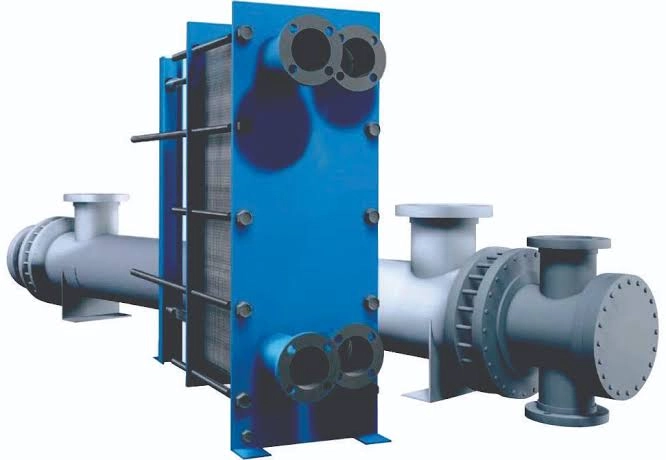
Choosing a Heat Exchanger is not only a price question. You are choosing how your plant will clean, stop, restart, and live with the unit for years. Grano works in that practical area: plate units, shell-and-tube units, plates, gaskets, and maintenance support for HVAC, chemical, food, industrial cooling, power, and similar lines. Since 2015, it has focused on detachable plate equipment, R&D, installation, and service.
What Makes Openable and Welded Designs Different?
Before comparing quotations, look at what the structure means on your site. “Openable” means easier access. “Welded” means fewer gasketed openings. Shell-and-tube equipment is another route for large flow and tougher duties.
Openable Plate Access
An openable plate unit uses heat transfer plates, sealing gaskets, clamping plates, and bolts. Corrugated plates create turbulence, so heat moves fast in a small footprint. When dirty, your team can open it, clean the plates, check gasket grooves, and restart.
Welded Sealing Strength
A welded design is chosen when leakage risk matters more than easy opening. It can suit hot, aggressive, or higher-pressure media. The trade-off is less cleaning freedom, which matters if the liquid scales badly.
Shell and Tube Body
Shell-and-tube equipment uses a tube bundle inside a shell. It is larger than a plate unit, but it handles high flow, lower pressure drop, and stronger mechanical loads well.
Which Process Conditions Should Guide Your Heat Exchanger Selection?
A good selection starts with process data, not a catalog photo. Send temperatures, flow rate, pressure, medium name, viscosity, fouling risk, cleaning method, and space limits.
Temperature and Pressure Range
|
Type |
Area |
Pressure |
Temperature |
Materials |
|
Plate unit |
Up to 5000 m² |
25 MPa |
200°C |
Stainless steel, titanium alloy, carbon steel |
|
Shell-and-tube unit |
Customized |
50 MPa |
400°C |
Stainless steel, carbon steel, copper |
If your duty fits the plate range and needs regular cleaning, an openable plate route often makes sense. If temperature, pressure, or flow rises, shell-and-tube equipment deserves first review.
Flow Rate and Pressure Drop
For compact plant rooms and close temperature approaches, a plate unit can do a lot in little space. For large loops or heavy process flows, shell-and-tube equipment is often calmer. Pump power is not free.
Fluid Cleanliness and Scaling
Dirty water, particles, and poor water treatment can raise pressure drop and cut heat transfer. In openable equipment, scaling can be handled by disassembly, washing, inspection, and pressure testing.
When Should You Choose an Openable Plate Design?
Openable plate equipment fits plants where maintenance is normal, not rare. If water quality changes by season, or if the unit serves food heating, HVAC, or industrial cooling, easy access can save real money.
Frequent Cleaning Work
Grano’s maintenance guidance includes flushing, acid washing, alkali washing, water washing, records, and pressure testing. The acid soaking step can be 2 hours, followed by 3 to 4 hours of circulation, with reverse cleaning every 0.5 hour.
Compact Plant Rooms
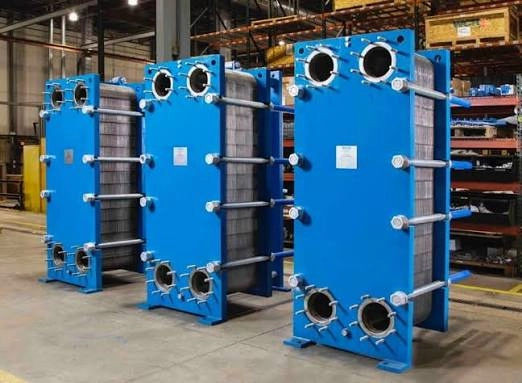
In HVAC machine rooms and retrofit projects, floor space is often already gone. A Plate Heat Exchanger is useful because it gives high transfer performance in a small footprint. It is also easier to move through a narrow door.
Flexible Capacity Changes
If your production line may expand, plate quantity and channel arrangement can be adjusted more easily than a fixed body. For phased projects, that flexibility helps you avoid buying too large too early.
When Is a Welded or Shell and Tube Design Safer?
Openable does not mean best for every job. Some processes punish gaskets, narrow channels, or frequent opening. In those cases, a stronger body and simpler flow path may give fewer surprises.
High Temperature Duty
At high temperature, gasket life becomes a real concern. Heat affects compression, aging, and sealing force. If your process runs hot every day, shell-and-tube equipment may reduce sealing risk.
Large Flow Demand
For large-scale exchange, the Shell and Tube Heat Exchanger is recommended when you need high flow, low pressure drop, and strong structure. It suits petrochemical, pharmaceutical, steel, HVAC, and other heavy-duty applications.
Tough Media
Corrosive liquid, high-salt water, oil-based fluid, or mixed chemical media need careful material choice. Stainless steel may be enough in one plant; titanium alloy may be needed in another. Check material early, not after the first leak.
How Should You Compare Lifetime Cost and Spare Parts?
The cheapest unit on day one can become costly after two shutdowns. A better comparison includes cleaning time, gasket life, spare plate supply, packing, and service help.
Gasket Material and Temperature
|
Gasket |
Medium Fit |
Temperature |
|
Nitrile rubber |
Oil-resistant, general duties |
-20°C to 135°C |
|
EPDM rubber |
Water, steam, acid, alkali, salt |
-50°C to 180°C |
|
Fluororubber |
High temperature, acid, alkali, oil |
-50°C to 250°C |
|
Neoprene |
Oil-resistant, general duties |
-20°C to 150°C |
|
Silicone rubber |
Low temperature and dry heat |
-65°C to 230°C |
Gasket choice decides much of the working limit. A wrong gasket can fail even when the plate material is correct. Annoying, but common.
Cleaning Time
Cleaning is not just washing and closing the frame. Plates should be checked for pits, deformation, cracks, and perforation. After reassembly, a 30-minute pressure hold with no drop is a practical checkpoint.
Spare Parts Supply
Ask about plates, gaskets, bolts, and packaging before ordering. Grano supplies complete units, spare plates, gaskets, bolts, and maintenance service. For titanium or other valuable materials, reinforced aluminum box packing protects parts during international shipping.
Why Work with Grano for Your Selection?
Your final choice should come from process data, site limits, and maintenance habits. A good supplier will ask a few boring questions first, which is usually a good sign.
Practical Product Matching
Grano can match you with an openable plate unit for compact, cleanable duties, or a shell-and-tube unit for higher flow, stronger structure, and harsher service.
Service and Maintenance Support
Grano also provides plate and gasket supply, cleaning, repair, remote guidance, and installation support. This is useful when your site cannot wait months for parts.
Final Buying Step
To choose the right Heat Exchanger, prepare a short data sheet: medium, flow rate, inlet and outlet temperature, pressure, material preference, cleaning cycle, and installation space. Then ask why the design fits your process, not only what it costs.
FAQ
Q: Which Heat Exchanger is better for frequent cleaning?
A: An openable plate design is usually better because you can open the frame, clean plates, check gaskets, and replace worn parts.
Q: When should you choose a shell-and-tube unit?
A: Choose it for higher pressure, higher temperature, large flow, low pressure drop, or stronger mechanical structure.
Q: What data should you send before buying a Heat Exchanger?
A: Send medium details, flow rate, inlet and outlet temperatures, operating pressure, design pressure, fouling risk, site space, and cleaning plan.


