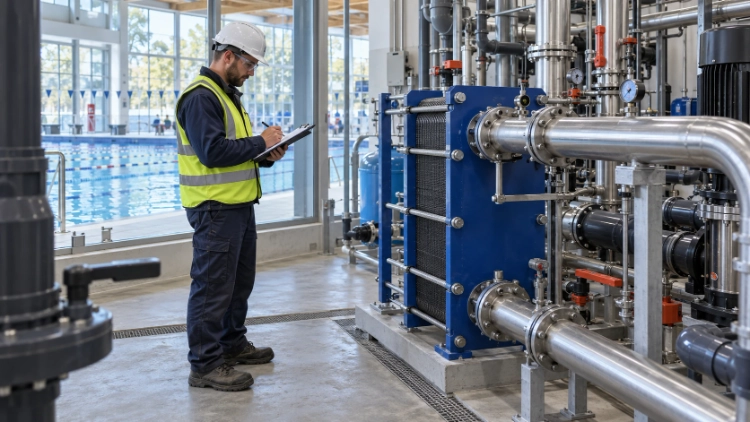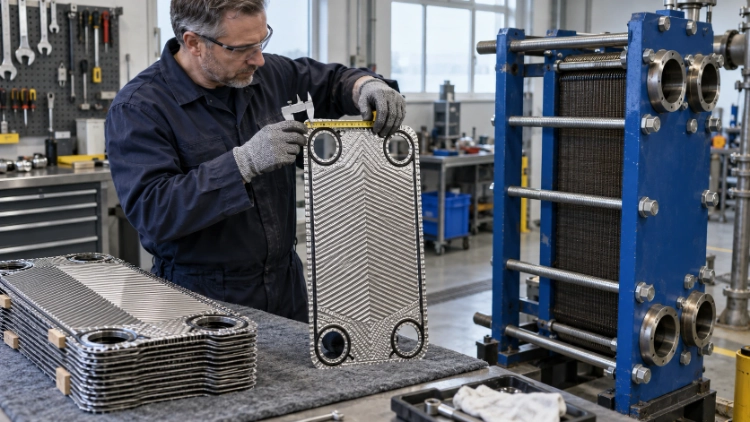

While comparing offers for a plate heat exchanger is important for a procurement department, they should also find out whether the supplier for the heat exchanger is able to control materials, production, test procedures and services after delivery. Grano develops, produces, sells, installs and services heat exchangers. Detachable plate heat exchangers, plates, gaskets and the corresponding maintenance are core areas for us. Our heat exchanger equipment is applied in HVAC, energy, chemicals, food & beverage, pharmaceuticals and industry.
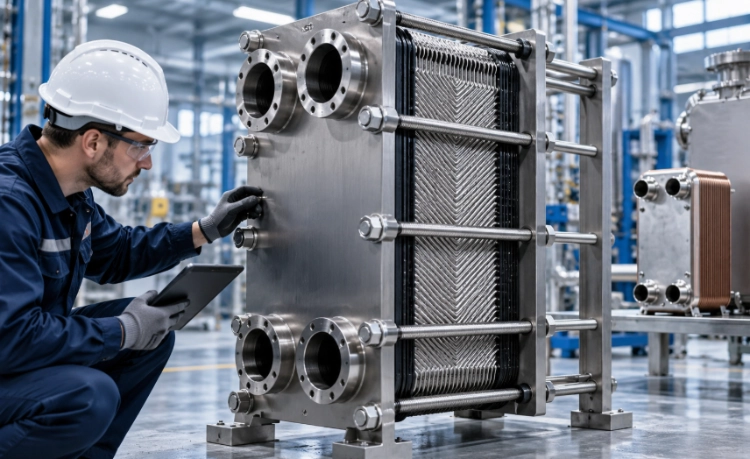 What Should You Verify Before Choosing a Heat Exchanger Supplier?
Before selecting a heat exchanger supplier, verify how materials are sourced, manufacturing processes are controlled, and finished equipment is tested. A quality certificate alone is not sufficient; the supplier should also provide relevant inspection procedures, testing records, and documentation for the proposed equipment.
A Documented Quality Management System
Even a quality system has to be managed in a documented way. In Grano’s case this is done under ISO 9001:2015 for procurement of raw materials, production, testing and service after delivery. Also the certificate has to be checked. Who controls the incoming goods? How is production controlled? How are nonconforming products handled?
Controlled Materials and Manufacturing Processes
Material selection for the fluid to be transferred and the operating conditions are critical. Grano uses steel from China and a variety of raw materials from countries such as Japan, the United States and others. The rubber used is imported and the company’s production is accurately controlled to achieve greater efficiency.
Sealing plates, gaskets, frame parts and clamping parts as a system. The material suitable for one medium is not necessarily suitable for another medium. Please indicate type and properties of medium, temperature, pressure and relevant chemical conditions.
Verifiable Inspection and Testing Evidence
A supplier should explain what happens before equipment leaves the factory. Grano carries out performance testing before shipment. In a Mexico HVAC project, its brazed units received 100% airtightness and thermal-efficiency testing before delivery; the first batch then operated for more than two years without failure, with stable heat exchange efficiency.
Ask what is tested, when, and what records are supplied. This is a practical part of heat exchanger quality control.
How Should You Match the Heat Exchanger to Your Application?
The quality of a supplier and the quality of a product that you select are inseparable. A well made heat exchanger can be the wrong product for a given process even if it was well made. Therefore the supplier must determine the medium, the flow, the temperatures, the pressures, the available space for installation, the cleaning needs and the expected maintenance before he can recommend a suitable design.
Plate Heat Exchanger for Flexible, Serviceable Applications
Grano’s Plate Heat Exchanger is made up of corrugated metal plates, which are separated by gaskets and held together by clamping plates and bolts. The frame of the Plate Heat Exchanger can be opened up in order to inspect and clean the separate flow channels.
This configuration is ideal for applications where maintenance access is required. HVAC, industrial cooling, industrial heating, food processing and many chemical processes are typical applications for plate heat exchangers. If the process in question tends to deposit or if the equipment in question is going to require gasket replacement then a detachable design allows for easy maintenance access to the plate pack.
When procuring items please check that the item can meet the required duties and be serviced in the space available. Even a very compact frame will require clearance for opening up and for inspection.
Brazed Plate Heat Exchanger for Compact, High-Pressure Applications
Grano also produces brazed plate heat exchangers. These units are particularly suited for applications where a compact construction and high pressure are required. These units differ from the above mentioned detachable heat exchangers with respect to the joining and sealing of the plates and thus also with respect to the maintenance.
This construction saves serviceable sealing components for relatively clean media which are not frequently opened. For cleaning or gasket change of frequently opened units it is more practical to have them as separate units. A reliable supplier of heat exchangers will tell you about this trade-off.
Fully Welded Plate Heat Exchanger for More Demanding Service
There is also fully welded construction, where consideration must be given to the joint and to the seal. Choice of the form of construction will depend upon the fluid, temperature and pressure conditions, corrosion problem and maintenance policy. Welded construction is not necessarily better than any other form of construction.
Assess the heat exchanger supplier to understand why a particular heat exchanger construction was chosen for your process and what kind of tests are performed on the relevant manufacturing steps.
What Evidence Can Show a Heat Exchanger Supplier Is Reliable?
When a technical claim is supported by documents, test data and real world experience then reliability is easier to assess. A useful supplier quality checklist for heat exchanger suppliers may therefore include reference to technical documents, test reports and application examples that are relevant.
Clear Technical Documentation
Check the fluids to be transferred on each side, operating conditions, materials, connections etc. and the supplier’s assumptions as to the major criteria for selection prior to placing an order.
By establishing a basis for comparison of technically different offers, the document also serves as a reference for the later service.
Testing Records and Performance Verification
For equipment testing, risks have to be checked that could affect the operation of the equipment, such as leakage, seal defects, material mismatches, fouling or wrong assembly. Grano performs pre-shipment performance testing. For the Mexico project 100% airtightness and thermal-efficiency tests were carried out within the supply process.
Will test results be delivered with the shipment? And does the scope of the tests carried out correspond to the agreed specifications? This is part of the heat exchanger quality control.
Real-World Application Evidence
Additional information on the operating history of Grano units would be relevant in case the Buyer’s proposed application is similar to previous ones. For example, in India a customer purchased several Grano units already in 2019 to be used in industrial cooling as well as heat exchange applications. Recently he placed orders for additional units for increased capacity as well as for replacement of old units. He required high strength plates as well as special high temperature resistant gaskets. He was also provided with remote technical assistance as well as after-sales service support.
Brazed units were used in Mexico for Air Conditioning and Hot Water Circulation applications. Units were tested before they were shipped. The first batch of units ran for over two years without failure.
Previous project experience can help buyers evaluate a supplier’s testing practices and after-sales support, but the proposed heat exchanger must still be verified against the new project’s operating conditions and technical requirements.
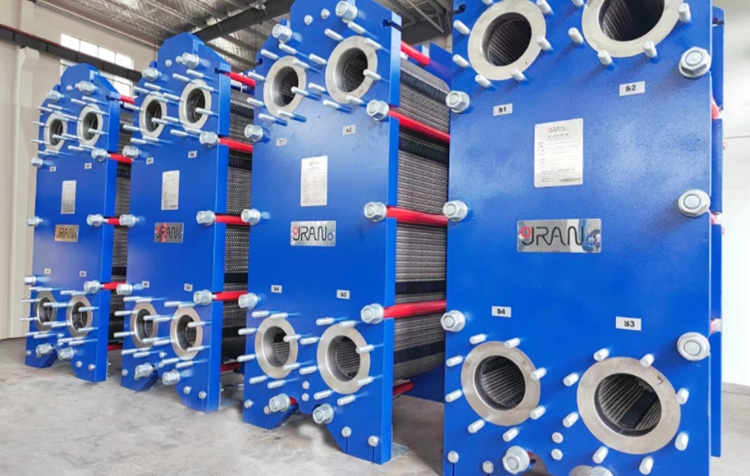
How Can You Assess Maintenance and Lifecycle Risk?
Post-installation work to be included in the purchase decision. Fouling, gasket aging, blocked flow channels, corrosion, and uneven clamping can reduce heat transfer efficiency, increase pressure drop, or cause leakage in a plate heat exchanger. Subsequent parts, labor, downtime and troubleshooting costs are involved.
Service Access and Cleanability
The detachable plate heat exchanger is useful for regular inspection and cleaning. Our maintenance procedures for the frame type heat exchanger Grano include opening the frame, checking the plates and gaskets, cleaning the sealing grooves and the plates’ surface and finally the pressure test after having reassembled everything.
Maintenance access must be selected. Space must be allowed for the frame to be opened and the plate pack handled. A maintenance plan should then outline the necessary steps for isolation, draining, cleaning, inspection and start-up.
Gasket and Material Compatibility
When selecting a gasket, it is essential to select the correct gasket for the medium for which it is to be used, as well as for the operating conditions. Gasket selection should account for the process fluid, operating temperature, pressure, and cleaning chemicals. Confirm the appropriate gasket material and its operating limits for the selected heat exchanger before placing an order. When purchasing a gasket, it is better to inform the seller about the complete process than to only compare prices.
The gasket and plate material must be re-evaluated if the fluid, cleaning agent, temperature or cycle of operation is changed. The material compatibility should be specified in the initial supplier quality specification for heat exchangers.
Spare Parts and Long-Term Support
Small parts can bring down large systems should they not be available or incorrectly specified. Grano supplies a range of plates, gaskets, bolts etc as well as a maintenance service. Its PHE Tie Bolt is relevant when clamping components need replacement during service.
Record the model, plate layout, gasket type and key dimensions of the plant. This will assist with future ordering of spare parts and aid in preventing mixing up of parts.
What Should You Expect After Purchase?
Continued supplier support after delivery to ensure adequate installation, commissioning and field cleaning together with provision of suitable spare parts and back-up technical support to ensure satisfactory performance in the field.
Installation and Commissioning Support
Installation errors can create problems that look like equipment defects. Plate direction, piping connections, clamping condition, and pipe cleanliness should be checked before startup. Grano provides installation and commissioning support.
Cleaning, Maintenance, and Technical Guidance
Increasing pressure drop, reduced heat transfer performance, leakage, or visible deposits may indicate fouling or mechanical problems in a plate heat exchanger. Inspect the operating conditions and equipment before deciding whether cleaning, gasket replacement, or further maintenance is required. Grano provides cleaning and maintenance support, including inspection, disassembly, cleaning, reassembly, gasket replacement when required, and post-service testing.
Direct Technical Contact with Grano
For a project specification, a replacement unit or an especially difficult installation, please provide the following information for the fluid: type, flow rate, inlet and outlet temperatures. Additional information such as the operating pressure, required heat duty, connection points and available space for the installation would be very helpful. Based on this information the engineering team can then start discussing the required configuration and appropriate documentation.
FAQ
What should I ask a heat exchanger supplier before placing an order?
Review the materials, operating conditions, testing, documentation, installation, maintenance access, spare parts and after-sales service offered by potential suppliers. Use a heat exchanger supplier quality checklist to compare suppliers.
How often does a plate heat exchanger need maintenance?
No application has the same maintenance interval. The required maintenance depends on several factors like the cleanliness of the fluids, the fouling tendency, the water treatment, the operation conditions and changes like an increasing pressure drop or decreasing heat transfer. A maintenance plan for plate heat exchangers should be based on more than just the calendar.
What makes a reliable heat exchanger supplier?
Your heat exchanger supplier should explain his choice of materials, production, testing, documentation as well as his service after delivery. For a plate heat exchanger your supplier should be able to give information on the suitable gasket types as well as on maintenance and on spare parts for your specific application.