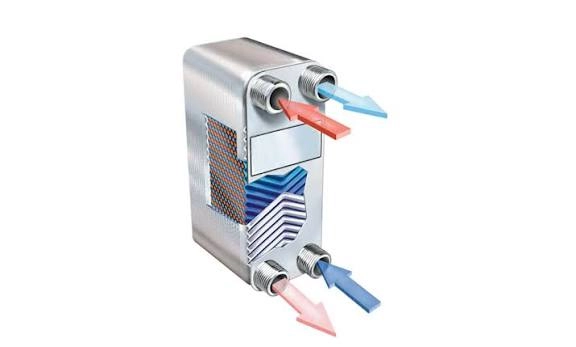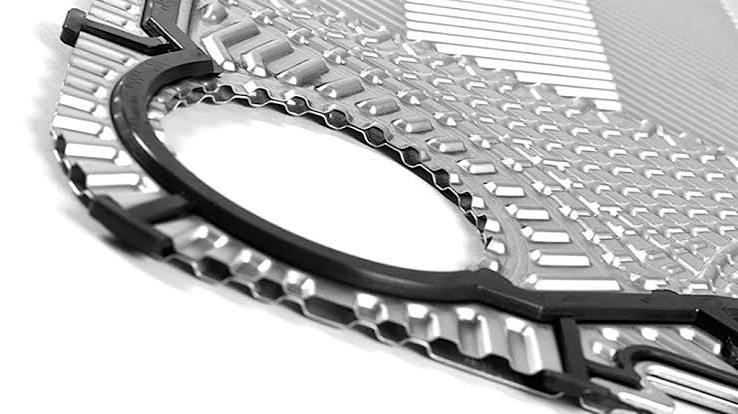

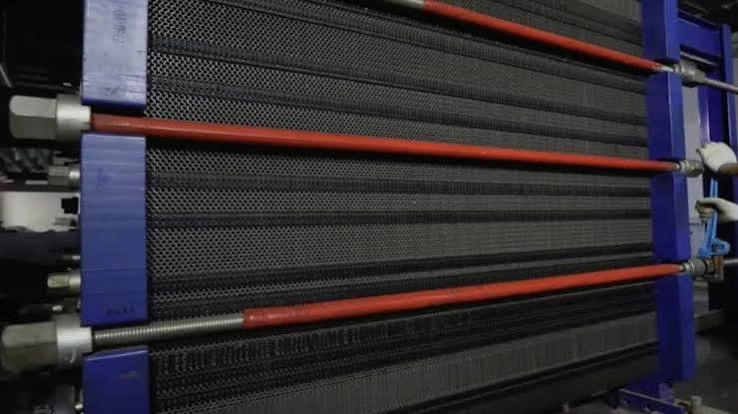
A Plate Heat Exchanger can’t be sized from pipe diameters or from the required floor space. Before a Plate Heat Exchanger can be delivered, 7 items of information are required from the customer: heat duty, inlet- and outlet temperatures, flow rates, fluid properties, required pressure drop, design pressure and temperature, and any fouling or cleaning conditions. These figures decide the plate area, channel count, gasket choice, connection size, and frame.
Founded in 2015, Grano focuses on detachable heat exchangers, plates, gaskets, and maintenance support. Its team covers design, production, installation, and service. The Grano Plate Heat Exchanger uses corrugated plates, removable gaskets, clamping plates, and bolts in a compact frame. Plate quantity can be adjusted for different duties, while the detachable structure allows cleaning and part replacement.
What Does Correct Plate Heat Exchanger Sizing Determine?
Correct sizing balances heat transfer, pump capacity, mechanical safety, and maintenance.
Thermal Performance Targets
The exchanger needs enough area to reach both outlet temperatures. Too little area misses the target, while too much area adds cost and may lower channel velocity.
Hydraulic Stability Limits
Higher velocity improves turbulence, but pressure drop also rises. Plate pattern, channel gap, and pass count must suit the pump.
Lifecycle Cost Consequences
An undersized unit can restrict production. An oversized unit may foul faster at low flow.
| Sizing Error | Immediate Result | Longer-Term Effect |
|---|---|---|
| Too little plate area | Outlet temperature misses target | Higher energy use |
| Too few flow channels | Pressure drop rises | More pump power |
| Wrong gasket grade | Swelling or leakage | Unplanned shutdown |
| Excessive oversizing | Low channel velocity | Faster deposit buildup |
Which Thermal Data Defines the Required Heat Transfer Area?
The first three parameters describe heat load and fluid movement. A change in either can alter the final plate count.
Parameter 1: Required Heat Duty
Give heat duty in kW or MW. When it is unknown, it can be calculated from mass flow, specific heat, and temperature change:
Q = m × Cp × ΔT
Provide normal, minimum, and peak duty, not only one brief peak.
Parameter 2: Inlet and Outlet Temperatures
List hot inlet, hot outlet, cold inlet, and cold outlet temperatures. A small approach temperature usually needs more plate area. Avoid phrases such as “cool to normal temperature.” Exact numbers save a surprising amount of email.
Parameter 3: Hot- and Cold-Side Flow Rates
Provide both flow rates with units such as kg/h, m³/h, or L/min. Flow affects heat duty, velocity, pressure loss, and port size.
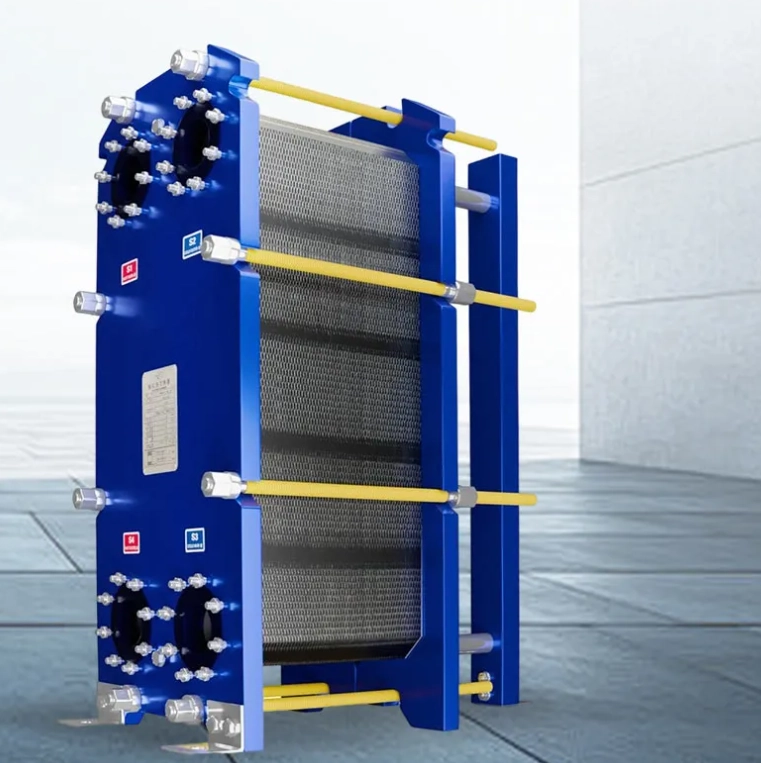
The Grano Plate Heat Exchanger can use different plate counts and pass arrangements. A single pass suits many duties, while multiple passes may help with low flow or a close temperature approach.
Which Fluid Details Control Plate and Gasket Selection?
Thermal data sets size. Fluid data governs material survival.
Parameter 4: Fluid Properties and Composition
Name each fluid and state its concentration. Add viscosity, density, solids, chloride level, and pH when available. Thick oil may need wider channels than water at the same flow rate.
Plate Material Compatibility
Common options include stainless steel, titanium alloy, and carbon steel. Selection depends on corrosion risk, temperature, chlorides, and cleaning chemicals.
Gasket Material Limits
The gasket forms the fluid channel and limits temperature and chemical exposure. The supplied documentation gives these reference ranges:
| Gasket Material | Reference Operating Range | Typical Media Direction |
|---|---|---|
| Nitrile rubber | -20°C to 135°C | Oils and general service |
| EPDM rubber | -50°C to 180°C | Water, acids, alkalis, and salts |
| Fluororubber | -50°C to 250°C | Higher temperature, oils, and chemicals |
| Neoprene | -20°C to 150°C | Oil-resistant general service |
| Silicone rubber | -65°C to 230°C | Low temperature and dry heat |
These values are guides. Final selection must match the exact fluid, concentration, and cleaning method.
Which Hydraulic and Mechanical Limits Must You Specify?
A Plate Heat Exchanger must fit the wider system, so hydraulic and mechanical limits both matter.
Parameter 5: Allowable Pressure Drop
Give the maximum pressure drop for each side. Pipes, valves, strainers, and fittings also consume pressure, so the pump’s full head cannot be assigned to the exchanger.
A tight pressure-drop limit often needs more channels, larger ports, or more plate area.
Parameter 6: Design Pressure and Temperature
Separate operating values from design values. State maximum pressure on each side, maximum temperature, and maximum differential pressure.
Also report steam cleaning, hot-water sanitation, cold startup, or sudden pump shutdown. These short events may be harsher than normal production.
Connection Sizes and Flow Arrangements
Provide pipe size, flange rating, connection standard, and preferred orientation. Existing pipe size is useful, but it should not control the design when port velocity would be excessive.
Which Operating Conditions Affect Long-Term Performance?
Water quality, solids, cleaning practice, and access space shape long-term performance.
Parameter 7: Fouling and Cleaning Requirements
State water quality, solids level, scaling tendency, cleaning chemical, and cleaning interval. Calcium, magnesium, and carbonate deposits can form hard scale with poor thermal conductivity, so heat transfer falls as energy use rises.
A removable plate pack helps because plates can be opened, checked, cleaned, and replaced.
Maintenance Space and Future Expansion
Leave room to move the pressure plate and remove individual plates. Tell the supplier about height limits, nearby walls, pipe supports, and planned capacity increases.
Product Capability Check
The supplied Grano product data lists these upper reference values:
| Item | Product Data |
|---|---|
| Custom heat transfer area | Up to 5,000 m² |
| Maximum working pressure | 25 MPa |
| Maximum operating temperature | 200°C |
| Listed plate materials | Stainless steel, titanium alloy, carbon steel |
Final limits depend on the selected plate, gasket, frame, and duty.
Why Choose Grano for Your Heat Exchanger Sizing?
A complete data sheet is only the starting point. The supplier still needs to check how the details work together.
Application-Specific Technical Review
Grano can review duty, temperatures, flow, media, pressure drop, design limits, and cleaning needs as one package. This shortens quotation time and reduces sizing mistakes.
Configurable Plate-Pack Design
The recommended product can be configured through plate count, material, gasket grade, pass arrangement, and connection layout. Its detachable construction also makes cleaning and plate replacement easier.
Parts and Service Support
Grano supplies plates, gaskets, bolts, and maintenance support with complete units. Access to matching parts matters almost as much as the first purchase.
Before ordering, send all seven parameters with units and operating limits. This gives the technical team enough information to size the Plate Heat Exchanger for your process instead of forcing your process around a guessed model.
FAQ
Q1: Can a heat exchanger be sized from flow rate alone?
A: No. You also need heat duty, four temperatures, fluid properties, pressure-drop limits, design conditions, and fouling data.
Q2: Why does gasket selection matter so much?
A: The gasket contacts the fluid, forms the channel, and limits temperature and chemical resistance. A poor match may harden, swell, or leak.
Q3: What information should you send with a Plate Heat Exchanger inquiry?
A: Please provide the following: Duty, temperatures, both flow rates, information on the two fluids, allowed pressure drop, design pressure and temperature, cleaning requirements, connection details, and installation space constraints.