
Finding reliable thermal equipment for food plants is a constant challenge. A lot of factory managers struggle with systems that scale up quickly, causing massive downtime. When looking for thermal solutions in 2026, Grano stands out as a highly professional manufacturer.
Established in 2015, they build high-quality heat transfer equipment specifically for demanding sanitary environments. If your facility needs a robust Plate Heat Exchanger, their designs deliver exceptional thermal efficiency and feature a simple structure for easy cleaning. They do not just provide hardware. You can rely on their dedicated service team for maintenance guidance and precise spare parts. Curious about their industry background? Visit the about us page to see how their technical expertise supports the global food and beverage sector today.
The Impact of Fouling on Food Processing Efficiency in 2026
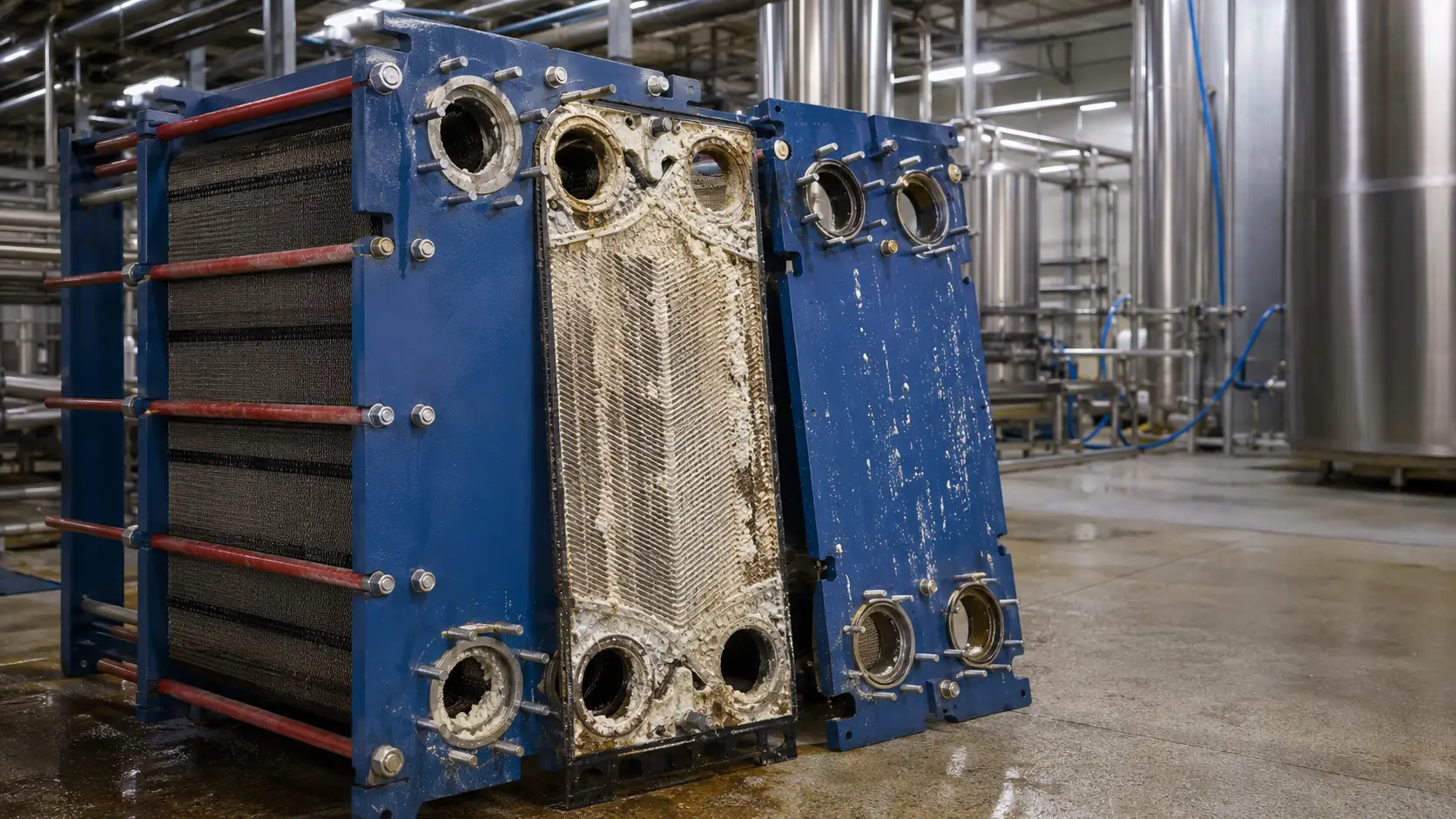
Fouling is basically the biggest enemy of food plant operators. When deposits build up on the internal plates, the whole production line slows down. It is not just a minor headache for the maintenance crew. It directly hurts your bottom line and ruins product quality. Let us look at what exactly happens when scale takes over the equipment.
Reduced Thermal Transfer Rates
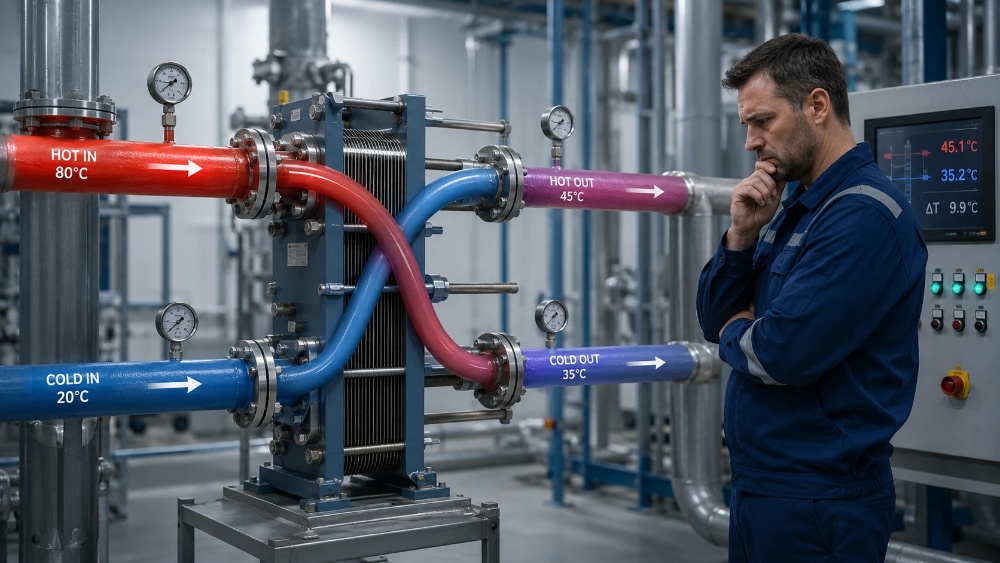
Scale has terrible thermal conductivity. When calcium or sticky food particles coat the heating surface, they form a thick barrier. Heat cannot pass through the metal easily. The equipment then has to work much harder just to hit the basic pasteurization temperatures required for food safety.
Increased Energy Consumption Costs
Because the heat transfer drops so drastically, you burn way more fuel or electricity. It is a serious waste of energy. Factory managers often see their utility bills spike suddenly just because a thin layer of scale forces the boilers to run longer to compensate for the heat loss.
Hidden Bacterial Growth Risks
Deposits create perfect little hiding spots for bacteria. Hard scale protects microbes from standard cleaning fluids. This is a massive food safety hazard. A contaminated batch means product recalls, lost revenue, and a ruined brand reputation in the market.
Let’s look at how scale physically changes the performance metrics of your equipment.
|
Condition |
Heat Transfer Coefficient (W/m²K) |
Pressure Drop (kPa) |
Relative Energy Cost |
|
Clean Stainless Plates |
4500 to 6000 |
50 |
Baseline (100%) |
|
1mm Hard Scale Buildup |
1500 to 2000 |
85 |
+35% to +50% |
Common Causes of Scale Buildup in Sanitary Environments
Finding the root cause of scaling helps you prevent it from happening in the first place. You might think the factory water is perfectly clean, but the reality inside the hot pipes is quite different. Here is what usually triggers those stubborn deposits.
High-Viscosity Fluid Accumulation
Thick food products like syrups, juices, and sauces naturally want to stick to metal. If the flow rate drops even slightly, these viscous liquids coat the plates. Over time, the constant heat bakes this soft layer onto the surface, making it extremely difficult to wash off.
Calcium and Magnesium Precipitation
This is a classic industrial issue. If the water treatment fails and unqualified softened water enters the system, trouble starts. Once heated, the calcium, magnesium, and carbonate in the water decompose into calcium carbonate and magnesium hydroxide precipitates. These elements adhere tightly to the heating surface and form rock-hard scale.
Inadequate Clean-in-Place Washdown Velocity
CIP systems only work if the cleaning fluid moves fast enough. Weak flow leaves blind spots inside the channels. If the acid or alkaline wash does not have enough physical force to scrub the metal, leftover food residues will eventually harden into permanent scale.
Innovative Plate Heat Exchanger Designs for Fouling Prevention
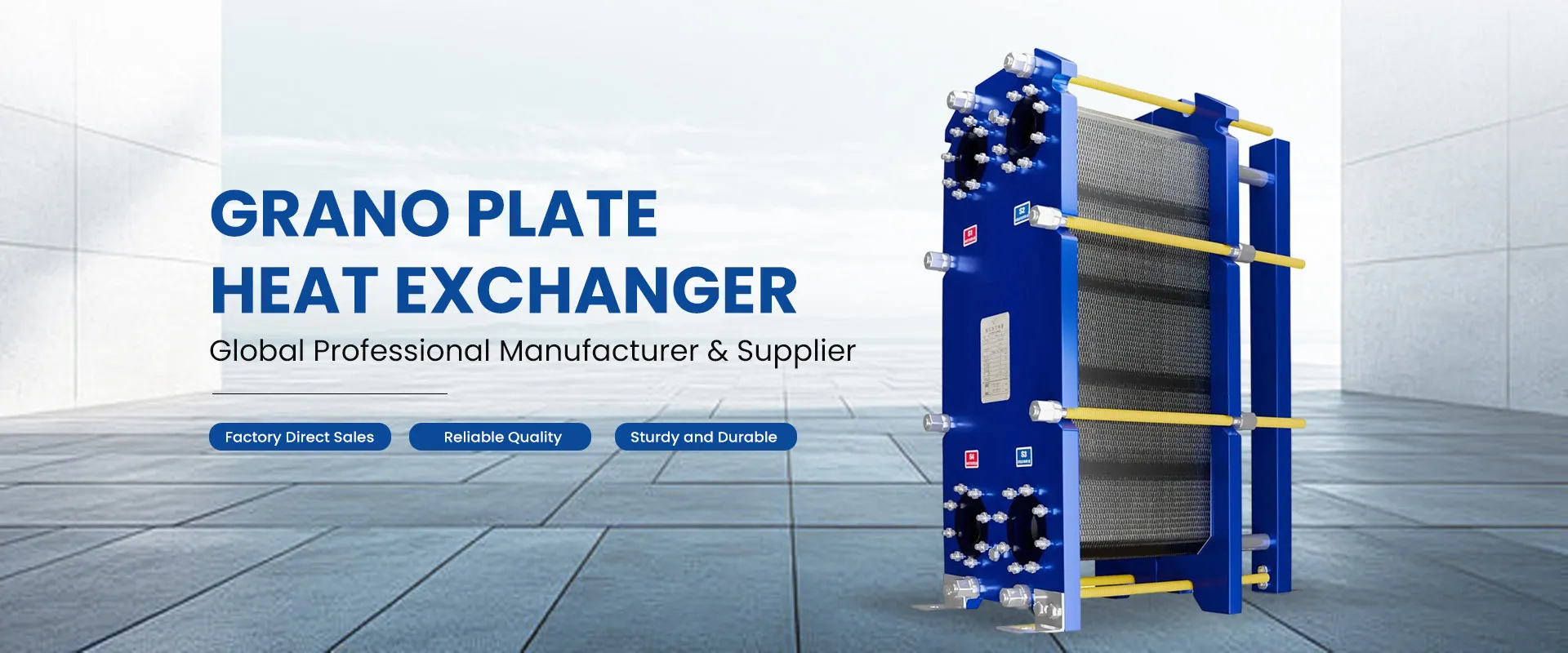
Upgrading the hardware is the most effective defense against deposits. Modern Plate Heat Exchanger units have specific structural features engineered to fight scale automatically during daily operations.
High-Turbulence Corrugated Plates
Quality plates use a herringbone corrugation pattern. By arranging the A plates and B plates crosswise, thousands of staggered contacts form inside the narrow channels. This forces the fluid to constantly change direction and flow around these contacts. The resulting high turbulence naturally scrubs the plate surface, washing away particles before they can settle.
Smooth Food-Grade Stainless Steel Surfaces
Rough metal gives scale something to grab onto. Food-grade stainless steel is highly polished and extremely smooth. This material choice significantly reduces the chances of bacterial harbor points and scale attachment, making it ideal for the food processing industry.
Easy-to-Dismantle Frame Structures
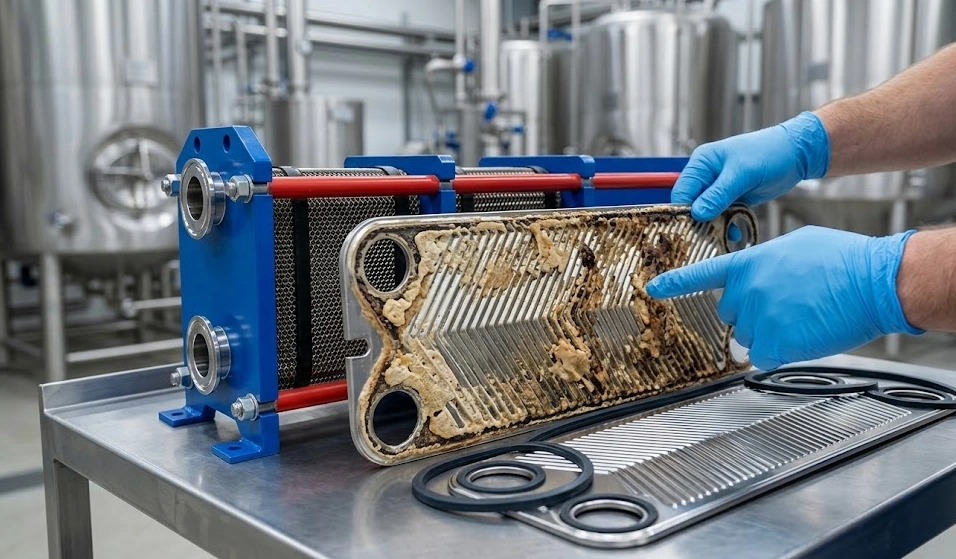
Sometimes you just have to open the unit up for a manual inspection. A major advantage of this equipment is the simple, compact structure. Workers can easily remove the clamping bolts and take out the plates. This makes physical inspection and deep cleaning incredibly straightforward.
Effective Maintenance Strategies for Sanitary Plate Heat Exchangers
Even the best equipment needs proper care. Setting up a strict maintenance routine keeps your thermal efficiency high. You have to be proactive rather than waiting for a complete blockage to happen.
Scheduled Chemical Descaling Procedures
Chemical cleaning relies on dissolution, stripping, gas lifting, and loosening effects. The acid reacts with calcium and carbonate scale to generate carbon dioxide. This gas lifting effect physically pushes the hard scale off the heated surface. Always finish the process with an alkali wash using NaOH and trisodium phosphate to neutralize the acid and protect the plates from corrosion.
Daily Dynamic Circulation Flushing
Do not let debris sit inside the machine overnight. Run an open-type flush before pickling to clear out loose mud and particles. Doing this reduces the amount of acid you will need later. Alternate between positive and reverse cleaning every half hour during your dynamic circulation cycle for the best results.
Timely Food-Grade Gasket Replacement
Gaskets fail over time due to heat and pressure. When they age, you risk leaks and cross-contamination. Always swap them out using the correct material. Food EPDM (Code SE) is great for water and steam up to 150°C, while Food Butyronitrile (Code SN) works well for oily media up to 120°C.
Here is a quick reference guide for selecting the right sanitary gasket material.
|
Gasket Material |
Code |
Working Temp (°C) |
Best Application |
Limitations |
|
Food EPDM |
SE |
-54 to 150 |
Water, steam, acids, alkalis |
Not resistant to petroleum products |
|
Food Butyronitrile |
SN |
-30 to 120 |
Animal oils, vegetable oils |
Not resistant to oxidizing acids |
|
Food Fluorine |
SF |
-29 to 220 |
High temp, chemical media |
Poor resistance to superheated water |
Selecting the Right Sanitary Equipment for Food Production Needs
Buying thermal equipment is a major investment. You need to match the technical specifications with the actual factory floor conditions. Getting this wrong means endless maintenance headaches and production stops down the road.
Strict Hygiene Material Selection
Never compromise on materials. The plates must handle your specific food acids and strong cleaning chemicals without corroding. Titanium might be necessary if the food product is highly salty. Always check the gasket compatibility against your process fluids.
Customizable Heat Exchange Areas
Your production volume will likely grow over the next few years. Look for flexible modular designs. By just adding more plates to the frame, you can expand the heat exchange area up to 5000 square meters depending on the model. You do not have to buy a whole new machine when capacity increases.
Reliable Pressure Drop Management
Pumping thick food liquids requires a lot of electrical power. You want a plate pattern that offers high heat transfer but keeps the pressure drop low. This delicate balance stops your pumps from burning out while processing heavy sauces or purees.
Partner with Grano for Your Food Processing Thermal Solutions
Having a reliable supplier makes factory management much easier. You need a company that delivers quality hardware and backs it up with solid technical help when things go wrong.
High-Efficiency Sanitary Equipment
Their core products, including the Plate Heat Exchanger, are built for high efficiency and a small space occupation. The design allows for easy disassembly, which perfectly caters to the strict cleaning requirements of many industries. Visit the Grano homepage to explore the catalog.
Comprehensive After-Sales Support
A breakdown stops the entire production line. That is why having access to fast service matters so much. They supply plates and gaskets, plus they offer maintenance, cleaning guidance, and technical support to keep everything running smoothly.
Years of Industry Expertise
Experience counts in B2B manufacturing. Since 2015, they have exported equipment to Europe, America, the Middle East, and Southeast Asia. They also hold multiple patents and software copyrights for thermal design. You can learn more about their history and capabilities on the website.
FAQ
Q1: How often should chemical descaling be performed on a sanitary heat exchanger?
A: It depends heavily on the water quality and production volume. Generally, inspecting and running a CIP chemical wash every few months is standard, but daily dynamic water flushing is highly recommended to prevent soft scale from hardening.
Q2: What is the gas lifting effect during the chemical cleaning process?
A: When the acid solution reacts with calcium and carbonate scale, it generates a large amount of carbon dioxide gas. As the gas overflows, it provides a physical lifting force that peels the stubborn scale off the metal heating surface.
Q3: Why are the heat exchanger gaskets leaking suddenly?
A: Leaks usually happen when the clamping bolts are tightened unevenly, the plate is deformed, or the gasket itself is simply old and has lost its elasticity.
Q4: Is it safe to use EPDM gaskets for processing edible oils?
A: No. EPDM rubber is excellent for water and steam but cannot handle oils. You must select Food Butyronitrile (Code SN) for any animal or vegetable oil applications.
Q5: How do herringbone plates actually prevent fouling?
A: The corrugated A and B plates are arranged crosswise to create thousands of contact points. This forces the fluid into a highly turbulent flow, which continuously scrubs the metal surface and stops particles from settling down.