
Dealing with raw milk processing brings up one massive headache for any production line: fouling. When cold milk hits hot metal, things get messy fast. Minerals bake onto the surfaces, flow channels choke up, and suddenly your whole operation has to stop for a massive cleaning cycle. It eats into your production hours and kills your profit margins. You need hardware that fights back against this constant buildup, keeping your product safe and your lines moving.
As a facility manager, handling dirty equipment consumes way too much of your day. You want reliable gear that just works. That is where Grano steps in. Since 2015, they have operated as a heavy-duty manufacturer focused entirely on thermal technology. They do not just push metal boxes out the factory door; they deliver complete thermal answers. If your current setup keeps clogging, checking their company history and you will find a deep background in designing detachable units that actually fit your specific floor plan. And when things inevitably get sticky, their dedicated Service team provides the exact maintenance and parts replacement you need to keep the lines running. They know the food industry inside and out, keeping your sanitary standards high and your daily stress low.
The Mechanics of Protein Fouling in Milk Production
The moment heat transfers into liquid dairy, a complex chemical reaction kicks off. It is not just about making the liquid hot. The components inside the milk react poorly to sudden temperature spikes. Getting a handle on how this crust forms helps you pick better hardware to stop it early.
Mineral Deposition in Milk Pasteurization
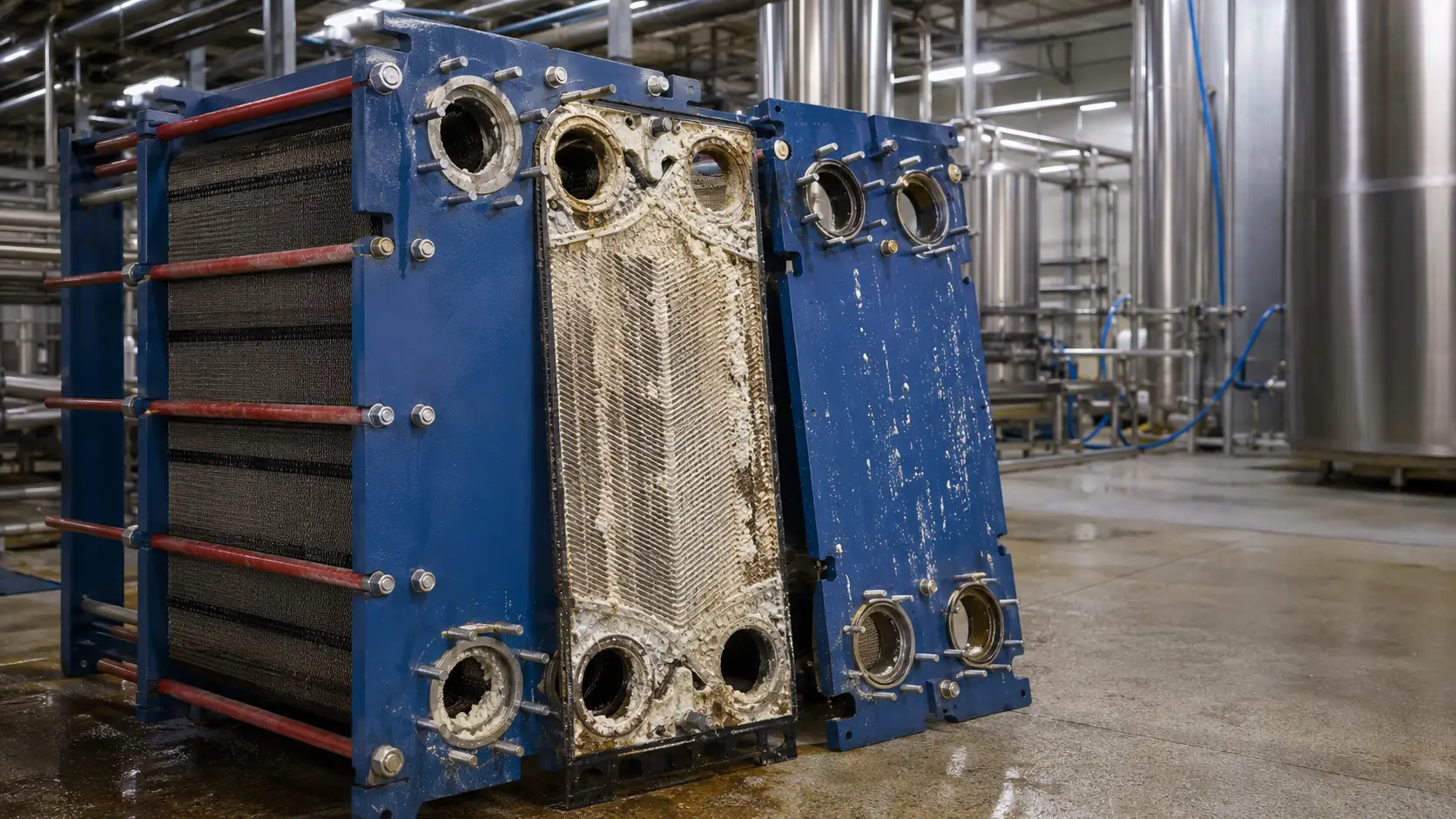
When you inject heat into the system, the calcium, magnesium, and carbonate naturally found in the water and milk start to break down. They decompose into calcium carbonate and magnesium hydroxide precipitates right after being heated. This material sticks aggressively to the heating surface and forms a hard, rock-like scale. You pull apart a Plate Heat Exchanger after a long run and find it totally caked in this white crust. It is incredibly stubborn and ruins your daily flow rates.
Thermal Adhesion Effects on Heat Transfer Efficiency
That hard scale acts like a thick winter blanket on your metal plates. Because scale has incredibly poor thermal conductivity, the heat exchange efficiency drops like a rock. You end up pumping more and more energy into the boiler just to hit your target pasteurization temperatures. Thermal energy gets seriously wasted, which heavily impacts the overall heat transfer effect. Your utility bills go up while your output noticeably slows down.
Contamination Risks from Biofilm Formation
Beyond just blocking the flow, that crust creates a secondary hygienic nightmare. An unclean medium full of particles and debris causes the flow channel to be blocked. These blocked areas become dead zones where bacteria can easily hide and multiply. If you do not clear it out thoroughly, the bacteria spoil the next batch of product. It is a straight path to failed quality checks and ruined milk batches.
Key Design Features for Sanitary Heat Transfer
Stopping this mess requires smart mechanical engineering. You cannot just run milk through any standard industrial pipe and hope for the best. The physical shape of the metal and the rubber seals must be specifically built for food-grade environments.
Crevice-Free Plate Patterns for Smooth Fluid Flow
The surface of the heat exchange plate is pressed into a corrugated or grooved shape to increase the rigidity of the plate and improve the heat transfer efficiency. The working medium flows through narrow and tortuous channels. Thousands of contacts formed by the cross-corrugation are staggered and evenly distributed, generating strong disturbances. This high turbulence physically scrubs the metal, making it much harder for the milk proteins to settle and bake onto the surface.
Compliant Gasket Materials for High Temperatures
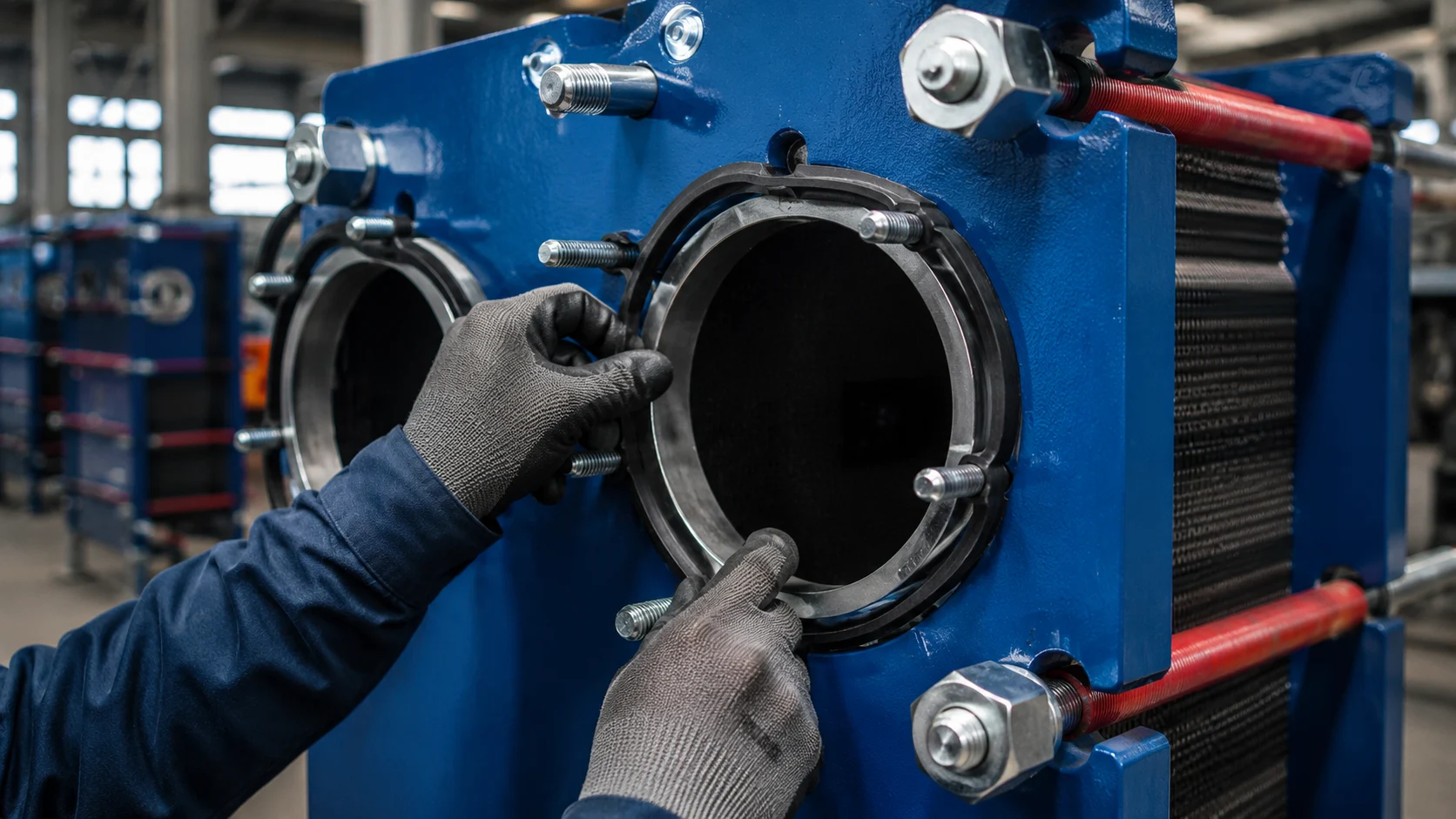
Your rubber seals take a massive beating during daily runs. You need specific materials to handle the heat without breaking down into your food. Food EPDM (SE) provides good resistance to water, water vapor, and superheated water, working safely from -54℃ to 150℃. For oily fluids, Food butyronitrile (SN) handles oil-water exchange effectively between -30℃ and 120℃.
Here is a quick breakdown of common food-grade seal performance based on factory data.
|
Gasket Material |
Code |
Working Temperature |
Applicable Media |
|
Food EPDM |
SE |
-54℃ to 150℃ |
Water, water vapor, superheated water |
|
Food Butyronitrile |
SN |
-30℃ to 120℃ |
Animal and vegetable oil, aliphatic oil |
|
Food Fluorine |
SF |
-29℃ to 220℃ |
Acid, alkali, salt corrosive medium |
Welded Cassettes for Critical Media Separation
Sometimes rubber gaskets are just too risky for certain aggressive fluids. Using a Semi-Welded Plate Heat Exchanger solves this by utilizing laser-welded pairs. The critical fluid stays entirely inside the welded cassette, while the food product runs on the gasketed side. It keeps the messy fluids totally separate and cuts the risk of leakage down to almost zero, which keeps the health inspectors happy.
Equipment Applications in Dairy Plants
Throwing the right hardware at specific stages of your production line makes a massive difference in your daily output. You need different configurations depending on whether you are boiling the milk or chilling it down for transport.
Rapid Heating Solutions for Treatment Systems
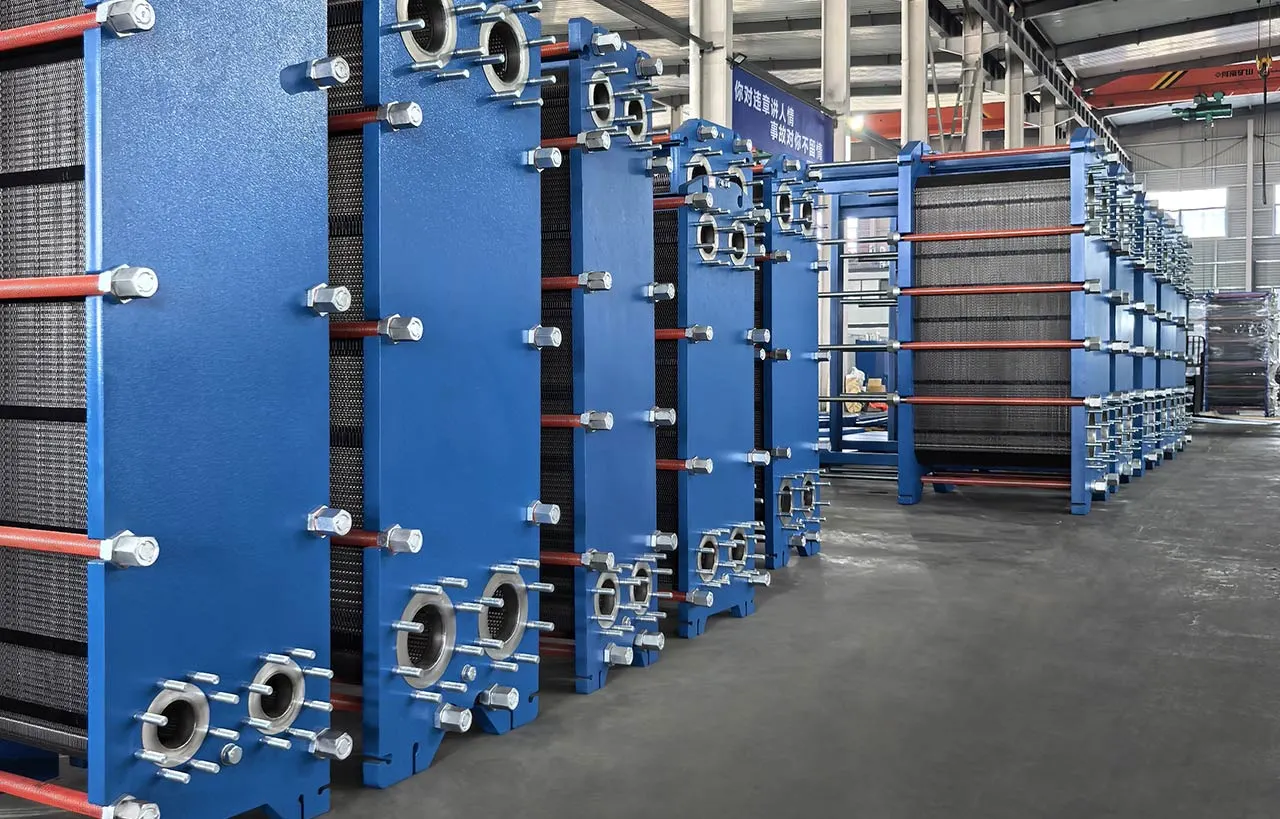
For standard pasteurization, a traditional Plate Heat Exchanger works perfectly. It has the advantages of small space occupation and easy installation and disassembly. You get high heat transfer efficiency without taking up your entire factory floor. If a plate gets dirty, your maintenance team can just unbolt the frame and scrub it down manually.
Gentle Cooling Stages for Liquid Dairy Products
After you heat the milk to kill the bugs, you have to cool it down fast but gently. Dropping the temperature too aggressively can mess with the texture of creams and yogurts. You can configure the Semi-Welded Plate Heat Exchanger to run chilled water or ammonia on the welded side, giving you highly precise thermal control over your delicate dairy products on the other side.
Waste Heat Recovery in Daily Plant Operations
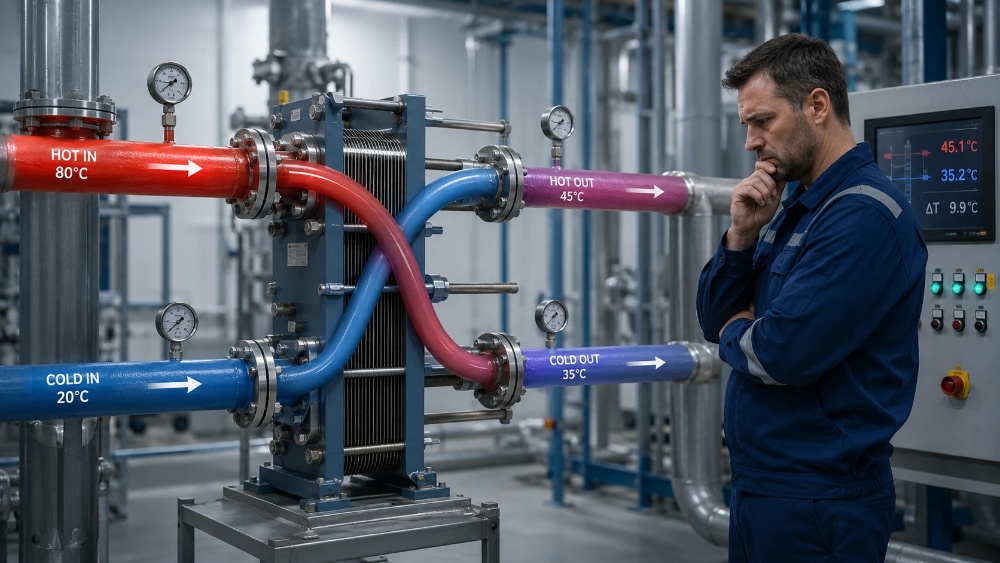
Do not let your paid-for thermal energy literally go down the drain. Because these units have very small heat loss, they are incredible at recovering energy. You can take the hot pasteurized milk and run it past the incoming cold raw milk. The hot milk cools down, the cold milk warms up, and your boiler works half as hard for the rest of the day.
Effective Cleaning Procedures for Maximum Equipment Uptime
Eventually, every machine gets dirty. The trick is getting it completely clean without keeping the factory shut down for three days. Chemical descaling is the standard way to strip that burnt milk right off the metal.
Acid Washing Ratios for Stubborn Calcium Removal
The basic principle of removing scale involves a strong dissolution effect. An acid solution easily reacts with calcium, magnesium, and carbonate scale to form soluble compounds. It also creates a gas lifting effect where generated carbon dioxide gas literally lifts the scale off the heated surface. You pour the cleaning liquid into the equipment and let it soak statically for 2 hours. It smells pretty awful on the factory floor when the acid hits the scale, but it absolutely strips the metal bare.
Alkali Circulation for Protein Residue Breakdown
Acid handles the minerals, but you need alkali to break down the fat and protein. After the acid wash, you use NaOH, Na3P04, and softened water in a certain proportion. You run a dynamic circulation to wash the unit with alkali, which achieves an acid-base neutralization so the metal plates will no longer corrode.
Forward and Reverse Flushing Techniques
Just running the chemicals in one direction leaves blind spots. You need to continuously circulate the fluids dynamically for 3 to 4 hours. During this specific period, perform positive and reverse cleaning alternately every 0.5 hours. Also, before disassembling the unit for manual checks, first measure the compression length of the plate bundle and make a record, because it should be compressed tighter than the original size when reinstalling.
Check this standard descaling timeline from factory manuals.
|
Step |
Action |
Duration |
|
1. Flushing |
Open-type flushing |
Removes loose mud and scale |
|
2. Pickling (Static) |
Soak with acid solution |
2 hours |
|
3. Pickling (Dynamic) |
Circulate and reverse flow |
3 to 4 hours, switch every 0.5 hours |
|
4. Alkali Washing |
Neutralize with NaOH |
Dynamic circulation |
|
5. Water Washing |
Rinse with softened water |
0.5 hours |
If the pH value of the acid solution stays above 2 after the run, you can actually reuse it for the next batch. After everything finishes, you must run a pressure test before putting milk back in the pipes.
FAQ
Q1: What Causes Rapid Scaling in Pasteurizers?
A: When you heat the fluids, calcium, magnesium, and carbonate in the water and milk decompose into precipitates. These attach directly to the metal and form hard scale because of the high temperatures.
Q2: How Do You Stop Gasket Leaks?
A: Leaks usually happen when the clamping bolts are not tightened evenly or the gasket gets old. Always use a torque wrench to tighten the bolts evenly to the exact required tightening length during assembly.
Q3: Does Food EPDM Handle Superheated Water?
A: Yes. Food EPDM (SE) has good resistance to water, water vapor, and superheated water, working perfectly up to 150℃. It is a non-polar substance, so it has excellent hydrophobicity for these applications.
Q4: How Should You Store Replacement Gaskets?
A: You must store them in a cool, dry, dark environment where the temperature does not exceed 40°C. Do not let them contact acids, alkalis, oils, or organic solvents, and definitely avoid heavy pressure.
Q5: Why Are Herringbone Plates Used in Dairy Processing?
A: The herringbone pattern forces the fluid to flow around thousands of contacts. This generates strong disturbances and forms a very high heat transfer coefficient, which stops milk from settling and burning onto the metal.