



In the field of industrial heat control, the Plate Heat Exchanger (PHE) stands out as a great example of good performance. It has a small size, strong heat movement rates, and simple upkeep. But even the strongest setups can face a quiet, sometimes major problem: internal leakage, which people also call cross-contamination.
Outside leaks show up right away with drops of liquid, but internal leakage takes place when the wall between the warm and cool fluids breaks, letting them blend together. This mixing can cause dirty outputs, odd water traits, and big harm to the gear. At Grano, where we have worked on making, selling, and fixing PHEs since January 2015, we think that knowing the main reasons for this quiet danger is the key first move to keep things running steady. Our team has seen many cases over the years, and we always stress how important it is to look at the whole system, not just one part, to avoid these issues in the future.
1. The Gasket “Scapegoat” Fallacy
When you spot cross-contamination, maybe from a quick shift in pH, color, or matching up and down in pressure on both sides of the exchanger, repair groups often quickly point to the sealing gaskets. This reaction makes sense at first, since gaskets are the obvious seals, but digging deeper shows it’s not always the case.
That said, good PHEs come with a smart safety feature. The gaskets usually sit with dual-seal protection and leakage signal grooves. If a gasket gives out, the liquid goes through these paths and outside the gear, showing as an outside leak instead of blending inside. This design helps catch problems early and keeps things from getting worse.
Real internal leakage rarely comes from a gasket problem. More often, it stems from the failure of the metal plates themselves. When those slim metal sheets from 0.4mm to 0.6mm get damaged, the two fluids lose their separation. Over time, small issues can build up, leading to bigger failures if not addressed promptly.
2. Three Core Mechanisms of Plate Perforation
Figuring out why metal plates break down is vital for stopping it long-term. From lots of research and on-site work, Grano has found three main reasons for plate holes: These factors often work together in real setups, so checking all of them helps get to the bottom of the problem effectively.
Chemical Corrosion: The Silent Destroyer
Even strong materials such as 316L stainless steel have limits. In hot settings or with lots of chloride ions, the metal can face pitting and crevice corrosion. Such damage starts small but grows if the conditions stay the same, eventually causing leaks that affect the whole operation.
Scale Accumulation: If you do not control water quality well (by skipping softening), calcium and magnesium carbonates build tough layers on the plates. These layers speed up “under-deposit corrosion,” forming local battery-like spots that wear away the metal over time. Regular checks and cleaning can prevent this buildup from causing serious harm.
Material Selection: Picking the wrong stuff for the fluids, like regular stainless steel for salty seawater, leads to fast breakdown. Always match the material to the job to avoid early failures and extra costs down the line.
Fatigue Cracking: The Pressure of Instability
PHEs face changing work conditions a lot. The number of starts and stops, pump shakes, or quick “water hammer” hits make pressure go up and down.
Mechanical Stress: These changes make the plates bend at the wavy meeting spots. Such repeated bending wears on the material slowly but surely.
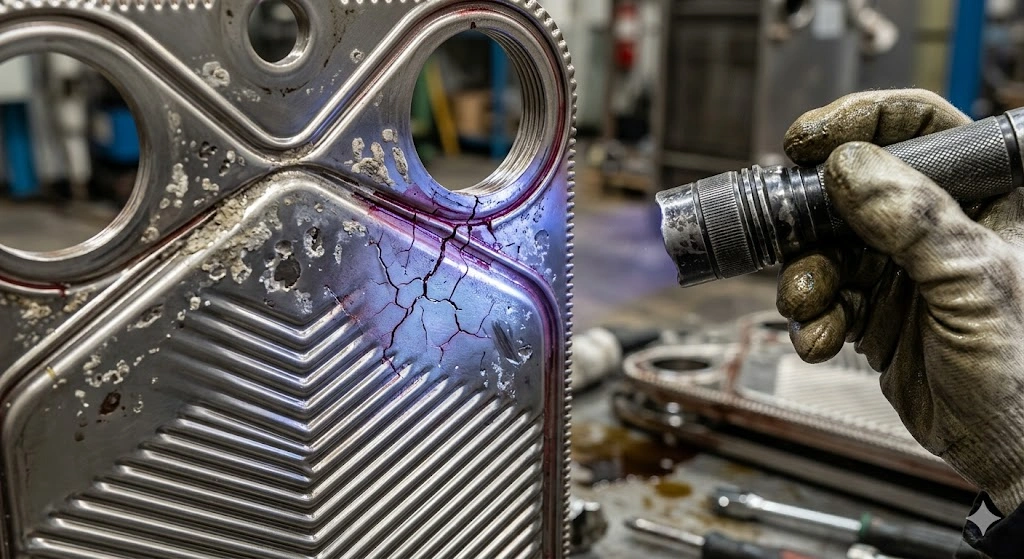
Micro-cracks: After a while, this back-and-forth stress creates tiredness cracks, usually at the base of the plate waves or by the inlet holes, and in the end, high-pressure fluids push into the low-pressure area. Monitoring vibrations and smoothing operations can cut down on these risks quite a bit.
Physical Damage: The Cost of Improper Maintenance
At times, the danger arises from the upkeep work itself. Simple mistakes during handling can lead to big problems later on.
Aggressive Cleaning: Tools like steel brushes or wrong high-pressure water use can mark the safe layer on the metal face. Opt for gentle methods to keep the surface intact and free from scratches that invite corrosion.
Mechanical Damage: While taking apart or putting together, if plates hang wrong or bolts tighten unevenly, the plates might bend for good or split. Careful steps during these tasks ensure the equipment lasts longer without extra fixes.
3. Data Insights: Material and Gasket Compatibility
Selecting the proper parts is the top way to fight internal leakage. Grano offers many choices of materials and gaskets made for certain work limits in industry. We base our picks on real data from tests and user feedback to make sure they fit well.
Performance Characteristics of Common Gasket Materials: These traits help you choose based on your needs, like temperature or fluid type, to avoid mismatches that cause leaks.
NBR (Nitrile Rubber): Works well for oil-water swaps; runs from -30°C to 120°C. It’s a reliable choice for many standard jobs where oils are involved.
EPDM (Ethylene Propylene Diene Monomer): Great for water, steam, and light chemicals; works from -54°C to 150°C. This material holds up well in wet environments without breaking down quickly.
High-Temp EPDM: Goes up to 170°C for tough steam jobs. It provides extra staying power where heat pushes limits.
Fluorine Rubber (Viton): Stands up well to acids, bases, and oils; handles up to 220°C (normal) or 300°C (hot version). It’s ideal for rough chemical work where other options fail.
Silicon Rubber: Top for big temperature shifts, from -100°C to 230°C. This one shines in spots with wild heat changes.
Plate Material Selection and Application: Picking the right plate material matters a lot for lasting performance, especially in tough spots.
Stainless Steel (304/316L): Basic pick for heating, HVAC, and usual chemical tasks. It works fine for everyday use without extreme demands.
Titanium / Titanium Alloys: Needed for spots with heavy rust, like seawater cleanup or sea-based platforms. These materials resist wear far better in salty or chemical-heavy flows.
Carbon Steel / Copper: Used in special cooling or tube-and-shell jobs. They suit certain setups where other metals do not fit the bill.
4. Grano’s Troubleshooting and Solution Recommendations
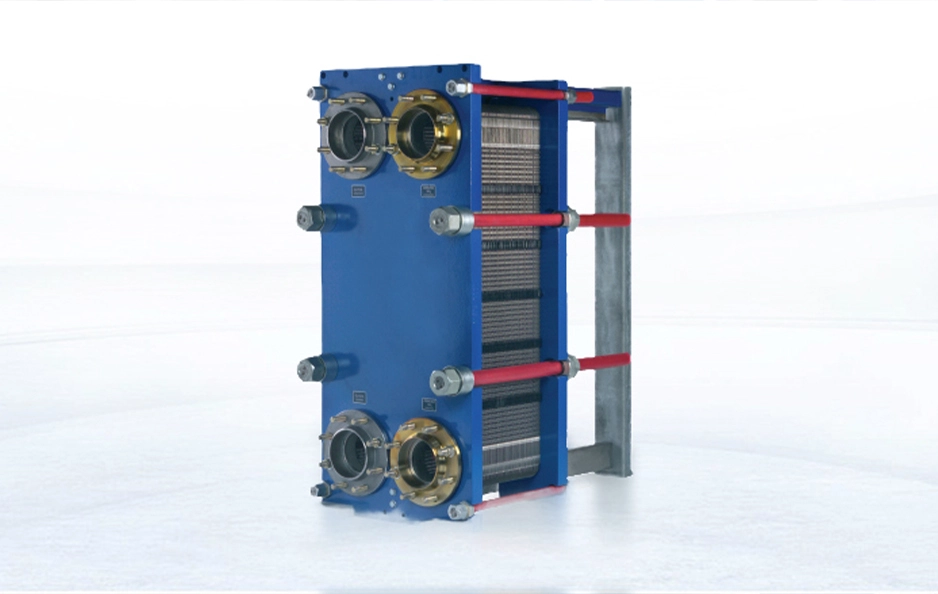
If you think internal leakage is happening, Grano suggests a step-by-step way to find and fix it: This method saves time and money by targeting the real issue right away.
Step 1: Immediate Diagnostics
Water Quality Testing: Look for shifts in chloride amounts or pH in the backup line. These tests give quick clues without taking things apart.
Pressure Monitoring: Watch if the pressure in the low side rises to match the high side’s level. Tools like gauges help spot this early on.
Step 2: Accurate Inspection (PT Testing)
After you take the unit apart, just looking is not enough to find tiny cracks. We use Penetrant Testing (PT) or light-pass methods to spot holed plates. These techniques reveal issues that the eye misses, making repairs more precise.
Step 3: Professional Maintenance and Upgrading
Precise Replacement: Swap just the broken plates or update the full pack to tougher stuff like Titanium (Titan) or Hastelloy if rust is the main culprit. Upgrading like this prevents repeats and boosts overall reliability.
Chemical Cleaning: We stick to a clear 6-step chemical removal process (Rinsing, Acid Soaking, Dynamic Circulation, Alkaline Neutralization, Water Washing, and Recording) to clean plates without harm from force . Each step builds on the last to restore the surfaces safely.
Software-Driven Design: With our own Heat Exchanger Structure Design Software V1.0, we check again if your plate setup fits your real work loads. This tool helps customize solutions that last.
5. Global Case Studies: Proving Reliability
Grano’s skills in fixing cross-contamination and performance problems show up around the world: These real examples highlight how our approaches work in different places and conditions.
Mumbai Industrial Park, India (2019): We supplied strong plates and hot gaskets for several cooling units. These pieces have run steady for years in India’s varied weather, which led to ongoing work with more than ten extra units . The park’s managers noted big improvements in uptime and lower repair needs.
Food Processing Plant, Italy: A customer needed matching parts for their juice cleaning setup. We gave exact-fit Alfa Laval plates and safe-for-food gaskets, making sure they matched perfectly and had no mixing risks while cutting costs a lot . The plant saw better product quality right after the change.
Seawater Desalination Plant, Saudi Arabia: Dealing with bad rust and seal breakdowns, Grano sent experts to clean on site and swap normal plates for Titanium alloys, bringing back the cooling system’s work in a salty setting . The upgrades stopped leaks and improved flow for months without issues.
FAQ
Q: How can I tell if my plate heat exchanger is leaking internally without opening it?
A: The usual signs are a “pressure match” where levels in both lines start to balance, or shifts in water traits (like oil showing up in water or test markers in wrong spots). Watching the pressure loss is also important; a slow rise in loss might mean buildup, which can lead to holes later. Regular monitoring catches these early and saves downtime.
Q: Can a perforated plate be repaired with welding?
A: In most cases, no. Since heat exchanger plates are very thin (0.4mm-0.6mm), welding adds new weak spots and ruins the plate’s build and heat flow. The best and cheapest fix is to check the plate group, find the bad ones, and swap them with new, matching Grano plates. This keeps everything working like new without risks.
Q: Why does Grano recommend Titanium plates for certain applications instead of Stainless Steel?
A: Stainless steel is handy, but it breaks down fast with pitting in high-chloride spots like seawater. Titanium gives much better protection against rust, wiping out the quiet danger of internal leakage in hard industrial or sea settings, which guards your full output chain. Switching to it often pays off in longer life and fewer headaches.


