



Several hatchery tanks may depend on one intake line. Between the sea and those tanks are screens, pumps and perhaps a storage vessel. If an exchanger is installed without tracing that route, taking it out for cleaning might interrupt all the tanks. Sand and biological material arrive from the intake; a separate utility loop carries heating or cooling fluid. Trace both routes before comparing the footprint of two plate models.
The FAO’s hatchery manual discusses heat exchangers alongside seawater treatment. It also makes clear why the rest of the intake matters. The species and life stage set the target temperature; upstream treatment changes the solids the plates will see. A number borrowed from another farm gives the supplier no reliable duty.
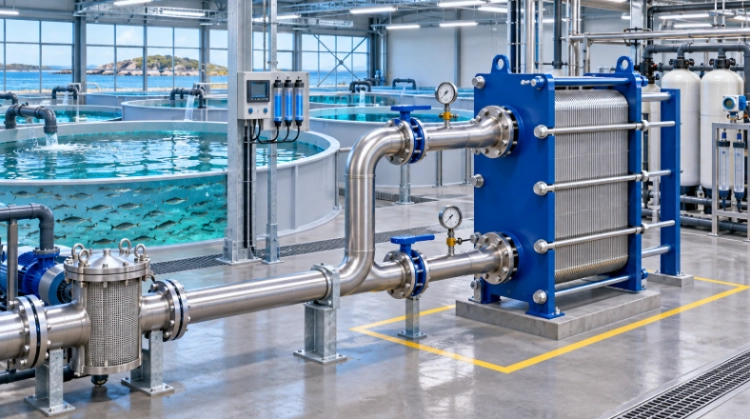
At a glance
The intake location changes the job. Raw seawater brings one solids load; a branch after treatment brings another. The pack’s titanium plates are only part of the wetted path, and the tanks still need temperature control when that pack is isolated for cleaning. Draw those three things on one sheet before asking for a model.
|
Intake location |
Solids question |
Service question |
|
Raw seawater |
What passes the intake screen in a bad season? |
Can the pack be opened without interrupting every tank? |
|
Filtered branch |
What reaches the plates after treatment? |
Can the branch be isolated while circulation continues? |
|
Either location |
What can cross if a plate fails? |
How will operators detect and isolate a leak? |
Which water actually passes through the plates?
The choice may be between placing the exchanger on raw intake and placing it on a treated recirculation branch. Draw both if the location is still open. Label the utility fluid and place each filter, pump, tank, bypass and probe on the sheet. A pack upstream of filtration receives whatever passes the intake screen; the filtered branch usually brings a different cleaning load. Calling both “seawater service” on an RFQ erases a useful distinction.
The control probe belongs where it represents water going into the tanks. A comfortable number at a mixing valve can hide a warmer branch farther along. Walk through tomorrow’s cleaning outage with the operator. Will water continue circulating while the pack is isolated? What would the tank temperature do after an hour? The FAO discussion of recirculating systems treats temperature as part of stable water quality. Flow through a bypass answers only the circulation question.
A plate transfers heat. Water leaving it is no cleaner than water entering it; pathogens and dissolved contaminants still need their own treatment steps. Consider a pinhole while the seawater pump is off but the utility pump continues. Could utility fluid reach a culture tank before anyone notices? Reverse the pump states and ask again. The hatchery’s water-quality team can set pressure, monitoring and separation requirements from those two cases.
Titanium plates still need compatible neighbors
Titanium has a strong seawater service record, described by the International Titanium Association. For this installation, it merits serious plate consideration. But a titanium plate can sit beside a nozzle, gasket or pressure tap made of something else. That small part may dictate the first leak or replacement job.
Attach the site water analysis to the drawing: salinity or chloride range, pH, temperature, oxidants and the cleaning chemicals in store. Note how long the equipment may sit full without circulation. Winter intake, summer intake and a filled unit during an outage deserve separate attention. “Normal seawater” cannot carry those facts into the material review.
Check the whole wetted path
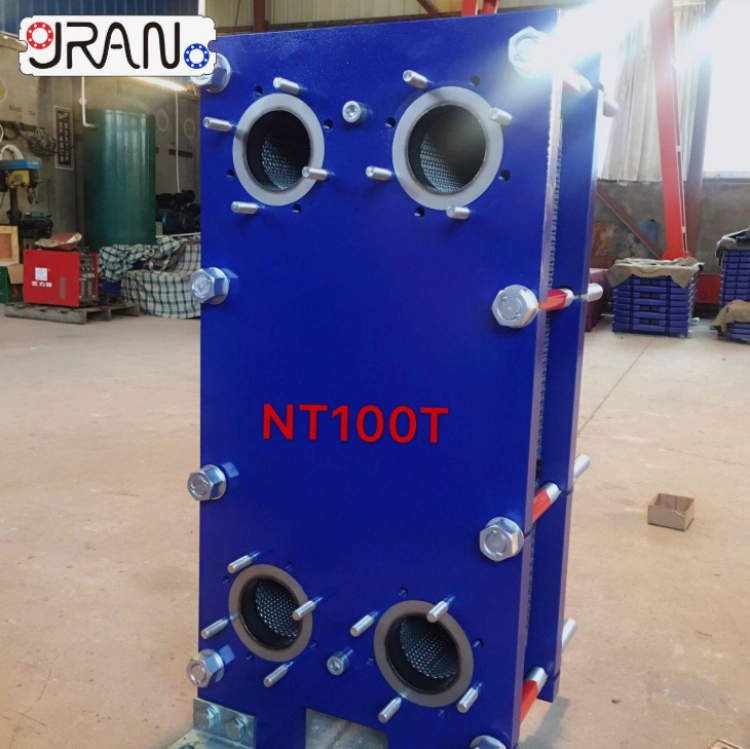
Grano lists titanium-alloy plates among the material options in its English product information. In its detachable plate exchanger range, the corrugated plates sit in a clamped frame. Sealing pads form the separate seawater and utility paths. If a spring intake brings biological deposits that winter water did not, staff can open the pack and see what accumulated. Put that service access beside heat-transfer area when comparing quotes.
The Grano assembly holds the plates and sealing pads between clamping plates with bolts. Its catalog also includes replacement plates and gaskets. Keep the precise plate pattern, port map, seal grade, plate order and closing dimension in the service file. A gasket that only looks similar may fit the groove poorly; the wash chemical can create another problem. Put that cleaner’s name in the material review beside the seawater analysis.
The seawater path continues past the frame. At each nozzle, strainer, instrument and short pipe spool, note the material and whether it will be submerged, splashed or simply exposed to salty air. Leave room to slide out the plates without first dismantling those pipes. None of this raises the published heat-transfer area. Each item matters on the morning the hatchery has to clean the pack.
Make the intake manageable
Open the intake basket during a difficult season. If it holds sand, shell fragments or algae, some of that load may reach the plate channels whenever the screen misses a cycle. Give the supplier the upstream filter detail and ask for the proposed channel gap. Pressure taps across the screen tell staff when it is loading up. A clean-water rating alone cannot stand in for that seasonal operating condition.
After startup, record separate pressure losses for the clean screen and new pack. A later rise on the intake side points toward the filter. If tank temperatures drift while both losses hold steady, the crew can check utility flow and temperature before opening plates. Set investigation triggers from those readings and the tanks’ allowed temperature range. A maintenance interval copied from ship machinery says little about this intake.
Rate the unit across a season and a quiet shift
A full row of tanks on a hot day is one operating point. A few tanks on a cool morning are another. Show the supplier both flows and inlet temperatures for each, plus the outlet range the animals need. The chiller or heater supply may shift during the year; include that range too. The pack has to meet the high load, while its valve and sensor still need to hold temperature when only a few tanks are running.
How much head remains after the intake pump pushes through the filters and onward to the tanks? That figure limits what the plate pack may consume. The utility pump has a separate allowance. A close outlet approach may call for more area; ask which seasonal case sets that requirement and what pressure it costs. Then draw the proposed frame at scale with its opening clearance and screen access. “Compact” loses its appeal if the service envelope will not fit.
Try the control valve with just a few tanks calling for water. Does the outlet swing when another tank valve opens? Does startup send a cold slug toward the culture line? Record bypass position during these tests; a mixed outlet temperature by itself may conceal what the exchanger did.
Leave the crew a service plan
Commission under a known duty and keep all four terminal temperatures, both flows and both pressure drops. Store the material schedule, plate drawing, gasket ID and cleaning instructions with that record. Before a chemical clean, check both plate and seal compatibility and make sure rinse residues cannot reach the tanks. When the pack is closed again, the saved plate order and clamping dimension become working instructions.
If utility fluid may have crossed into culture water, use the site’s water-quality isolation procedure. Ordinary loss of duty calls for a calmer sequence: inspect the intake filter, compare utility flow and temperature, then decide whether the plate pack needs opening. This can spare the crew an unnecessary teardown.
Send Grano the water analysis and a sketch with filtration, seasonal temperatures, pump-head budgets and the space available to move the frame plate. Ask for the grade of titanium in the quoted pack and the materials of every other wetted part. The answer should include the cleaning route staff can actually use.
FAQ
Will titanium plates stop the channels from fouling?
No. Corrosion resistance does not remove sand or biological matter. Filtration and access for cleaning still matter.
Can one exchanger serve all of a hatchery’s tanks?
Possibly. First check the flow and temperature range, the consequence of a single outage and how water will circulate during maintenance.


