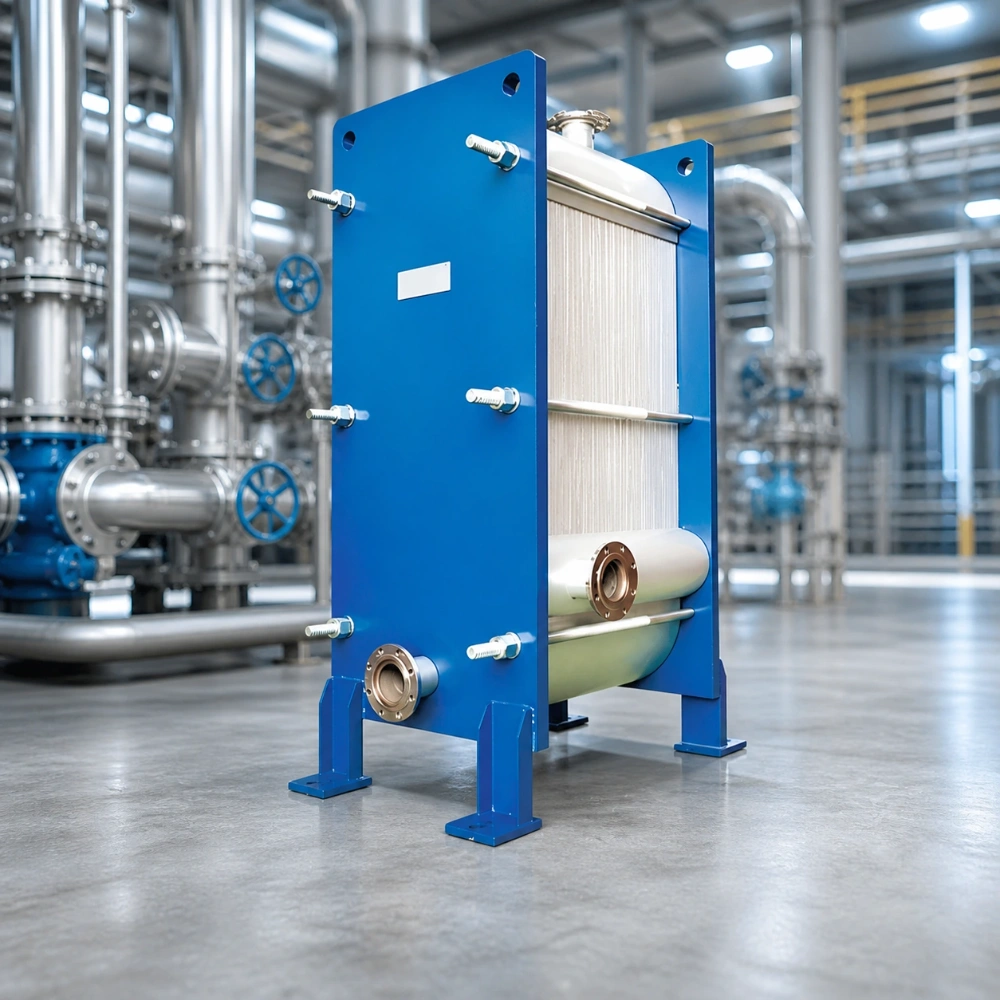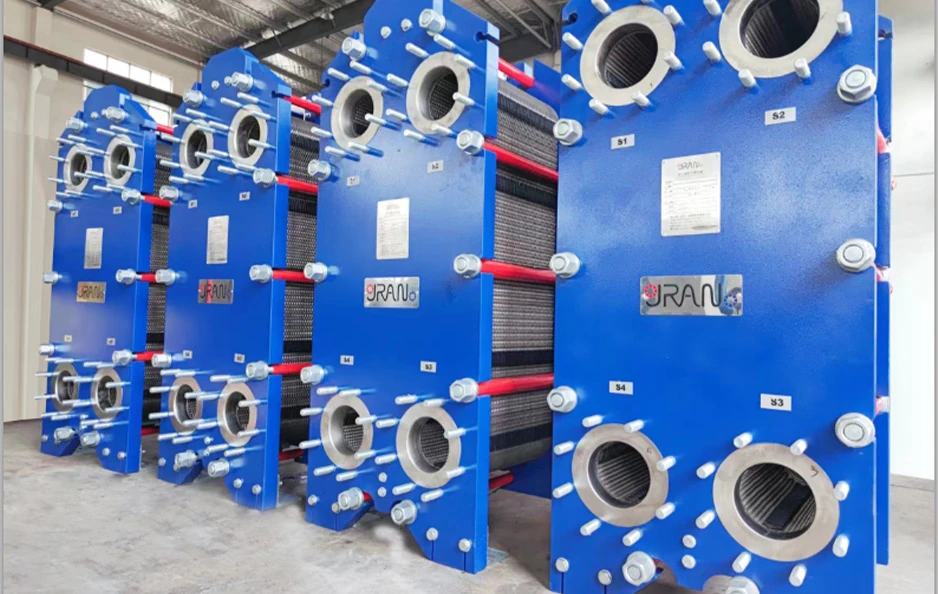

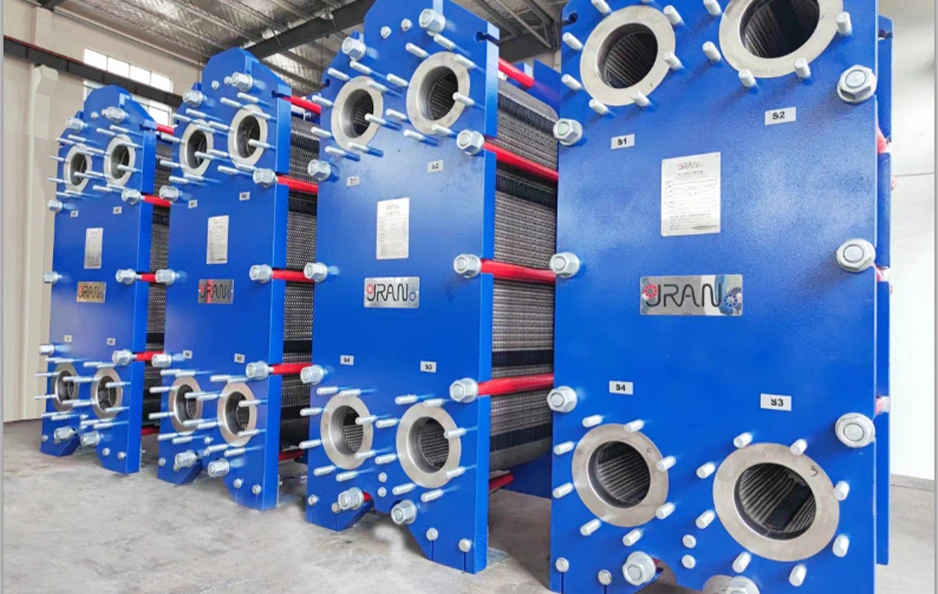
A heat exchanger that starts leaking, loses duty, or develops an unusual pressure drop creates an expensive question: should the team repair it, or is replacement the safer choice? The answer is rarely determined by operating age alone. A sound heat exchanger repair decision combines the failure mechanism, the condition of the heat-transfer surfaces, the frame and connections, the availability of matching parts, the required test work, and the consequence of another failure.
This guide uses a practical inspection sequence for industrial equipment. It is written for engineers, maintenance managers, and purchasing teams who need a defensible decision before ordering parts or a new unit. A gasketed plate heat exchanger is often repairable because its plates and gaskets can be accessed and replaced, but that does not mean every leaking unit should be rebuilt.
Start With the Failure, Not the Age
Begin by recording what changed and when. A sudden external leak after a pressure event points to a different problem than a slow loss of capacity caused by fouling. A rising pressure drop may indicate blocked passages, an incorrect flow condition, or a damaged plate. Repeated gasket leaks after a previous overhaul may point to assembly, compression, plate order, or material-compatibility problems rather than a simple gasket failure.
- Where is the leak? Check the external gasket line, port area, frame side, connections, and any sign of cross-contamination between circuits.
- What changed first? Record duty, inlet and outlet temperatures, flow, pressure drop, and the timing of the symptom.
- Was there an event? Note freezing, water hammer, overpressure, chemical exposure, vibration, or an unusually fast start-up.
- Has the same problem returned? A recurring fault deserves a root-cause review before another set of gaskets is ordered.
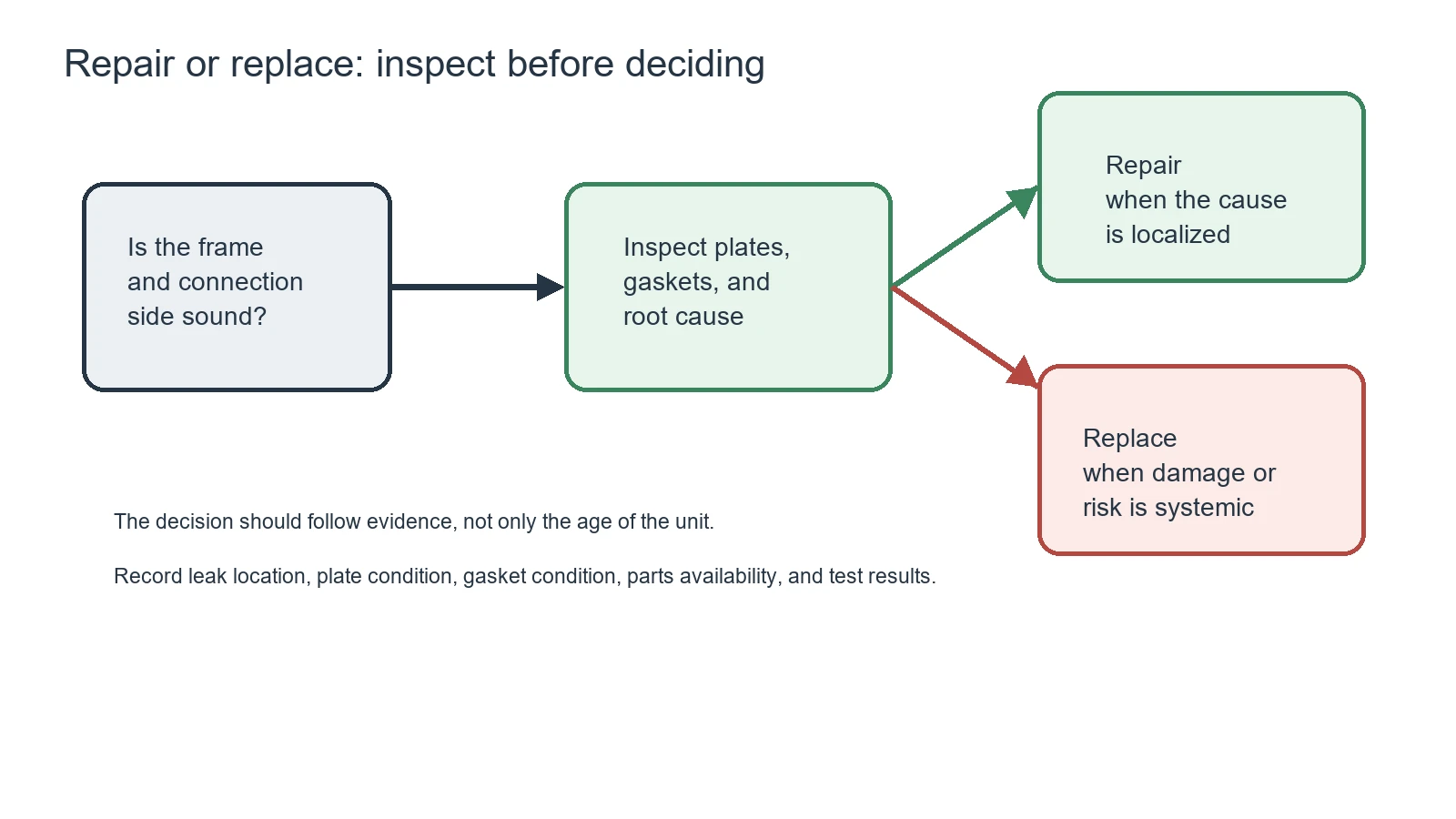
When Repair Is Usually the Better First Step
Repair is often sensible when the failure is localized and the load-bearing parts remain within the manufacturer’s limits. For a gasketed unit, examples can include aged or damaged gaskets, deposits that have reduced the open flow area, a limited number of plates with verified damage, or a connection issue that can be corrected without changing the design duty.
The word repair should still mean more than replacing the visibly wet gasket. The team should identify why the gasket failed, verify the gasket compound and profile, inspect the plate groove and sealing surface, and check that the plate pack has been assembled in the correct order. If the original service conditions have changed, the repair should also confirm that the existing heat exchanger is still suitable for the new temperatures, fluids, and pressure drop.
When Replacement Becomes the Safer Choice
Replacement becomes more attractive when the damage is widespread, the root cause cannot be controlled, or the required repair would leave too little confidence in the next operating cycle. Deep pitting, cracks, severe erosion, permanent plate deformation, a damaged frame, obsolete parts, or repeated failures after correct maintenance are warning signs.
A replacement decision should also consider the cost of an unplanned shutdown. A low purchase price is not a good result if the new unit cannot meet the existing connection arrangement, pressure rating, thermal duty, or material requirements. Conversely, a complete new unit may be unnecessary when a documented plate and gasket rebuild can restore the equipment safely.
Inspect the Plates and Gaskets Separately
Plate condition
After isolation, depressurization, draining, and safe opening, clean enough of the plate surface to see the metal and sealing zones. Look for pinholes, cracks, deep corrosion, local thinning, dents, collapsed corrugations, and marks where plates have been rubbing. Deposits can hide damage, so a visual decision made before cleaning is incomplete.
Gasket condition
Check for hardening, swelling, cuts, flattening, loss of elasticity, chemical attack, and separation from the groove. Compare the proposed replacement with the existing profile and the equipment records. A gasket compound that worked in water service may not be appropriate for oil, cleaning chemicals, high temperature, or a different process fluid. Compatibility must be confirmed against the actual media and the supplier’s technical data.
Check the Frame, Ports, and Compression Range
A rebuild is not complete if the plates and gaskets are sound but the frame cannot hold the plate pack correctly. Inspect the fixed and movable pressure plates, carrying and guide bars, tightening bolts, nuts, washers, nozzles, linings, and connection faces. Look for distortion, corrosion, damaged threads, uneven tightening, and signs that the plate pack has been compressed beyond the permitted dimension.
Do not assume that a familiar plate count or tightening dimension is universal. Use the unit’s drawing, nameplate, assembly record, or manufacturer instructions. If those records are missing, collect clear photographs, plate markings, gasket details, connection dimensions, fluid information, design pressure, and temperature before asking for replacement parts or a quotation.
Compare Repair and Replacement on the Same Basis
|
Decision factor |
Repair or rebuild |
New or replacement unit |
|
Failure scope |
Localized and understood |
Widespread, recurring, or uncertain |
|
Existing frame |
Straight, serviceable, and within limits |
Damaged, obsolete, or unsuitable |
|
Parts |
Matching plates and gaskets are available |
Parts are unavailable or configuration must change |
|
Process |
Fluid, duty, and pressure remain compatible |
Service conditions or connection needs have changed |
|
Risk |
Can be verified by inspection and testing |
Repair would leave unacceptable uncertainty |
The table is a decision aid, not a substitute for an engineering assessment. In a critical service, the cost of lost production, contamination, or a safety event may justify replacement even when a repair is technically possible.
Do Not Skip Cleaning and Root-Cause Work
A new gasket cannot compensate for a blocked passage, wrong flow direction, untreated water chemistry, excessive vibration, or a plate that has been installed in the wrong sequence. Before closing the unit, remove deposits using a method that is compatible with the plate alloy and gasket material. Avoid tools or cleaning conditions that can scratch sealing areas or damage elastomers.
The cause should be recorded in the maintenance file. Useful records include the removed gasket condition, plate photographs, deposit description, cleaning method, replaced components, plate-pack dimension, tightening sequence, and test result. This history makes the next repair faster and helps purchasing avoid an incorrect part number.
Verify the Repaired Unit Before Return to Service
Before reconnecting the unit, confirm that the flow passages, seals, drains, vents, and connections are ready. Tighten the frame according to the manufacturer’s instructions and bring the equipment up gradually. Watch for external leakage, abnormal pressure drop, temperature instability, and cross-contamination during the first operating period.
A pressure or leakage test after plate or gasket work should be planned and performed by qualified or authorized personnel using the equipment instructions and site safety procedure. Do not copy a pressure value from another model or treat a successful visual check as a complete pressure test.
What Information to Send When You Need a Decision
A supplier or service team can make a more reliable recommendation when the request contains more than a product name. For a repair or replacement review, provide:
- The nameplate, model, serial information, plate markings, and connection dimensions.
- Fluid names, concentrations, temperatures, flow rates, design pressure, and allowable pressure drop.
- Photographs of the frame, plate pack, gaskets, ports, leakage area, and deposits.
- The failure history, previous repairs, cleaning chemicals, and any recent process change.
- The required delivery timing and whether the priority is parts, a rebuild, or a complete replacement.
ग्रानो का gasketed plate heat exchanger information explains the removable plate-and-gasket construction used for inspection and cleaning. Its सेवा टीम can also be asked to clarify whether the requested support is cleaning, parts supply, repair guidance, installation guidance, or a new-equipment quotation. The final recommendation should still be based on the unit records and the confirmed operating conditions.
A Short Decision Checklist
- The failure mechanism is described, not just the visible symptom.
- The plates, gaskets, frame, ports, and tightening system have been inspected.
- The replacement materials match the actual fluid, temperature, and cleaning method.
- The existing connections, duty, pressure, and pressure drop remain suitable.
- Parts availability and lead time have been checked against the shutdown window.
- The repaired or replacement unit has a documented inspection and test plan.
पूछे जाने वाले प्रश्न
Q1: Is a leaking heat exchanger always ready for replacement?
No. A leak can come from a gasket, plate, connection, assembly problem, or operating event. The location and cause should be established before choosing a repair or replacement.
Q2: Can I replace only the gaskets?
Sometimes. The plates, grooves, frame, and operating conditions must be checked first. New gaskets will not solve a cracked or deeply corroded plate, a damaged frame, or an unresolved pressure event.
Q3: How do I know whether the plates can be reused?
Clean them enough to inspect the metal and sealing areas, then check for cracks, pinholes, deep corrosion, thinning, deformation, and fretting. Use the manufacturer’s acceptance criteria rather than appearance alone.
Q4: What should happen after a gasketed plate heat exchanger is rebuilt?
The unit should be reassembled with the correct plate order and gasket fit, tightened according to the instructions, inspected for leaks, and tested by qualified personnel before a controlled return to service.
Q5: What if the original nameplate or drawings are missing?
Collect photographs, dimensions, plate and gasket markings, fluid data, operating conditions, and connection details. A supplier can use this information to verify the configuration before quoting parts or a replacement.
निष्कर्ष
The right choice between repair and replacement comes from evidence. Repair is reasonable when the failure is localized, the frame and plates remain serviceable, matching parts are available, and the result can be inspected and tested. Replacement is safer when damage is widespread, parts or records are unavailable, process conditions have changed, or a rebuilt unit would leave too much uncertainty. A documented heat exchanger repair gives the next operating cycle a clearer technical basis.