



In marine engineering, the Plate Heat Exchanger (PHE) has superseded shell-and-tube designs for most cooling applications due to its high heat transfer coefficients (U-values) and compact footprint. However, the operational parameters of marine environments—specifically high-chloride seawater coolants, constant mechanical vibration, and spatial constraints—impose rigorous demands on material selection and maintenance regimes.
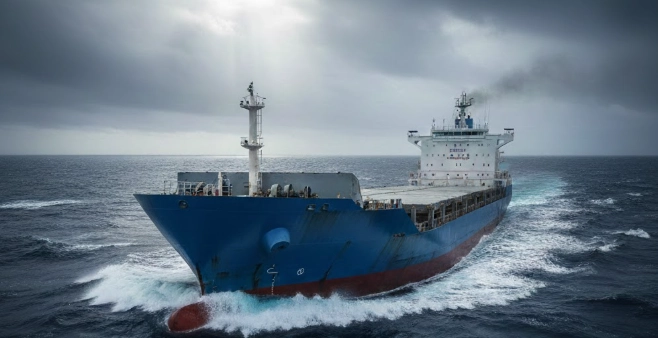
For reliability engineers and marine superintendents, ensuring the longevity of a PHE is not merely a matter of installation but requires adherence to strict tribological and thermodynamic maintenance standards. This technical overview outlines the primary failure modes and mitigation strategies for غرانو marine heat exchangers.
1. The Marine Operational Envelope
Unlike land-based static installations, marine cooling systems operate under dynamic stresses that accelerate component degradation.
- Electrochemical Corrosion:Seawater acts as a highly conductive electrolyte. Inadequate material selection leads to rapid pitting and crevice corrosion, particularly in stagnant zones or under deposits.
- Mechanical Fatigue:Hull vibration and engine harmonics transmit dynamic loads to the PHE frame. This can lead to the loosening of tensioning bolts and deviation from the critical “A-Dimension” (plate pack compression length).
- Volumetric Constraints:The necessity for high thermal density in engine rooms requires مبدل حرارة لوحة (PHE) designs that maximize the effective heat transfer area (A_eff) relative to the physical volume.
2. Primary Marine Applications
Grano PHE units are typically integrated into the following sub-systems:
- Jacket Water Cooling:Dissipation of high-grade heat from main engines and gensets.
- Central Cooling Systems:Interfacing fresh water loops (LT/HT circuits) with raw seawater.
- Lube Oil Cooling:Viscosity stabilization for main propulsion and auxiliary machinery.
3. Failure Modes and Analysis
Field data and tribological studies indicate three dominant failure modes in marine PHEs:
A. Biofouling and Particulate Deposition
Marine growth (barnacles, mussels) and sedimentation (silt) reduce the free channel volume. While engineering safety margins are calculated during sizing, biofouling can reduce the overall heat transfer coefficient by up to 50% within the first year of operation if untreated.
Consequence: Increased pressure drop (ΔP) across the unit and reduced thermal efficiency.
B. Erosion-Corrosion and Gasket Degradation
High fluid velocities, particularly when carrying suspended solids, cause erosion-corrosion on plate surfaces. Furthermore, varying seawater chemistry and temperature cycling accelerate the aging (hardening/embrittlement) of elastomeric gaskets.
Consequence: Cross-contamination of fluids or external leakage.
C. Structural Loosening due to Vibration
Constant vibration leads to bolt relaxation. If the tightening torque decreases, the plate pack expands beyond the specified A-dimension, compromising the gasket seal compression.
4. Material Selection: Metallurgy and Lifecycle Cost
The selection of plate material is the single most critical variable in preventing catastrophic failure.
|
المعلمة |
Stainless Steel (316L) |
Titanium (Grano Standard) |
|
Pitting Resistance Equivalent Number (PREN) |
Moderate (Susceptible to crevice corrosion in warm seawater) |
Excellent (Virtually immune to seawater corrosion) |
|
Max Flow Velocity limits |
~2.5 m/s |
> 25 m/s (High erosion resistance) |
|
Expected Service Life |
3–5 Years |
20+ Years |
|
Maintenance Profile |
High (Frequent replacement) |
Low (Focus on gaskets only) |
ملاحظة تقنية: While Titanium presents a higher CAPEX, the elimination of corrosion-related failure results in a significantly lower OPEX over the vessel’s lifecycle.
5. Maintenance Protocols
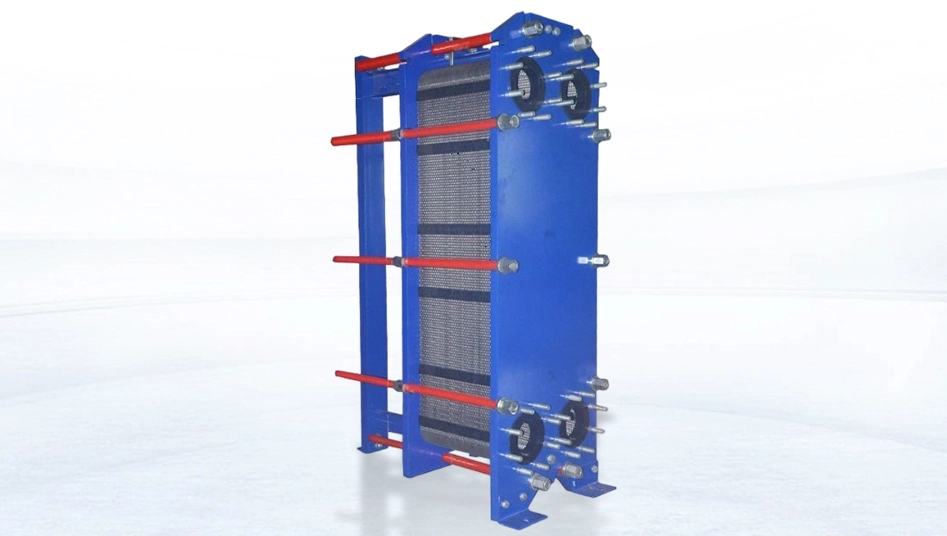
To maintain design point performance, the following maintenance protocols must be observed:
Filtration and Pre-treatment
Effective strainers and filters on the seawater inlet are mandatory. Monitoring the differential pressure (ΔP) serves as the primary indicator for determining the need for back-flushing or cleaning.
Adherence to A-Dimension Specifications
Tightening of the plate pack must be done to the specific الأبعاد (the distance between the pressure plate and the frame plate), not to a specific torque value.
Procedure: Measurements should be taken at multiple points around the frame to ensure parallelism. Guide bars should be lubricated with high-grade grease to facilitate plate movement during disassembly.
Fluid Velocity Management
Flow rates must be balanced. Sufficient velocity is required to induce turbulent flow (minimizing fouling/scaling), but excessive velocity risks erosion, particularly in titanium units where wall shear stress is less of a concern than in steel, but pump energy efficiency is still a factor.
6. Case Study: Retrofit of 5,000 TEU Container Vessel
سيناريو: Main Engine High-Temperature alarm activation.
Diagnosis: Existing PHE units exhibited severe macro-fouling and scaling. Flow rate had degraded from 1,500 GPM to 400 GPM due to channel blockage.
Intervention: Retrofit with Grano Titanium plates utilizing a high-theta “Chocolate” corrugation pattern.
Technical Outcome: The specific corrugation pattern induced higher wall shear stress, reducing fouling adhesion. Heat transfer efficiency quadrupled. الصيانة intervals for Clean-in-Place (CIP) or mechanical cleaning were extended from 6 months to 24 months.
أسئلة متكررة
Q: What is the recommended interval for Clean-in-Place (CIP) procedures?
رصد درجات حرارة المدخل يكتشف المشاكل في وقت مبكر CIP intervals should be condition-based rather than calendar-based. Cleaning-in-place (CIP) should be initiated when the pressure drop (ΔP) increases by 10–15 % or the approach temperature difference (ΔT) deviates by 2–5 °C from the established baseline values. In marine applications, this condition is typically reached every 6–12 months.
Q: What are the chemical compatibility constraints for cleaning Titanium plates?
رصد درجات حرارة المدخل يكتشف المشاكل في وقت مبكر Titanium is highly resistant to chlorides but susceptible to hydrogen embrittlement. Never use Hydrofluoric Acid (HF). For calcium carbonate scaling and marine growth, a 5% solution of Phosphoric Acid or Citric Acid is recommended. Ensure the cleaning agent is compatible with the gasket material (NBR/EPDM).
Q: The unit is leaking, but the bolts are torqued tight. What is the cause?
رصد درجات حرارة المدخل يكتشف المشاكل في وقت مبكر Over-tightening is a common error. If the gaskets have suffered compression set (lost elasticity due to thermal aging), tightening beyond the minimum A-dimension will not seal the unit and may permanently deform the metal plates. If the A-dimension is correct and leakage persists, the gasket operational life has been exceeded and replacement is required.


