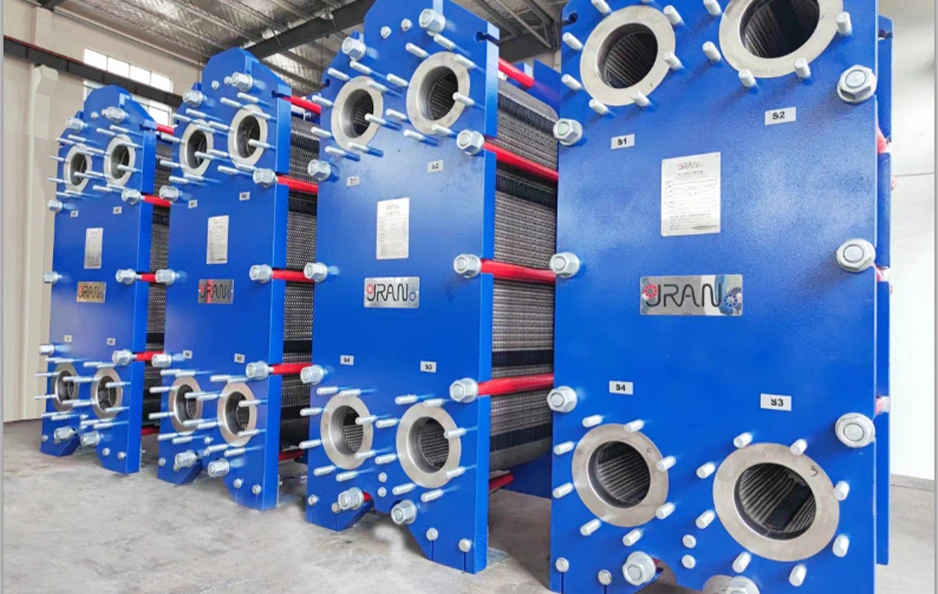

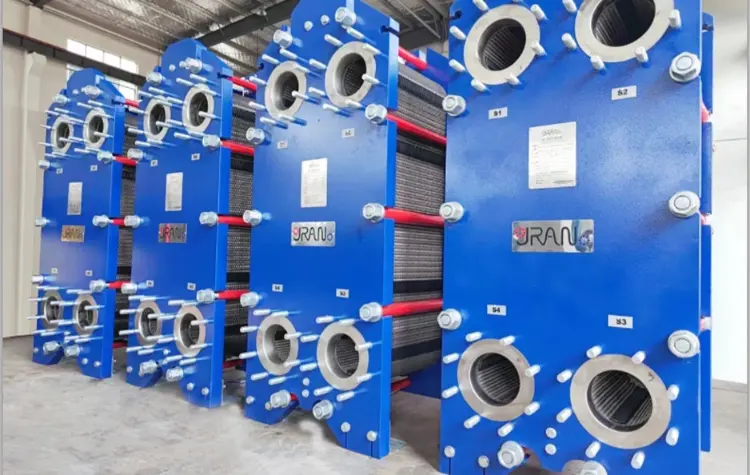
The cost of a plate and frame heat exchanger is not determined by plate count alone. Thermal duty, temperature approach, pressure drop, plate alloy, gasket material, design pressure, connection size, frame construction, inspection, documentation, packaging, and service scope all change the quote. Two units that appear similar in a product photo can therefore carry different prices for sound engineering reasons.
For buyers, the practical goal is not to find one universal list price. It is to make every supplier price the same design basis and then separate essential requirements from optional features. This article explains the main cost drivers and shows how to compare quotations without accepting a cheaper unit that cannot meet the process duty or maintenance plan.
Start With the Thermal Duty
Every quotation begins with what the exchanger must do. The supplier needs both fluids, flow rates, inlet temperatures, required outlet temperatures or heat duty, fluid properties, operating pressure, allowable pressure drop, and fouling information. If any of these inputs are uncertain, the price should be treated as budgetary.
The temperature approach is especially important. A smaller difference between the hot-side outlet and cold-side inlet usually demands more effective heat-transfer area or a different plate arrangement. More area can mean more plates, a larger plate model, or multiple sections. The least expensive solution cannot be selected responsibly until the required approach and allowable pressure drop are considered together.
Flow rate influences both port size and channel velocity. Higher flow may require larger connections, more parallel channels, a wider frame, or a different plate size. Low flow can also create a design problem if it produces weak turbulence and poor control. The supplier should optimize the complete duty instead of multiplying a nominal price per plate.
Plate Count Is a Result, Not the First Input
Plate count matters because every added plate uses metal, gasket length, pressing capacity, assembly time, and frame space. Yet it is the result of several earlier decisions. Plate size, corrugation pattern, channel gap, pass arrangement, fluid properties, fouling allowance, pressure drop, and thermal margin all influence the final number.
A quote should identify the selected plate model, effective heat-transfer area, plate count, number of thermal plates, pass arrangement, channel configuration, and design margin. Ask whether the frame can accept additional plates later and, if so, how many. Paying for a frame with sensible expansion capacity can be useful when the process is expected to grow; paying for unused frame length without a defined future duty may not be.
Grano’s gasketed plate exchanger page describes the core construction: corrugated plates are held between fixed and movable frame plates, with gaskets directing the two fluids through alternating channels. Those same components create the main price structure, but their specification matters more than their names.
Plate Material Can Change the Quote Sharply
Plate alloy is often one of the largest cost differences between apparently similar proposals. Stainless steel may be suitable for many treated-water and process duties, while chloride exposure, aggressive chemicals, sanitation requirements, or higher corrosion risk may lead to titanium or another alloy. The correct choice depends on concentration, temperature, pH, oxidizing conditions, contaminants, cleaning chemistry, and velocity.
Do not accept “stainless steel plates” as a complete description. Request the exact grade, nominal thickness, pressing allowance, surface requirement, and material certificate. When a supplier proposes an alternative alloy, ask for the corrosion basis and any limits on operating or cleaning conditions.
Plate thickness also affects cost, but thicker is not automatically better. Forming quality, corrugation geometry, design pressure, fatigue exposure, alloy strength, and the plate manufacturer’s validated design all matter. The RFQ should require the offered thickness and pressure rating to be documented rather than evaluated from thickness alone.
Gasket Material Affects Price and Maintenance
Every gasket must seal the plate perimeter and ports while tolerating the fluid, temperature, pressure cycles, cleaning solution, and expected service life. Elastomers are not interchangeable. A lower-cost gasket that swells, hardens, cracks, or loses compression in the actual medium can make the total operating cost much higher.
Ask the supplier to state the exact gasket compound, fixing method, color coding if used, temperature limits for the offered service, chemical restrictions, storage requirements, and replacement availability. Clip-on, hook-on, and glued designs also change assembly labor and field replacement practice.
Gasket price should be evaluated together with the maintenance plan. For a unit that opens frequently, installation time and the risk of damaging a gasket during cleaning can matter as much as the initial set price. For a clean, sealed duty where opening is not needed, compare brazed plate options rather than assuming a gasketed frame is always the lowest-cost architecture.
Pressure and Temperature Change the Frame
Design pressure and temperature affect plate selection, gasket choice, frame thickness, tightening system, port lining, connections, and testing. A unit built for mild water service is not commercially comparable to one designed for higher pressure, thermal cycling, corrosive fluid, or a strict pressure-vessel specification.
State normal and design conditions separately. Include startup, shutdown, cleaning, steam-out, pump shutoff, static head, blocked-in pressure, and any case where one side is pressurized while the other is empty. If the exchanger may experience vacuum, water hammer, or rapid valve movement, disclose it before the supplier fixes the frame and plate arrangement.
Higher design limits do not create value by themselves. Buying unnecessary pressure or temperature capability increases material and fabrication cost. Buying too little creates a safety and reliability risk. The right quote uses the project design basis and identifies the conditions that set each component limit.
Connection Size and Port Protection Matter
Large nozzles, special flanges, exotic linings, studs, companion flanges, and nonstandard orientations add cost. So do multi-pass arrangements that require connections on both the fixed and movable frame plates. Provide the piping standard, size, rating, facing, material, orientation, and allowable loads for every port.
Check the velocity through the ports as well as the channels. A small connection may reduce the purchase price but consume pressure drop or increase erosion risk. In dirty service, strainers, spool pieces, flushing points, drains, and chemical-cleaning connections may cost more initially while reducing later downtime.
If piping loads are significant, ask for allowable nozzle loads and frame anchoring details. The exchanger should not become the restraint point for an inadequately supported piping system.
Plate Pattern and Pass Arrangement Influence Both Sides of the Cost Equation
Corrugation angle and plate pattern affect heat transfer and pressure drop. A pattern that creates stronger turbulence may reduce the required area but use more pump head. A lower-pressure-drop pattern may need more area. Mixed patterns can balance the two, provided the supplier has validated performance data for the selected plate family.
Multi-pass designs may help reach a target velocity or temperature program, but they can add piping complexity and may put connections on the movable plate, which affects maintenance access. The quote should show the pass arrangement and explain why it is needed.
Do not compare two offers only by area. Compare duty, terminal temperatures, calculated pressure drop, channel velocities, fouling assumptions, thermal margin, plate pattern, and pumping consequence. A cheaper exchanger that transfers the pump cost to the operating budget is not necessarily the lower-cost choice.
Fouling Risk Changes the Economic Design
Clean laboratory fluid data rarely describes a working plant for long. Hardness, suspended solids, fibers, oils, biological activity, crystallization, and corrosion products can block narrow channels or coat heat-transfer surfaces. The design response may involve a wider gap, different velocity, filtration, easier opening, spare plates, or a cleaning connection.

State the expected deposit and planned cleaning method. If the unit will be opened, include safe clearance to move the pressure plate and remove individual plates. If cleaning-in-place is planned, define the cleaning fluid, temperature, concentration, circulation direction, connection points, and material compatibility. A general statement that the unit is “easy to clean” does not establish the actual work scope.
Grano’s published service support includes plate-exchanger cleaning as well as packaging and logistics inspection. Request a separate price for any startup spares, replacement gaskets, cleaning work, installation guidance, or field support so the base equipment cost remains transparent.
Frame Construction and Finish Are Not Cosmetic
The fixed frame plate, movable pressure plate, carrying bar, guiding bar, support column, tightening bolts, feet, and protective finish must hold the plate pack aligned and compressed. Frame material and coating should fit indoor humidity, outdoor weather, washdown, coastal salt, chemical exposure, and the expected service environment.
Ask for the frame material, plate thickness or structural design basis, coating system, surface preparation, color, fastener treatment, port lining, nameplate material, and any stainless or coated contact surfaces. For food, pharmaceutical, or washdown areas, define cleanability and finish expectations rather than relying on a standard industrial paint system.
Protective shrouds, insulation, drip trays, guards, lifting devices, and stainless feet may be optional. Price them separately if the project has not decided, but do not remove safety or environmental requirements merely to make the base number look lower.
Testing and Documentation Add Real Work
A quotation that includes material traceability, pressure testing, inspection records, and a complete data package should not be compared directly with one that only includes routine factory checks. Define what evidence the project needs.
Possible requirements include:
- material certificates for plates, frames, and pressure parts;
- gasket batch identification;
- dimensional inspection;
- hydrostatic or pneumatic testing;
- dye-penetrant testing where applicable;
- performance calculation sheets;
- approved general-arrangement and connection drawings;
- assembly, tightening, installation, operation, and maintenance instructions;
- inspection and test plans with witness points;
- spare-parts lists and component identification.
Do not ask for every test by habit. Choose requirements that match the process risk, jurisdiction, client standard, and consequence of failure. Then make them common to all bidders.
Packaging and Delivery Can Change the Landed Cost
Equipment price is only one part of landed cost. Export packaging, moisture protection, crate construction, container constraints, inland transport, ocean or air freight, insurance, duties, unloading, and site storage can be substantial—especially for a large frame or high-value alloy plates.
Your RFQ should state the Incoterm, named place, shipping method, destination constraints, lifting equipment, storage duration, and whether the unit ships assembled. Ask for package dimensions, gross weight, center of gravity, lifting marks, preservation method, and replacement responsibility for transit damage.
Special packaging can be justified for titanium plates, coated frames, long storage, sea transport, or repeated handling. It should appear as a defined scope rather than an unexplained surcharge.
Compare Lifecycle Cost, Not Just Purchase Price
The lowest evaluated cost includes the consequences of pressure drop, cleaning labor, gasket replacement, spare availability, downtime, expansion, and service access. These items should not be converted into invented savings percentages. Use plant-specific labor rates, electricity cost, maintenance frequency, production-loss assumptions, and planned service life.
A simple comparison can include:
- purchase and freight cost;
- pump energy associated with the offered pressure drop;
- expected cleaning labor and consumables;
- replacement gasket and plate prices;
- recommended spare inventory;
- production downtime for opening and reassembly;
- inspection or pressure-test requirements after maintenance;
- cost of adding plates if future duty increases.
The heat exchanger FAQ notes that plate units are modular and maintainable. Treat those characteristics as design possibilities, then verify the offered model’s actual expansion capacity, spare-part identification, and service procedure in writing.
How to Compare Supplier Quotes Fairly
Build a line-by-line bid tabulation. Every supplier should answer the same thermal, mechanical, material, testing, documentation, delivery, and warranty requirements. Mark each item as included, optional, excluded, deviating, or not stated.
At minimum, compare:
- plate model, alloy, thickness, count, and effective area;
- gasket compound and fixing method;
- frame material, coating, and design rating;
- connection size, rating, lining, and orientation;
- calculated duty, outlet temperatures, pressure drops, and margins;
- fouling basis and cleaning access;
- test scope, certificates, drawings, and manuals;
- spares, tools, packaging, freight, lead time, and warranty;
- exceptions and assumptions.
If a supplier offers an alternative, keep it beside a fully compliant base bid. Otherwise, a lower-cost deviation can be mistaken for a commercial advantage.
What Grano Buyers Should Request
Grano’s published product range includes gasketed plate exchangers, shell-and-tube alternatives, and brazed units. Its supplied company materials also describe plates, gaskets, bolts, OEM or ODM work, packaging, delivery, cleaning, and technical support. The useful buying step is to convert the relevant capability into a controlled quotation.
When data is incomplete, use the engineering review channel for a budget proposal and list every assumption that must be closed before manufacture.
FAQs
Q1: What is a typical plate and frame heat exchanger price?
A1: There is no reliable universal price because duty, approach temperature, flow, pressure drop, plate alloy, gasket material, frame rating, connections, tests, documentation, and delivery all vary. A budget range is useful only when its assumptions are stated.
Q2: Does a lower plate count always mean a better price?
A2: It may reduce material, but a low count can result from a larger plate, a different pattern, less margin, a higher pressure drop, or different fouling assumptions. Compare the full calculation and offered construction, not the count in isolation.
Q3: Why is titanium much more expensive than stainless steel?
A3: Raw material and fabrication costs differ, and the price effect grows with plate area and count. Titanium may still be the correct economic choice when the fluid would corrode stainless steel. Material selection should follow the verified chemistry and temperature, not purchase price alone.
Q4: Should I buy spare plates and gaskets with the exchanger?
A4: Consider the process criticality, maintenance interval, supplier lead time, model availability, and storage conditions. Critical plants often benefit from identified commissioning and operating spares, but the quantity should reflect the actual risk rather than a fixed percentage.
Q5: Can I compare a gasketed unit with a brazed unit on price?
A5: Yes, if both can meet the same fluids, duty, pressure drop, pressure, temperature, fouling, and cleaning requirements. Include replacement strategy and maintenance access. A sealed brazed unit and an openable gasketed unit have different lifecycle assumptions.
Conclusion
Plate and frame heat exchanger cost is the outcome of an engineering scope. Thermal duty sets the required performance; materials and design conditions shape the hardware; testing, documentation, packaging, and service complete the commercial offer.
The most useful RFQ gives every bidder the same data and requires assumptions, exclusions, and alternatives to be visible. Compare the complete design and lifecycle implications before negotiating the final price. That approach produces a quote you can defend technically, not just a number that looks attractive on the first page.