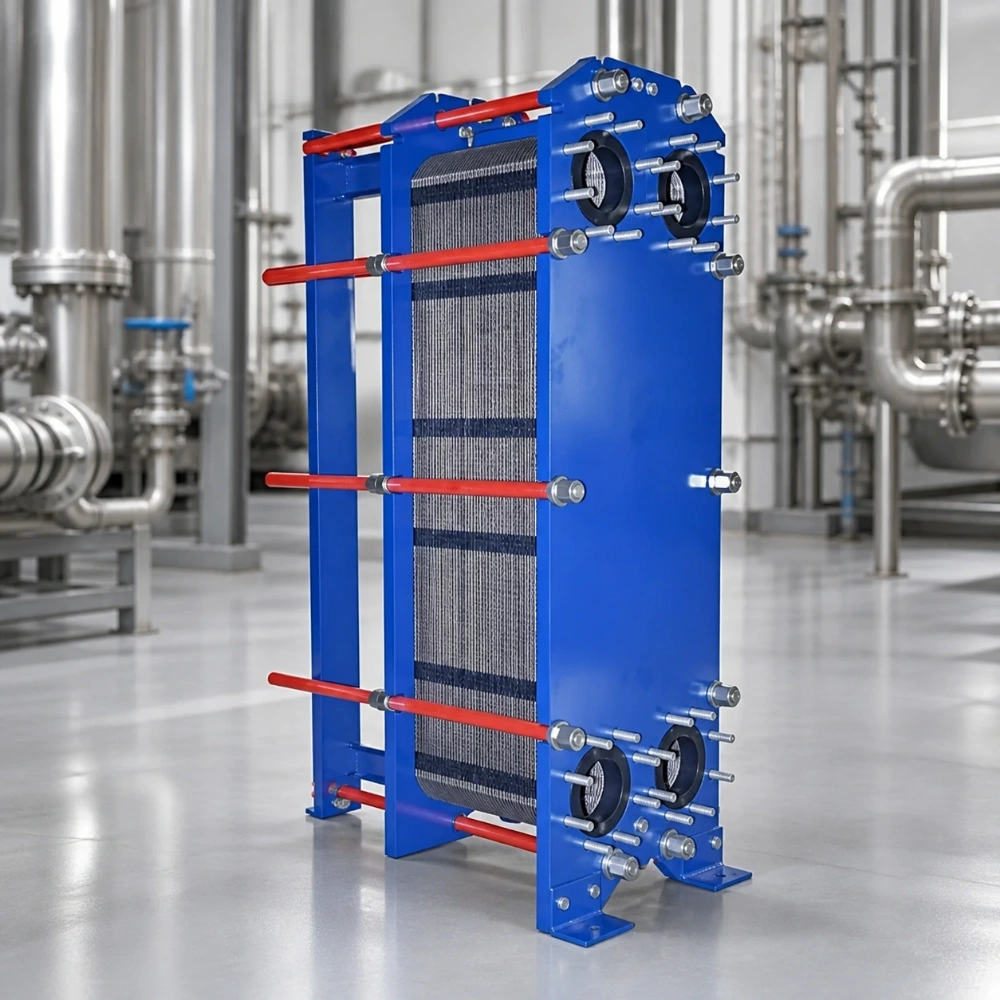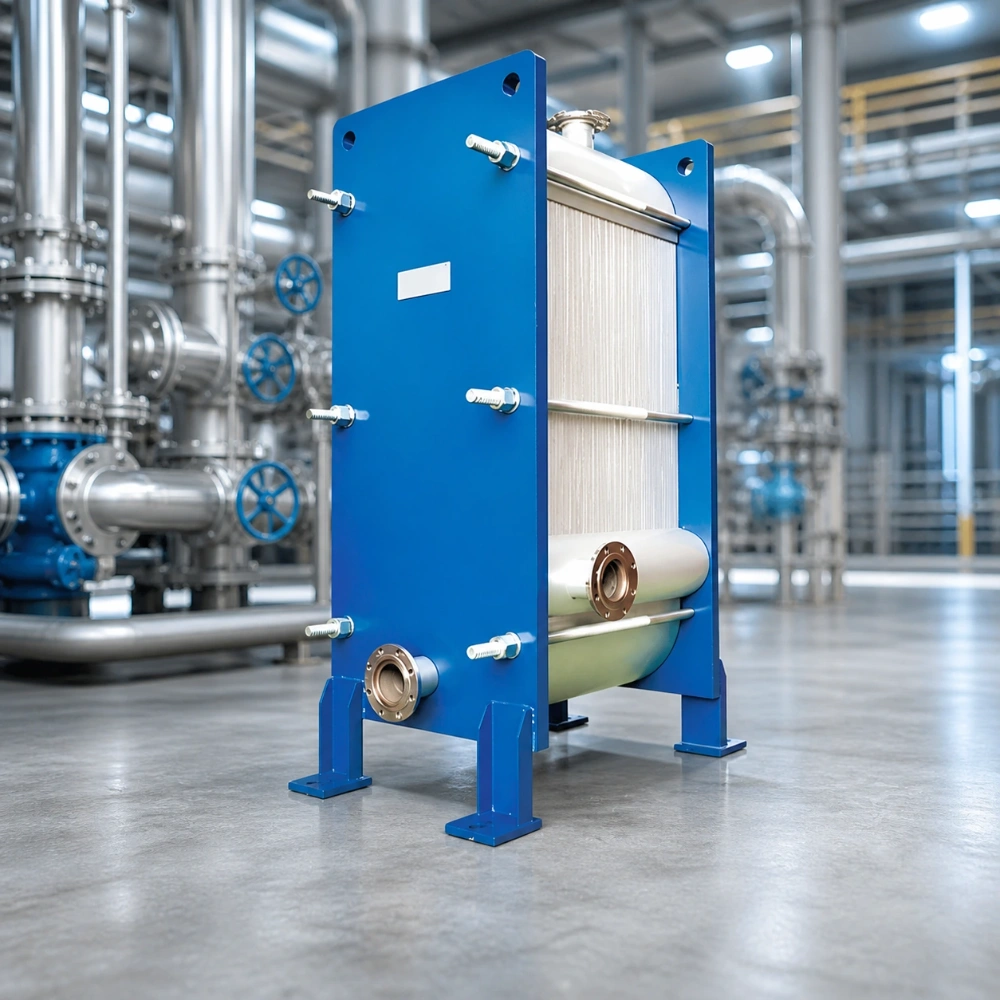

Shell-and-tube heat exchangers are widely used in conventional marine engine cooling systems, while plate heat exchangers are often selected where compact installation, modular capacity, and service access are more important. The suitable choice depends on the cooling circuit and seawater exposure. Grano offers plate and shell-and-tube heat exchanger solutions, but the appropriate construction must be checked against the vessel’s fluids, allowable pressure loss, installation envelope, maintenance access, and any marine approval requirements. A plate heat exchanger should not be treated as a direct substitute for every shell-and-tube cooler or every seawater-facing service. Selection should start with the duty sheet and cooling-circuit map, not with a product label.
Start With the Cooling Circuit and Vessel Context
A design may be familiar across marine or industrial systems without being suitable for your vessel. Start by separating general popularity from verified technical fit.
Separate Market Prevalence From Application Suitability
Widespread industrial use does not prove that a construction dominates boat engine cooling. A vessel may have different coolant chemistry, raw-water conditions, space restrictions, and inspection requirements. Declaring one type the market standard requires authoritative marine market data or verified installation records covering comparable vessels and engines.
Identify Where the Exchanger Sits in the Cooling Circuit
Map the complete circuit before comparing equipment. Identify the freshwater or coolant loop, the seawater or raw-water side, flow direction, pipe routing, and every inlet and outlet. Also establish whether the exchanger cools jacket water, lubricating oil, or another circuit. Never assume seawater compatibility from the unit’s general construction.
Define the Evidence Needed for a Reliable Answer
Use engine technical records, vessel drawings, equipment histories, nameplate data, and previous maintenance records to establish the installed configuration. For fleet-level prevalence, you need credible market or installation data. General descriptions of heat exchanger types can explain construction, but they cannot establish which design is most common across boat engines.
How Do Plate and Shell-and-Tube Heat Exchangers Differ?
Plate and shell-and-tube constructions transfer heat between separate fluids, but they differ in physical arrangement, connection planning, service access, and configuration options. The right comparison is tied to the cooling circuit and vessel layout, not to a universal ranking.
Review the Shell and Tube HeatExchanger
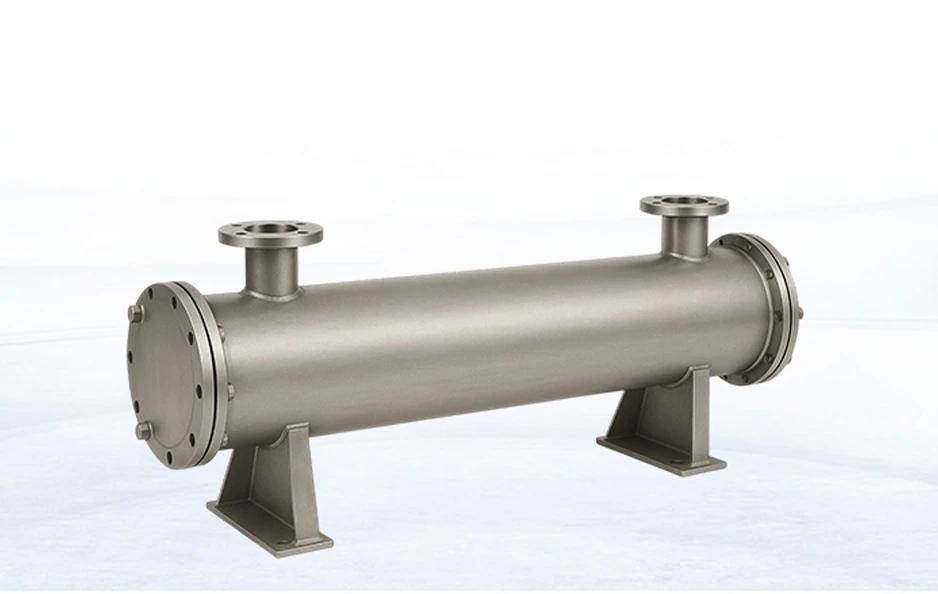
The Shell and Tube HeatExchanger uses an outer shell containing a tube bundle. One fluid travels through the tubes while the other flows through the shell side, with heat passing through the tube walls. This construction is widely used in conventional marine cooling arrangements and can be evaluated for engine jacket-water and lubricating-oil cooling. Materials, limits, cleaning procedures, vibration environment, and required marine approvals still need project-specific verification.
Assess the Plate Heat Exchanger
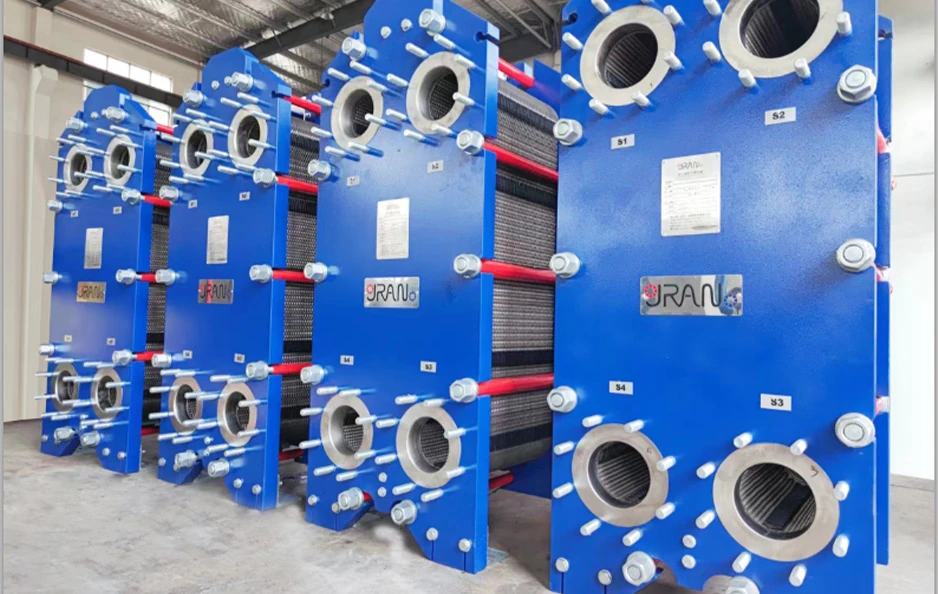
The Plate Heat Exchanger consists of corrugated metal plates with corner ports, assembled between fixed and movable clamping plates. Gaskets create separate channels for the two fluids. Its compact structure, configurable plate arrangement, and service access can be useful where space, modular capacity, or inspection matter. Gasketed, brazed, and fully welded plate designs do not have the same inspection access, joining method, repair route, or pressure and temperature envelope. Marine suitability and seawater compatibility must be checked for the actual duty.
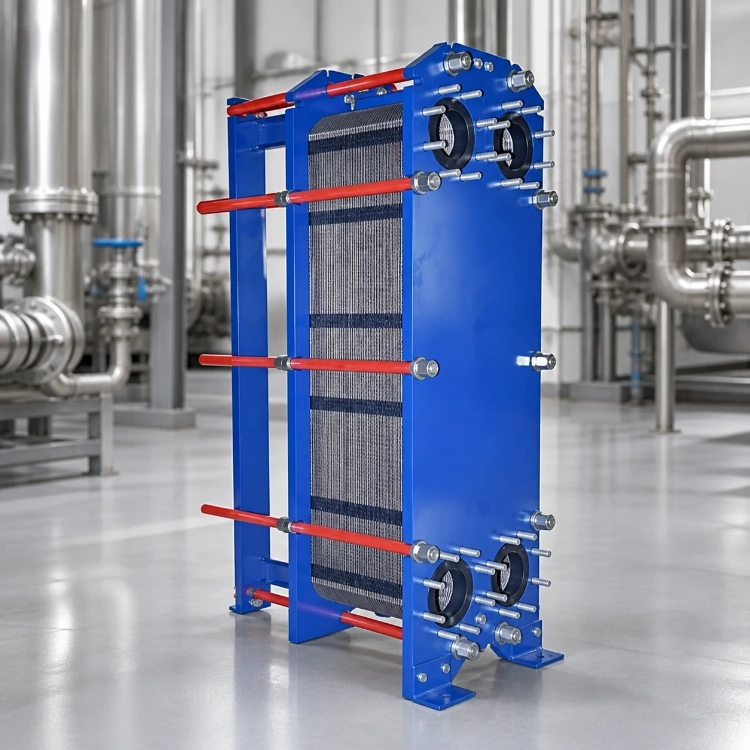
Compare Construction Logic Without Assuming Interchangeability
Compare the installation envelope, port positions, mounting arrangement, opening clearance, cleaning method, and access to internal heat-transfer surfaces. A plate unit and a shell-and-tube unit are not automatically interchangeable because their overall dimensions or pipe sizes appear similar. Selection also requires material specifications, thermal calculations, pressure-loss data, and operating limits.
Factors That Guide Boat Engine Heat Exchanger Selection
The correct boat engine heat exchanger is the unit that matches both cooling circuits and remains practical to install, inspect, and maintain under the vessel’s operating conditions. Use the comparison below to screen the application first, then confirm the detailed thermal and mechanical fit.
Compare Cooling Circuits Before Comparing Exchanger Types
The vessel context below is a screening aid, not a substitute for the duty sheet, circuit drawing, or equipment approval review. Use it to identify the dominant selection question before comparing plate and shell-and-tube configurations.
|
Cooling circuit or application |
Typical vessel or service context |
Common consideration |
Key selection factor |
|
Jacket-water cooling |
Yachts, workboats, and commercial vessels |
Stable thermal duty |
Heat load and pressure loss |
|
Seawater cooling |
Coastal, fishing, and workboat service |
Corrosion and fouling |
Wetted materials and cleaning access |
|
Lubricating-oil cooling |
High-load engines and auxiliary systems |
Oil viscosity and temperature |
Oil-side pressure loss |
|
Keel or central cooling |
Larger vessels or closed-loop systems |
Closed-loop design |
Circuit layout and maintenance strategy |
Smaller yachts and fast workboats may prioritize footprint, vibration tolerance, weight, and service access. Commercial or fishing vessels may place greater weight on seawater quality, redundancy, cleaning strategy, and class or owner requirements. Confirm the actual circuit and vessel constraints before treating either exchanger construction as the preferred choice.
Match the Exchanger to Both Fluids
Record the exact coolant or freshwater composition and the actual raw-water environment. Salinity, suspended contamination, biological material, treatment chemicals, and fluid additives can influence material compatibility, gasket life, corrosion, and fouling. Request written compatibility guidance for all wetted components rather than choosing a material from a general marine description.
Confirm the Full Operating Duty
Provide inlet and outlet temperatures, flow rates, working pressures, allowable pressure loss, and expected operating variation for both circuits. Engine power or pipe diameter alone is not enough to select an exchanger. Procurement should include a supported thermal calculation and clearly documented operating limits for the proposed configuration.
Check Space, Connections, and Service Access
Measure the available installation envelope and record mounting orientation, connection types, pipe positions, nearby structures, and lifting restrictions. Leave practical clearance for inspection, cleaning, opening, or removal. A compact boat engine heat exchanger offers little operational value if technicians cannot reach it or safely perform routine service.
Plan for Fouling, Inspection, and Cleaning
Assess which circuit is more likely to collect deposits, debris, or biological growth. Fouling risk cannot be represented by a single generic coefficient. Record suspended solids, sand or silt, biological material, oil or process carryover, salinity, treatment chemicals, filtration, and expected flow velocity. Then consider channel structure, pass arrangement, inspection access, and the planned mechanical or chemical cleaning method. A nominal fouling allowance still needs validation against the actual water quality and maintenance plan. Do not assign an arbitrary maintenance interval; base the service plan on water conditions, operating history, pressure or temperature changes, equipment instructions, and inspection findings.
How Should You Specify a Replacement Unit?
Replacement procurement should begin with the existing installation and operating duty, not with a visual match or an assumption about the original exchanger type.
Record the Existing Installation Before Requesting a Quote
Capture the nameplate, overall dimensions, port locations, connection details, mounting points, drawings, and available service space. Trace both circuits and label the fluid entering and leaving every connection. Photographs are helpful supporting records, but appearance and nominal pipe size cannot establish thermal or mechanical compatibility.
Request Verifiable Technical Documentation
Ask for material specifications, dimensional drawings, connection arrangements, operating limits, thermal selection data, and maintenance instructions. If your vessel class, owner, insurer, or project requires particular marine standards, certifications, inspections, or tests, list those requirements during the enquiry. Approvals should be verified for the exact proposed unit, not assumed from a product category.
Evaluate Compatibility Before Comparing Cost
First compare thermal duty, fluid compatibility, pressure loss, connection fit, installation clearance, and future maintenance access. Then consider purchase price, packaging, transport, and replacement risk. The right boat engine heat exchanger is the documented fit for your cooling circuit, rather than whichever construction is believed to be most common.
Discuss Your Cooling Requirements With Grano
A useful technical review begins with complete operating and installation information. Early clarification can prevent unsuitable configurations from reaching the price-comparison stage.
Share Your Operating And Installation Data
Prepare fluid details, temperatures, flow rates, pressures, connection information, equipment records, drawings, and space restrictions. Clear circuit identification is especially important where raw water and treated coolant must remain separated.
Request A Configuration And Documentation Review
Use the project data to discuss whether a plate or shell-and-tube configuration merits evaluation. You can discuss your heat exchanger requirements with Grano and identify the compatibility records, drawings, operating limits, and maintenance information required for procurement.
FAQ
What Type of Boat Engine Heat Exchanger Is Most Common?
Shell-and-tube heat exchangers are widely used in conventional marine cooling duties. Plate heat exchangers are also selected where compact size, modular capacity, or accessible inspection matters. Neither can be called the universal best or most common choice without comparable fleet data and the vessel’s cooling-circuit requirements.
Can a Plate Heat Exchanger Be Used in a Marine Engine Cooling Circuit?
It can be evaluated for a marine cooling circuit, but suitability depends on the fluids, wetted materials, joining or gasket arrangement, temperatures, pressures, pressure loss, fouling conditions, installation arrangement, and required approvals. For direct seawater service, also verify the water-quality controls, filtration or straining, cleaning method, and the exact proposed configuration before treating a general plate exchanger as suitable.
What Information Is Needed to Replace an Existing Marine Heat Exchanger?
Provide nameplate data, dimensions, drawings, port locations, mounting details, fluid compositions, flow directions, temperatures, flow rates, pressures, allowable pressure loss, and available service clearance. You should also specify required materials, standards, certifications, testing records, thermal selection data, and maintenance access.