
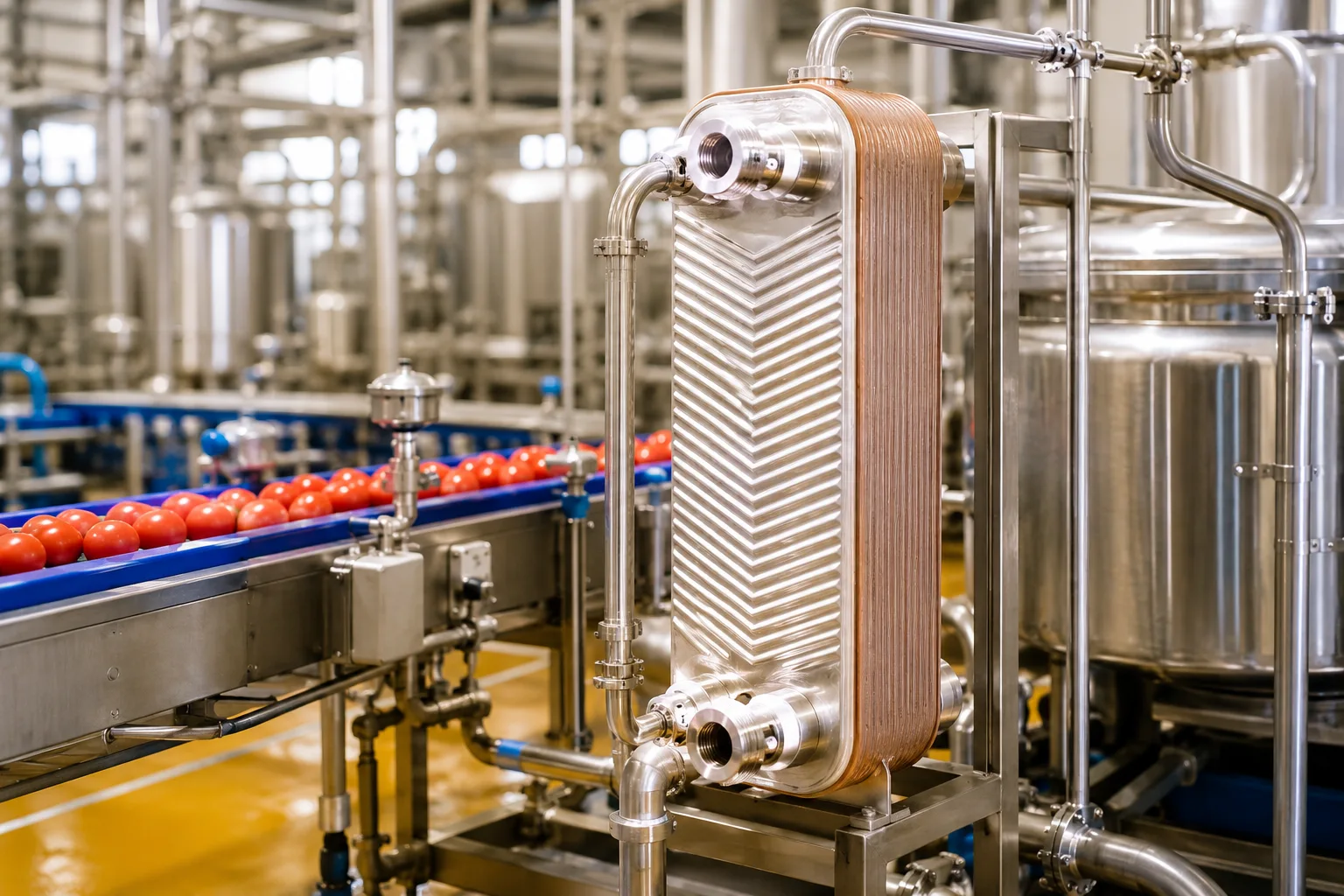
Compact food processing plants rarely have spare room for oversized thermal equipment. Heating, cooling, sterilization, washing lines, pumps, storage tanks, and operator passages all compete for the same floor area. That is why hygienic heat exchangers with a smaller footprint have become a practical choice for juice, dairy, sauce, beverage, and prepared food facilities.
For food processing buyers, the useful point is not only equipment supply. The value also sits in model matching, gasket selection, cleaning support, and delivery service, which are often the things that decide whether a compact system runs smoothly after installation.
Why Compact Food Processing Facilities Need Space-Saving Hygienic Heat Exchangers
A smaller plant does not mean a simpler plant. In many food workshops, the process is still strict: raw material preheating, pasteurization, cooling, cleaning, and hot water circulation all need stable temperature control. The difference is that the equipment room may be narrow, and maintenance staff may only have limited access around each unit.
Limited Floor Space
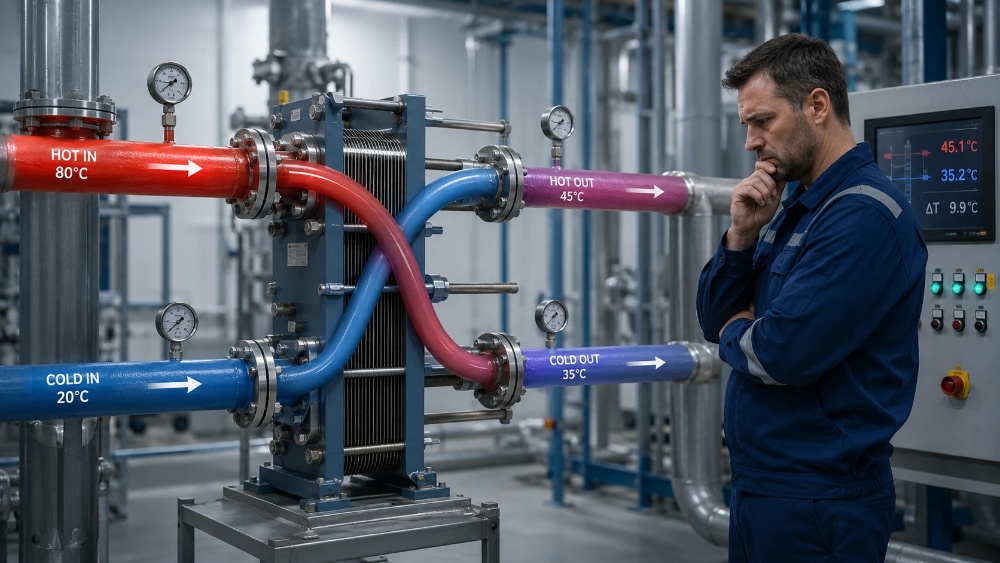
Space-saving design matters because the heat exchanger must fit into the process, not disturb it. A plate unit uses stacked heat transfer plates to create many narrow channels in a compact frame. Compared with many traditional heat transfer systems, this structure gives more heat transfer area within a smaller footprint.
In practice, this helps when a facility needs to add a pasteurization line or cooling loop without rebuilding the whole equipment area. The saved space may also leave better access for valves, gauges, and cleaning points. It sounds basic, but maintenance workers will care about those few extra centimeters.
Strict Hygiene Zones
Food processing requires clean process flow, clear pipe routing, and proper separation between product contact areas and service areas. A compact heat exchanger should not make cleaning harder. If the unit is too crowded by walls or pipes, inspection and gasket replacement become troublesome.
A detachable plate design is useful here because the plates and gaskets can be checked, cleaned, repaired, or replaced. For food media that may contain sugar, protein, minerals, or fine pulp, easy access matters more than a very small body size.
Energy and Water Costs
Heating and cooling are large cost points in food plants. A unit with high heat transfer efficiency can reduce waste heat and improve process response. The corrugated plate surface increases turbulence, which helps transfer heat faster between hot and cold fluids.
The result is not magic. It is simply better use of heat transfer area, flow path, and temperature difference. For a plant using hot water, chilled water, or product cooling every day, small gains can add up over a year.
How Hygienic Heat Exchangers Support Food Processing Efficiency
Efficiency in food processing is not only about fast production. It also means stable product quality, fewer cleaning problems, and lower downtime. The heat exchanger sits quietly in the system, but if it performs poorly, the whole line feels it.
Rapid Heating and Cooling
Juice, milk, sauces, and liquid food products often need fast heating and cooling. Slow heat transfer may affect taste, color, texture, and microbial control. A Plate Heat Exchanger works well for many liquid food processes because its corrugated plates create strong fluid disturbance and high heat transfer efficiency.
This style is especially suitable when the process needs stable performance but also regular cleaning. The detachable structure gives the plant a more practical way to handle inspection after long production runs.
Stable Product Quality
Temperature swings can create uneven results. In dairy products, poor control may affect texture. In juice processing, overheating may damage fresh flavor. In sauce heating, local hot spots may change color or viscosity.
A well-selected plate heat exchanger helps control these risks by matching flow rate, heat duty, pressure drop, and plate pattern. The selection work should include product viscosity, inlet and outlet temperature, cleaning method, and expected running hours.
Cleaner Process Flow
A hygienic system should support cleaning, not fight against it. In plate heat exchangers, the gasket material, plate surface, and flow channel layout all affect cleaning performance. Food-grade gasket options are important when the system contacts water, steam, cleaning liquid, or food-related fluids.
The service side also matters. The service support can include cleaning, maintenance, parts supply, and technical guidance, which is useful when the plant wants to keep older equipment running instead of replacing the whole system.
|
Selection Factor |
Why It Matters in Food Processing |
Practical Check |
|
Heat Transfer Area |
Affects heating or cooling speed |
Match flow rate and target temperature |
|
Plate Material |
Affects corrosion resistance and hygiene |
Common choices include stainless steel and titanium alloy |
|
Gasket Material |
Affects sealing, temperature, and cleaning resistance |
Check food-grade EPDM, food nitrile, or food fluorine needs |
|
Pressure Drop |
Affects pump load and line stability |
Avoid choosing only by equipment size |
|
Maintenance Access |
Affects cleaning and repair time |
Reserve room for disassembly and inspection |
Why a Plate Heat Exchanger Fits Compact Food Plants
A plate heat exchanger is often the first choice for compact facilities that need strong thermal performance and easier maintenance. It is not always the smallest possible option, but it is often the most balanced one for food processes that need cleaning access.
Compact Plate Structure
The plate heat exchanger is built from corrugated plates, sealing gaskets, clamping plates, and bolts. The plates form narrow channels where hot and cold fluids exchange heat. According to the product data, the heat exchange area can be customized up to 5000m², with maximum working pressure up to 25MPa and maximum operating temperature up to 200°C.
That range gives buyers room to match small lines, medium production, and later expansion. The compact frame also suits plants where floor area is expensive or already filled with tanks and pumps.
Detachable Cleaning Design
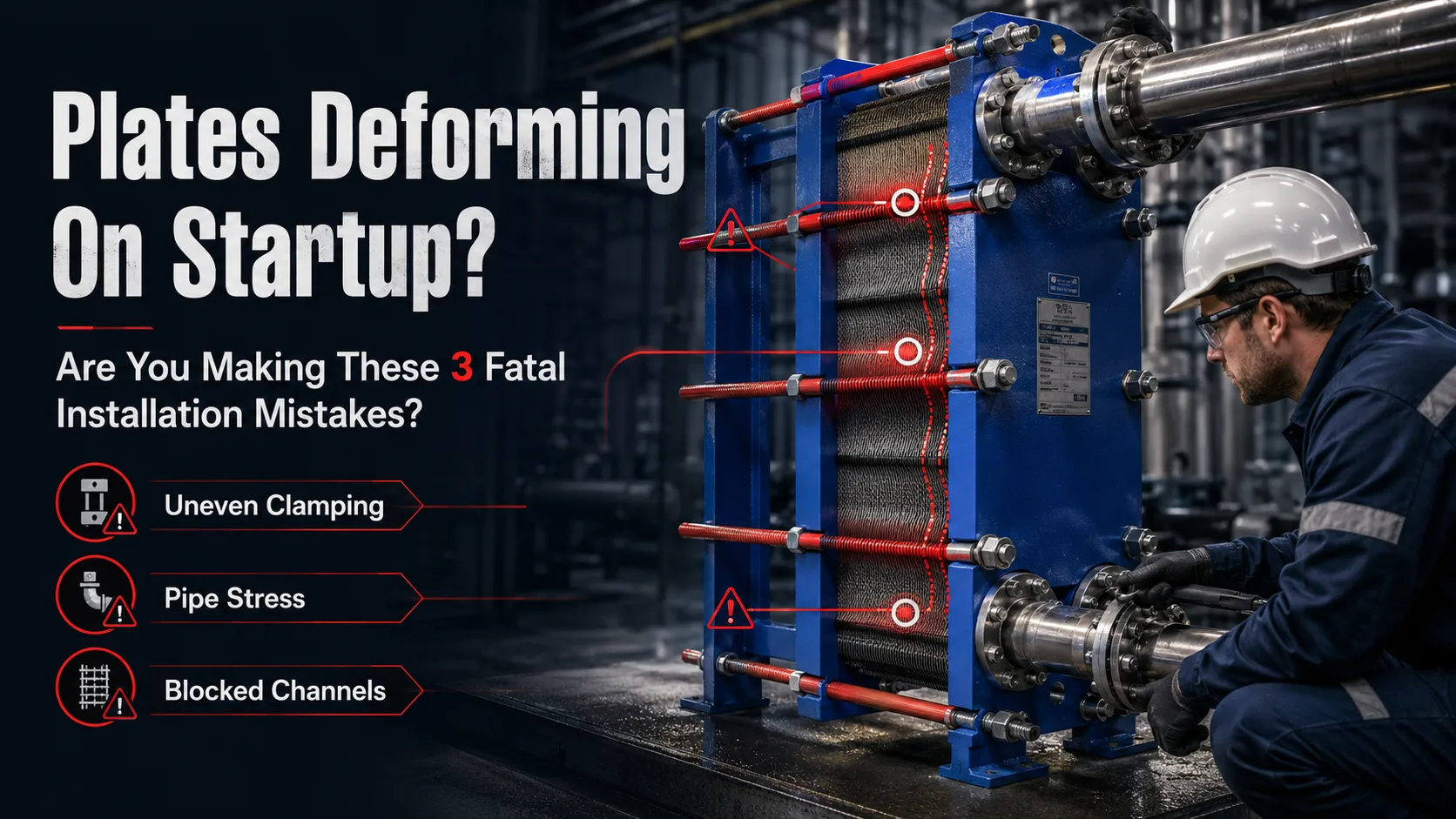
For food processing, detachable construction is a major advantage. When scale, residue, or gasket aging appears, the unit can be opened for cleaning and inspection. The knowledge base notes common issues such as rising pressure drop caused by scaling or blocked channels, and leakage caused by old gaskets, uneven tightening, plate deformation, or cracks.
These are real maintenance concerns, not brochure words. A unit that can be cleaned, pressure tested, and fitted with new gaskets helps reduce long stoppages.
Flexible Capacity Expansion
Plate heat exchangers use a modular structure, so capacity can be adjusted more easily than many fixed designs. If production grows, the plate group can often be redesigned or expanded, depending on the frame and working condition.
This is helpful for food plants that start with one product line and later add more SKUs. One month it may be fruit juice. Later it may be tea drinks, milk beverages, or sauces. The thermal duty changes, and the equipment should not become a dead end too soon.
When a Brazed Plate Heat Exchanger Makes Sense
A brazed unit is different from a detachable plate unit. It uses brazing technology to join metal plates into a compact, sealed body. There are no traditional frame gaskets to open for cleaning, so the choice must match the media and maintenance plan carefully.
Smaller Equipment Footprint
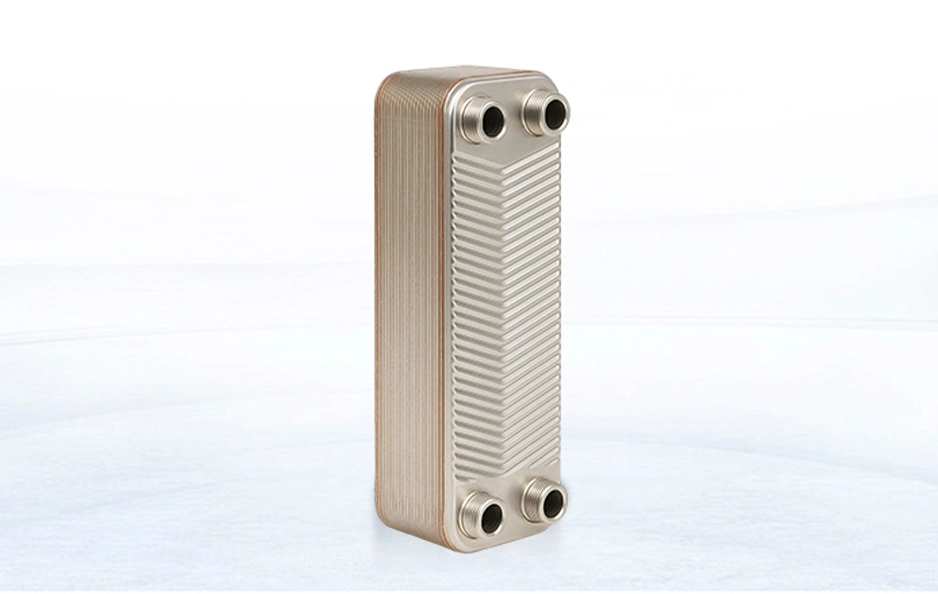
The Brazed Plate Heat Exchanger is a strong fit for auxiliary systems where space is tight and the media is relatively clean. Typical examples include hot water loops, chilled water, refrigerant circuits, and clean utility heat exchange.
Its compact size suits skid-mounted systems and small machine rooms. In a crowded plant, that can be a real benefit.
High Pressure and Temperature Needs
The product data lists a heat exchange area up to 2500m², maximum working pressure up to 40MPa, and maximum operating temperature up to 300°C. This makes the brazed type useful for high pressure and high temperature conditions where a compact structure is still required.
|
Product Type |
Heat Exchange Area |
Max Working Pressure |
Max Operating Temperature |
Key Fit |
|
Plate Heat Exchanger |
Up to 5000m² |
25MPa |
200°C |
Food liquid processing, cooling, heating, easy maintenance |
|
Brazed Plate Heat Exchanger |
Up to 2500m² |
40MPa |
300°C |
Compact utility systems, high pressure, clean media |
|
Shell and Tube Heat Exchanger |
Customizable |
50MPa |
400°C |
Large flow, low pressure drop, heavy-duty process use |
Lower Maintenance Frequency
A brazed design has fewer sealing parts and a rigid body. For clean media, it can run with lower maintenance demand. Still, it is not the best match for every food product. High-viscosity, particulate, or easy-scaling product streams may be better served by a detachable plate unit.
The simple rule is useful: choose easy opening when cleaning is frequent, and choose brazed compactness when the media is clean and the working pressure is demanding.
What Buyers Should Check Before Choosing a Hygienic Heat Exchanger
Choosing a smaller heat exchanger only by footprint can create later problems. A good purchase decision should balance size, cleaning, pressure drop, gasket life, and spare parts support.
Material and Gasket Compatibility
Material selection should match the product and cleaning liquid. Stainless steel is common in food processing, while titanium alloy may be considered for more corrosive conditions. Gasket choice also matters. The knowledge base lists food EPDM for water, steam, and superheated water use, food nitrile for oil-water exchange, and food fluorine for higher temperature or stronger chemical resistance.
Cleaning and Maintenance Access
Even a compact unit needs service space. For a detachable plate exchanger, staff need room to loosen bolts, remove plates, inspect gaskets, and clean flow channels. The product may be small, but the maintenance job still needs hands, tools, and patience.
Heat Duty and Pressure Drop
Before placing an order, confirm flow rate, inlet temperature, outlet temperature, media type, viscosity, working pressure, and cleaning method. Pressure drop should not be ignored. A unit that is small but creates heavy pump load may cost more over time.
Why Choose a Practical Heat Exchanger Partner for Compact Food Projects
For compact food plants, the right supplier should do more than list models. Product matching, spare parts, gasket selection, cleaning advice, and logistics support all affect the real project result. Grano‘s background shows a focus on plate heat exchangers, gaskets, plates, and maintenance services, with products used in food and beverage, pharmaceutical, chemical, HVAC, and energy fields.
The knowledge base also records an Italy food processing plant case involving a juice sterilization system. The customer needed compatible plates and sealing gaskets with fast delivery. Food-grade stainless steel plates and food-grade adhesive for gaskets were supplied, with direct air shipment to the factory. That type of detail matters when a production line cannot wait for a long spare parts cycle.
For compact facilities, a hygienic heat exchanger is not just a metal box with ports. It decides how neatly heat is moved, how often cleaning interrupts production, and how much room remains for the rest of the line.
FAQ
Q1: Which Heat Exchanger Is Better for Direct Food Product Heating or Cooling?
A: A detachable plate heat exchanger is often better for direct food product heating or cooling because it can be opened for inspection, cleaning, and gasket replacement. This is useful for liquids that may scale, foam, or leave residue.
Q2: When Should a Brazed Plate Heat Exchanger Be Used in a Food Facility?
A: A brazed plate heat exchanger is more suitable for clean utility systems, such as hot water, chilled water, refrigerant loops, or compact skid systems. It is best when the media is clean and the plant needs a smaller footprint.
Q3: What Gasket Material Is Common for Hygienic Heat Exchangers?
A: Food-grade EPDM is common for water, steam, and superheated water conditions. Food nitrile may suit oil-water exchange, while food fluorine can suit higher temperature or stronger chemical conditions.
Q4: Does a Compact Heat Exchanger Always Save Operating Cost?
A: Not always. A compact design helps save space, but the equipment must still match heat duty, pressure drop, flow rate, and cleaning needs. A unit that is too small may increase pump load or cleaning trouble.
Q5: What Information Is Needed Before Selecting a Hygienic Heat Exchanger?
A: Basic details include media type, flow rate, inlet and outlet temperature, working pressure, viscosity, cleaning method, material requirements, and available installation space. These details help match the right heat exchanger structure.