



In the tough field of industrial heat control, nothing frustrates a repair worker more than finding a Plate Heat Exchanger (PHE) that has started leaking or mixing fluids in a bad way, and then seeing “collapsed” or badly bent plates when you take it apart. Those wavy metal sheets, built to handle big pressures, appear smashed by some unseen power. The first thought is usually to point at the maker. Many wrong ideas claim the plates were “too slim” (like $0.4\text{ mm}$) or made from poor stuff.
But at Grano, where we have spent more than ten years on research and building top-quality PHEs, we understand that the real story is seldom so basic. If you pick a plate based on its planned pressure level, steady high pressure by itself hardly ever crushes the waves. Rather, the true dangers are often moving forces hiding in your pipe setup.
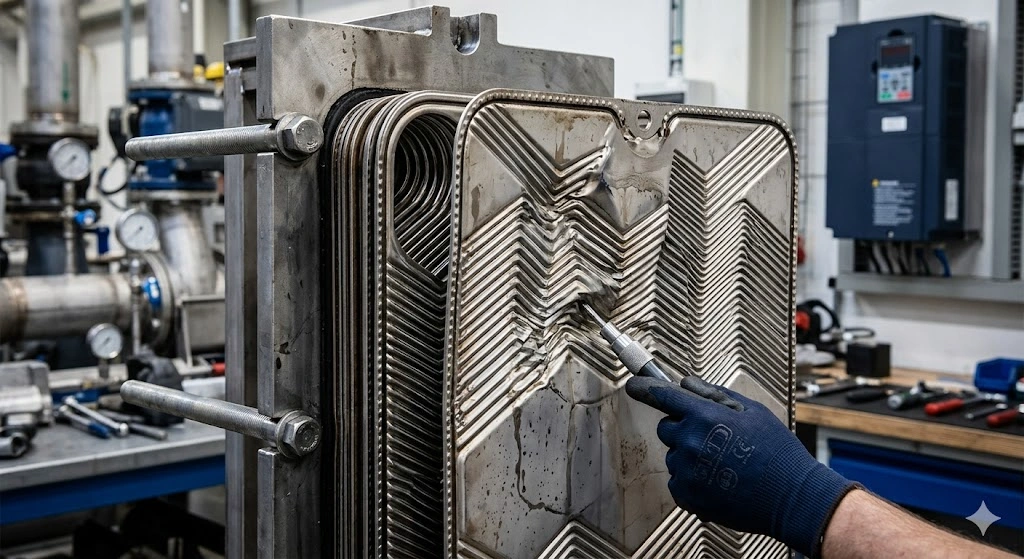
The Science of Collapse: Water Hammer and Contact Points
To figure out why a plate buckles, we need to examine the inner build of a PHE. The power of a plate group relies on the many contact points that form where the waves of nearby plates (A-plates and B-plates) meet at angles. These spots give the firm structure needed to deal with large pressure differences.
The Water Hammer Effect
The main reason for bending is the Water Hammer (Fluid Hammer) event. This happens when a liquid moving fast has to stop or turn quickly. That shift in motion makes a strong pressure wave or jolt that can hit 3 to 5 times the normal working pressure in the setup.
Sudden Push (Instantaneous Thrust): When this wave strikes the plate face, it applies a force that goes beyond the Yield Strength of the material.
Touchpoint Breakdown: After the contact points get smashed or “smoothed out,” the plate misses its inner backing, which causes the typical “collapse” or bending of the waves.
Three Systemic Triggers You Must Investigate
If your plates are bending, you should check more than just the heat exchanger and review your whole pipe and control setup. Grano’s expert group has spotted three common problems:
1. Rapid Valve Actuation
Air-powered or electric quick-shut valves often start water hammer. If a valve shuts in less than a second, the moving energy of the liquid has no place to go except into the sides of the heat exchanger.
2. Improper VFD (Variable Frequency Drive) Settings
In today’s systems, pumps that move fluids are usually run by VFDs. If the “speed-up” or “slow-down” periods are too brief, the quick rise in flow at start or the fast halt during a shutdown can cause harmful pressure jumps.
3. Poor Pipe Venting and Air Pockets
Leftover air stuck in the setup is easy to squeeze. When a pump begins, this air can get pushed hard and then bounce back (like a cavitation hit), making a “gas hammer” effect that hits the plates with focused, fast force.
Technical Comparison: Gasket and Plate Resilience
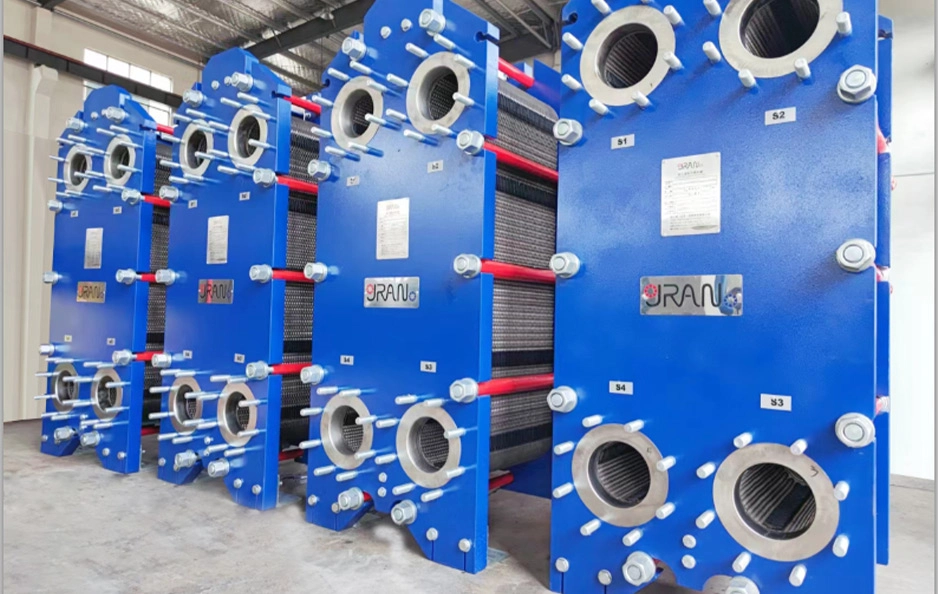
Picking the correct material is key for long life, but it needs to match with protection at the system level. Here is a guide for usual materials used by Grano to make sure they last in different fields.
| Material Type | Common Applications | Max Temp (∘C) | Pressure Resistance |
|---|---|---|---|
| Stainless Steel (304/316L) | HVAC, Food Processing, Industrial Cooling | 200°C | Up to 25 MPa |
| Titanium / Titanium Alloy | Sea Water Desalination, Chemical Processing | 200°C | Excellent |
| EPDM Gaskets | Water-Water, Steam, Dilute Acids | 150°C | Standard |
| NBR (Nitrile) Gaskets | Oil-Water, Mineral Oils, Fats | 120°C | High Oil Resistance |
| Fluorine Rubber (Viton) | Strong Chemicals, High Temp Oils | 220°C | Premium |
Case Study: Solving Premature Failure in High-Salt Environments
A big seawater desalination plant in Saudi Arabia had many seal problems and heavy plate buildup that caused uneven pressures.
The Problem: The rough high-salt setting wore out normal plates, and often system stops made pressure waves that bent the plate groups.
The Grano Solution: We sent an expert team to check the full system. We swapped the broken units with Titanium plates for better protection against rust and improved the seals to a stronger setup.
The Result: More than simply changing parts, we gave advice on setup and startup steps to keep the system in safe pressure limits. The customer said that the “Grano team’s skilled help ensured the smooth work of the seawater cooling system.”
The Grano Engineering Advantage
Just making plates thicker without thought (say, from 0.5 mm to 0.6 mm) is usually a quick fix that cuts down heat flow and raises costs without fixing the main issue. Grano uses a smarter method, one that looks at the whole picture to prevent problems before they start. We focus on understanding the real causes, like those dynamic forces mentioned earlier, and design our solutions to handle them directly. This approach not only saves money in the long run but also keeps your operations running smoothly without unexpected breakdowns.
Advanced Simulation: We rely on our own Heat Exchanger Structure Design Software V1.0 and Heat Testing Systems to model everyday situations accurately.
Optimized Plate Design: Our plates have lots of contact points packed closely and stronger wave shapes made on purpose to fight off bending from sudden pressure hits. We test these designs under various conditions to make sure they hold up well in real use, which helps avoid the common pitfalls that lead to early wear or failure in demanding setups.
Material Integrity: We get top-grade raw supplies from places in the US, Japan, and trusted spots in China, all handled with ISO9001:2015 rules.
Maintenance Support: We give full help for PHE care, which includes expert cleaning with chemicals (like acid or base washes) and complete checks for no leaks with air before we ship anything out.
No matter if you use names like Alfa Laval, GEA-Kelvion, or Tranter, Grano offers solid, affordable replacement plates and seals that usually beat the first equipment standards.
FAQ
Q: If my plates are already deformed, can I just press the plate pack tighter to stop the leak?
A: No. While Grano suggests noting the first tightening measure and squeezing a bit more during put-back, this helps only if the plates and seals are still good. If the metal waves have “buckled,” the contact spots are gone, and pressing too hard will probably harm the plates more or even the main frame.
Q: How can I tell if my system is suffering from “Water Hammer”?
A: Usual signs are loud bangs or “thuds” in the pipes when valves shut or pumps begin, quick changes on pressure dials, and gaskets or holders failing again and again. We advise putting in a pressure sensor with fast recording or adding buffer tanks and air vent valves to reduce these jolts.
Q: Does Grano provide parts for other international brands?
A: Yes. Grano focuses on making matching, strong plates and seals for leading world brands like Alfa Laval (M-series, T-series), Sondex, APV-SPX, and Hisaka. Our parts fit right into your current frames and cost less while working just as well or better.


