



I. Introduction: The Silent Killer in Your System
Imagine a bad dream for any operations manager. A new stainless steel plate heat exchanger (PHE) goes in clean and fresh. It sits as the core of your thermal system. Yet it fails without reason and starts leaking in just three months. The plates looked perfect at setup. Now they show small holes or even major cracks.
If this scary tale feels known, the bad guy in this heat failure is usually a hidden but very harmful particle in your process water. That is the Chloride Ion (Cl⁻).
At Grano, we focus on strong heat transfer options. These include Gasketed, Brazed, and Fully Welded Plate Heat Exchangers. We sell small, energy-saving tools,but offer more. We bring engineering calm. The right PHE needs the right material for your job. Skipping the Cl⁻ corrosion risk is the top error we see in material choice. It changes a good buy into high stop costs.
Chloride ions appear in most natural water supplies, cooling towers, and factory work. They have a clear power to break the safe passive layer on stainless steel. This article gives your main guide. It explains the two key ways Cl⁻ hits your plates. And it shows when to leave common stainless steel for the best shield: Titanium.
II. Corrosion’s Two Major Forms: The Pincer Attack
Chloride harm to stainless steel does not come as one thing. It shows in two main types. These often team up in the rough spots inside a plate heat exchanger’s paths.
1. Pitting Corrosion: The Invisible Drill Bit
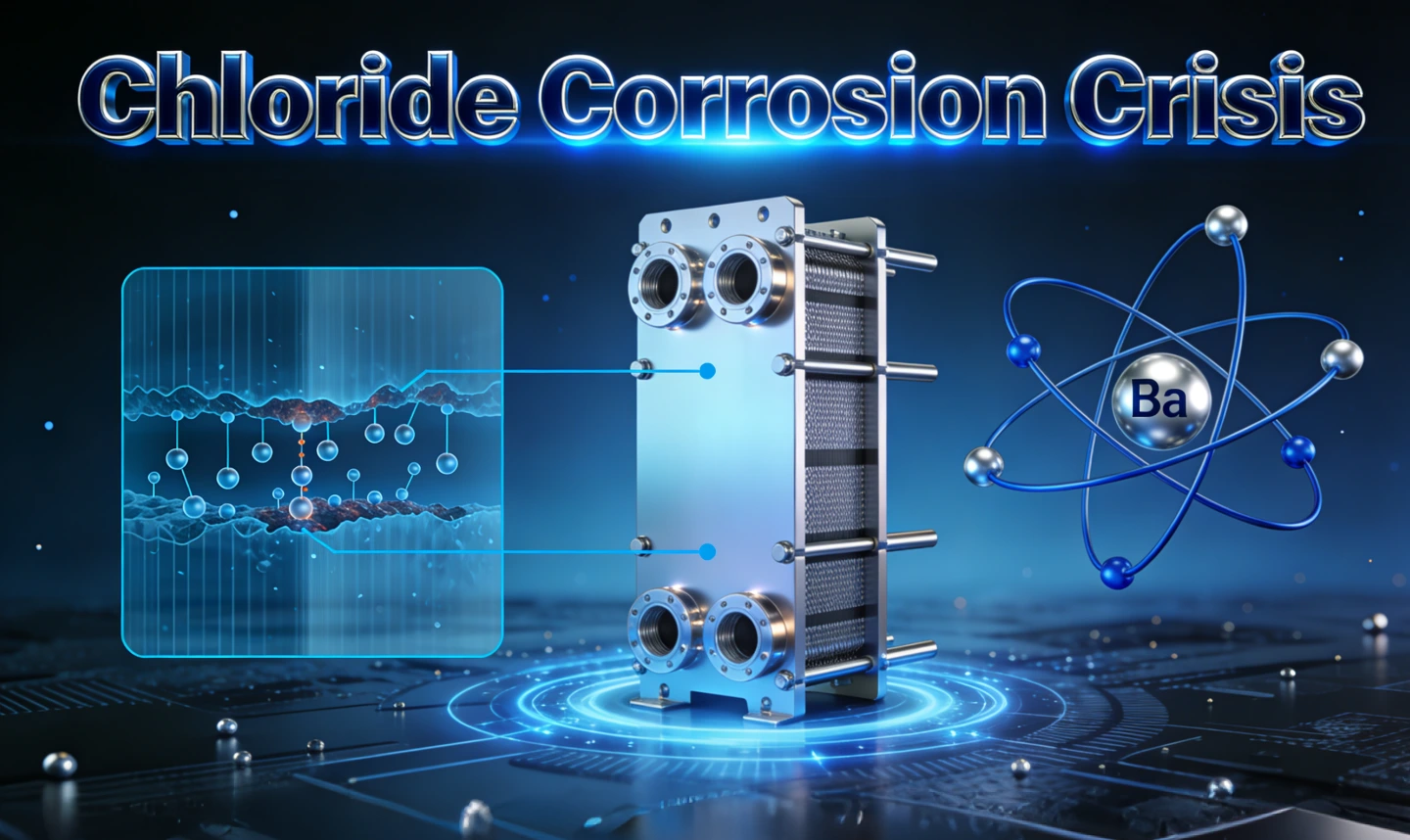
Pitting corrosion is the regular and tricky type of chloride harm. It acts like a small, pushy drill tip. It makes harm that seems tiny on the top but causes big issues below.
- Mechanism: Stainless steel makes a safe chromium oxide coat (the passive film) in air. Chloride ions build up in cracks or stick to the plate. They break and ruin this coat in one area. Once broken, the spot in the pit turns very acid and full of metal parts.
- The Outcome: This area breakdown speeds the rust rate in the pit. It drives the harm down, not across. You end up with small holes you can barely see. They cut through the thin PHE plate fast (usually 0.4 mm to 0.6 mm thick). This brings quick fluid mix and leaks. It is like a tooth decay. By the time you notice the harm, it is often past help.
2. Stress Corrosion Cracking (SCC): The Catastrophic Fracture
SCC is a quicker and worse type of breakdown. It starts when three clear factors meet at once.
- Tensile Stress: This pull often stays from making the material. It locks in during the process. You see it most in high-press, deep-pull spots of the plate waves.
- Aggressive Environment (Cl⁻): Chloride ions exist there.
- Elevated Temperature: Heat over 60 °C works as a strong starter.
- The Outcome: The Cl⁻ ions use the spots with the most leftover pull. These are the turns, bends, and edges of the plate’s chevron shape. Granobuilds these to boost fluid mix and heat swap power. With heat and pull, chlorides make small splits. These spread fast and across the plate build. The break comes as a quick, hard snap with little sign first. It leads to big leaks at once and system stop.
When you choose a heat exchanger, pick a strong Grano PHE. Keep in mind the design parts that raise heat transfer power. The wavy shapes are the weak points for SCC if you choose the wrong material.
III. The Material “Tolerance Red Lines”
Stainless steel is a solid, cheap pick. But it does not block rust fully. How it stands up ties close to the chloride amount in the air. We measure that in parts per million (ppm). Heat plays a big role too. Knowing these bounds is key to the long run that Grano PHEs plan to give.
|
Material Grade |
Common Name |
Max Recommended Cl⁻ Concentration (Approx.) |
Typical Application |
Caution |
|
SS304 |
The Standard |
< 50 ppm |
Closed-loop heating/cooling, clean potable water |
Faces Pitting and SCC easy over 50 ppm Cl⁻, mainly at higher heat. Grano experts warn hard against use in open setups. |
|
SS316L |
The Industry Workhorse |
< 150 ppm |
General industrial process water, cooling tower systems |
Gives stronger stand thanks to Molybdenum (Mo). But 150 ppm sets a firm top for sure work. This holds true in on-off runs or still spots. |
|
Titanium |
The Ultimate Shield |
> 10,000 ppm (Seawater) |
Seawater, brine, highly aggressive chemical solutions |
Stays safe from chloride Pitting and SCC in nearly all water jobs. It gives top work range. |
The Catalytic Effect of Temperature
The main error users make is this thought. Their water does not rust at room heat, like 20 °C. So it stays safe at work heat, say 60 °C or 80 °C.
Truth is, rust speeds grow fast with heat, mainly for SCC. Water with a mild 100 ppm chloride shows no problem at 25 °C. But it turns harmful to SS316L at 70 °C heat. High heat raises how ions move. It breaks the passive coat with ease. This moves the work from steady to near break fast. That is why good heat watch, a main plus of Grano PHEs, needs the right material choice.

IV. When to Mandate the Upgrade to Titanium
For jobs with high chloride chance, or where system stops are out, moving past SS316L bounds is no small pick. It is an engineering must. Grano’s skill in special materials helps here. Titanium stands out as key.
1. Seawater and Brackish Water Systems
This sets the firm line. Seawater holds Cl⁻ over 19,000 ppm most times. Any stainless steel faces quick, major failure. Even duplex or super-duplex types break via pitting and crack rust in months or weeks.
- The Titanium Solution: Titanium builds a tough, sticky, self-fix oxide coat. It blocks pitting and SCC in chloride spots. So it fits as the main must for sea, off-shore, and coast cooling jobs. Granogives Titanium plates for real long run in rough spots.
2. Aggressive Process and Pool Water
Past natural waters, factory work uses treated or reused water. This often has high chloride levels.
- Swimming Pool Water: Chlorine cleaners make the water full of chlorides. This turns too hard for SS316L over long time.
- Chemical/Food Processing: Jobs with salt water, salt mixes, or thick cooling tower waste need better rust block.
3. The Full Life-Cycle Cost Calculation (TCO)
A Titanium plate heat exchanger starts at two to three times the SS316L price. But focus only on the first quote shows narrow view. It hurts money sense.
Grano pushes clients to do Total Cost of Ownership (TCO) check. It weighs low start cost vs. high failure price.
|
Scenario |
SS316L PHE |
Titanium PHE (Grano) |
|
Initial Cost |
Low |
High (2x – 3x SS316L) |
|
Plate Life Expectancy (in aggressive Cl⁻) |
1–3 years (requiring replacement/re-tubing) |
10–15+ years (typical lifespan) |
|
Downtime Cost |
High (frequent plate pack replacement, system shutdown, potential contamination) |
Negligible (planned maintenance only) |
|
Maintenance/Parts |
High (frequent gasket and plate replacement, labor) |
Low (standard gasket replacement every 5–7 years, no plate replacement) |
In rough spots, SS316L may break each year. You swap the full plate set and face high surprise stops. Titanium costs more first but runs clean for ten years plus. You gain back the extra fast. This cuts repeat material and work costs. Most key, it skips the big money loss from missed time. For big jobs, Titanium gives top money return.
V. Conclusion: Your Water Quality is the Blueprint
Choosing plate heat exchanger material is the main pick in buying. It sets long-term trust and real price for your heat system. Do not base it just on the lowest first quote.
At Grano, we focus on long value in engineering. We bring high heat transfer power and small build on sure materials. We skip weaker picks to get the deal.
The Golden Rule of PHE Specification:
Before you look at the initial quote, you must first examine the Water Quality Analysis Report.
If your water check shows chloride over 100 ppm, or work heat stays above 60 °C, talk about Titanium need. Let our skilled engineers check your process fluids. They guide to the best, sure material. This makes your Grano exchanger give top power and strong, long run. Reach us now. Review your water check and pick the material for sure work life.
FAQ
Q: What is the critical difference between SS316L and SS304 that gives 316L better chloride resistance?
A: SS316L holds Molybdenum (Mo), about 2.0% to 3.0% by weight. SS304 lacks it. Mo boosts the steady and self-fix traits of the steel’s passive oxide coat. This makes it stronger against spot harm (pitting and crack rust) from chloride ions. But this extra stand is not full. Even 316L sets firm limit lines, mainly for Stress Corrosion Cracking at high heat.
Q: If Titanium is so resistant to chloride, why isn’t it used for all plate heat exchangers?
A: The main stop is cost. Titanium is a special, strong metal. It has higher base and build costs than regular stainless steels. For jobs with low chloride water (like city tap or closed loops under 50 ppm), SS304 or SS316L gives good run for less start money. Grano picks Titanium where TCO check backs the first extra. It counts break chance and stop costs. This makes it the right choice for long money sense in hard fluids.
Q: Besides using Titanium, are there other ways to mitigate chloride-induced corrosion in an existing SS316L heat exchanger?
A: Yes, ways to cut chloride rust focus on work setup control.
- Lower the Operating Temperature: Cut heat, mainly under 60 °C key line. This slows SCC and pitting rate a lot.
- Water Treatment: Use strong water care (like de-salt, reverse flow, or chem blocks) to lower chloride ion (Cl⁻) and other rust salts. This is the best forward step.
- Regular Cleaning: Steady upkeep works easy with Granogasketed PHE block design. It stops dirt and crust build. These make spot high chloride areas (cracks) that start pitting rust.


