



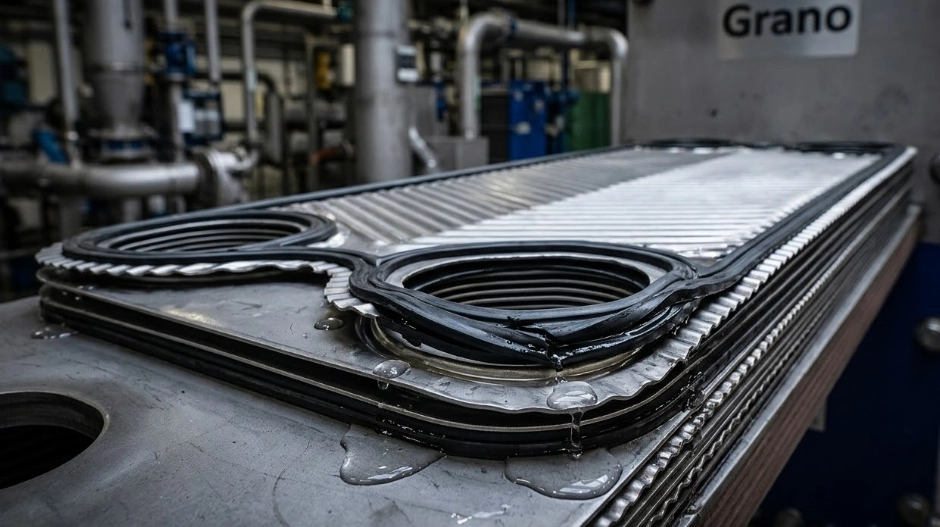
For the people who run facilities and fix machines, a leaking Plate Heat Exchanger (PHE) is a really big and annoying problem. What makes everyone more frustrated is when a machine starts dripping fluid or mixing fluids inside just a few weeks after the team put in brand-new gaskets. This bad situation costs a lot of money because machines have to stop working. It also creates dangerous safety problems for the factory.
So, what is the real reason behind this bad loop? As a top global plate heat exchanger maker with over 10 years of experience, ग्रेनो is here to look closely at why these gaskets fail way too early and give you clear engineering tips.
I. The Usual Signs of Frequent Leaking Problems
In busy factory settings, when the gaskets in a heat exchanger stop working right, it usually shows up in two main ways. The first way is external leakage, when the liquid drips right out from the spaces between the wavy metal plates. Workers can usually spot this easily.
The second way a leak happens is harder to see and a lot more dangerous, called internal leakage or cross-contamination. When this happens, the fluid under a lot of pressure pushes its way into the side with lower pressure because the seal is broken. This hidden problem can ruin your products or lower the quality of your chemicals. Dealing with leaks makes the factory spend too much money.
II. Common Mistakes People Make When Changing Gaskets
When trying to fix a leaking PHE, a lot of people fall into a very common trap. They only look at the physical size of the part and the cheapest price, while totally ignoring if the material matches the chemicals it will touch. There is an unsafe idea that as long as the rubber piece fits nicely into the groove on the metal plate, it will definitely stop leaks.
But, ignoring the special chemical makeup of the liquid and how much the heat goes up and down is the biggest reason why leaks come back fast. Different rubber materials are built in totally different ways on the inside. If you just pick the cheapest materials, you are putting your whole system at risk.
III. How Big Changes in Heat and Pressure Ruin Your Seals
Factory systems almost never stay exactly the same all day long. Turning the system on and off, seeing huge changes in how hard the machines work, or dealing with sudden jumps in heat when you do cleaning routines puts a massive amount of physical stress on the sealing gaskets.
When a rubber gasket is left in a situation where the heat goes up and down past what it was built to handle, it goes through “Permanent Compression Set” a lot faster than normal. The connected parts inside the rubber get broken, making the gasket lose its natural stretchiness. Once the pressure jumps up high, the stiff gasket cannot stretch out fast enough to plug the new spaces, so the liquid leaks out.
IV. The Unseen Dangers of Chemical Damage and Material Getting Old
A lot of the time, the main liquid inside a heat exchanger looks safe, but it is actually the tiny extra bits hidden inside that act as the worst enemies of your rubber seals. Small amounts of harsh chemicals can cause total destruction if you use the wrong rubber.
For instance, if regular Nitrile Rubber (NBR) or Ethylene Propylene Diene Monomer (EPDM) gaskets are put into a system by mistake when the liquid has a tiny bit of non-polar solvents, the gasket will drink up that liquid fast and blow up like a balloon. A swollen gasket gets bigger, loses its hardness, and is squeezed right out of its groove. Sometimes chemicals break the rubber down so it cracks into pieces.
V. How the Way You Put It Together Changes How Long It Lasts
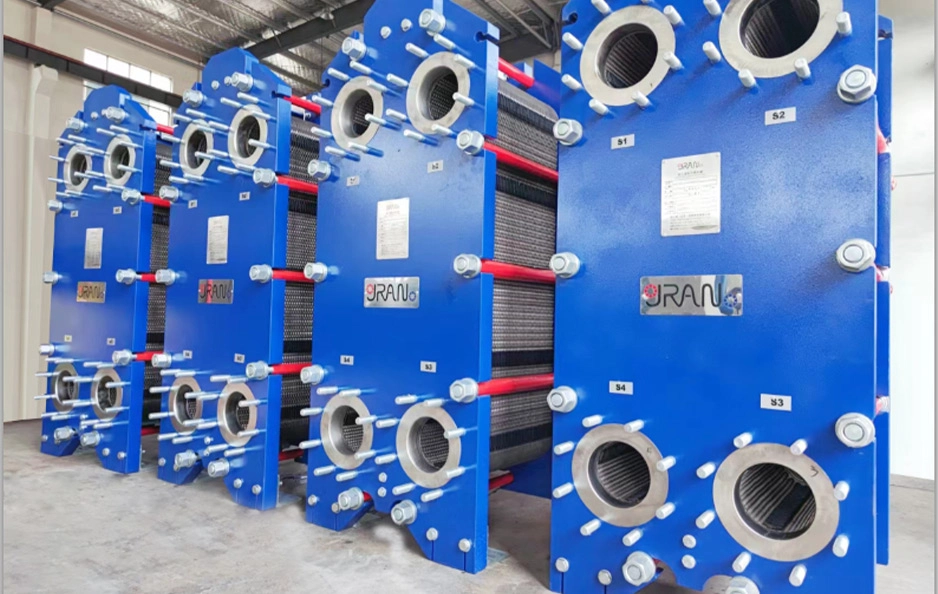
Besides पिकिंग the right rubber, the exact way you put everything together decides how long your seals will stay dry. Making mistakes with how tightly you squeeze the plates together is the most common human error.
If you squeeze the stack of plates way too hard, the gasket gets crushed, and you kill its ability to bounce back to its normal shape. If you do not squeeze it tight enough, there is not enough pressure to hold the water back. Also, if you tighten the bolts unevenly, it makes the stainless steel plates bend, putting too much stress on small spots.
When putting in new gaskets that need glue, forgetting to scrub away old glue means the new gasket will not sit flat, leaving little tunnels for liquid to escape.
VI. Important Things You Need to Think About Before Changing Gaskets
If you want to stop the bad cycle of leaks, you have to do a deep check of your whole system. You need to figure out these details:
-
Highest and Lowest Working Temperatures: Look past the normal heat levels and pay attention to super high heat spikes.
-
Highest System Pressure and Changes: Look at your pipes to see if water pumps turn on and off all the time.
-
Exact Chemical Mix of Your Liquids: Watch out for tiny extra chemicals added to the mix.
-
Original Plate Groove Depth: Make totally sure the thickness of your brand-new gasket matches the wavy metal plate.
To give you a clear picture, the Grano engineering team put together this guide for gasket materials:
-
NBR (Nitrile Rubber): Handles heat up to 110°C to 130°C. Works great with water and normal machine greases. Never use it with strong acids.
-
EPDM: Handles heat up to 150°C to 160°C. Perfect for hot water and weak acids. Keep away from mineral oils.
-
FKM: Survives crazy high heat from 200°C to 220°C. Built for hot strong acids. Do not use it with steam.
VII. A Real Story: Stopping Leaks at a Big Chemical Factory
Background
A chemical factory had a huge headache with a big plate heat exchanger. In just two months, workers put in three sets of brand-new NBR gaskets. But, less than two weeks after they put each new set in, solvent started dripping all over the floor again.
How We Found the Problem
The factory decided to call the engineering support team at Grano. The Grano engineers found the real reason for the trouble: the process sometimes pushed tiny amounts of aromatic solvents into the water. These bits of solvent made the NBR gaskets blow up like balloons and get soft. Plus, workers squeezed the metal plates 5mm tighter than they were supposed to, which crushed the rubber.
The Fix from Grano
The technical team at Grano worked fast to upgrade the setup with top-quality FKM gaskets. We also showed the workers how to install everything safely.
The Happy Ending
Since Grano stepped in, the machine has been running smoothly for more than 14 months straight without spilling a drop.
सामान्य प्रश्न
Q: How can I actually tell if my plate heat exchanger has a hidden leak inside?
A: Since you cannot see internal leaks from the outside, they are harder to catch. Good ways to figure it out include taking liquid samples to the lab regularly to see if chemicals from the high-pressure side show up in the low-pressure water. Also, watch your pressure gauges closely to see if the pressure drops for no reason. Another trick is to turn the machine off, empty the liquid from one side, and push steady water pressure into the other side to check if water sneaks out.
Q: The brand-new gaskets I just bought feel a little bit harder or softer compared to the old ones. Will this mess up the seal?
A: The physical hardness of a rubber gasket is decided by the chemicals inside it. Different rubbers naturally have different levels of perfect hardness. But, if gaskets from the same box feel uneven, or if old gaskets turned into hard rocks, it means the rubber got too old or chemicals ruined it. You should always buy gaskets from trusted makers like Grano, where they do strict tests.
Q: Are there things I absolutely must not do when scraping old glue off the plates?
A: Yes. When fighting to get tough old glue off, never pick up an angle grinder, rough wire brush, or sharp metal tool. If you put tiny scratches on the stainless steel plates, you destroy the shield that stops rust. This lets rust eat holes into the metal and make new pathways for water to leak. The right way is to use special chemical softeners to make the glue let go naturally. Then, brush it gently, wash it down, and dry it.


