



When it comes to chemical processing and heavy industries, dealing with hazardous fluids is a daily routine. It is not just a job; it is a constant fight to ensure safe operations. You’re always fighting against material degradation, human safety hazards, and unexpected equipment failures. For centuries, engineers and plant operators have had two less-than-ideal choices: Gasketed Plate Heat Exchangers transfer heat efficiently but have poor rubber gaskets; Shell-Tube Heat Exchangers are rugged but heavy, inefficient, and oversized. They both have problems with harsh chemicals.
There is a third option now – a new generation of advanced heat transfer technology that offers no compromises. This is where the Fully Welded Plate Heat Exchanger (PHE) comes in.
At Grano, we know that when you are working with strong acids, harsh alkalis, or tricky organic solvents, “good enough” is simply not an option. You need something that works perfectly every single time. Here is a deep dive into why Fully Welded PHEs have become the best choice for handling corrosive fluids, and why they are the future of safe and smart chemical processing.
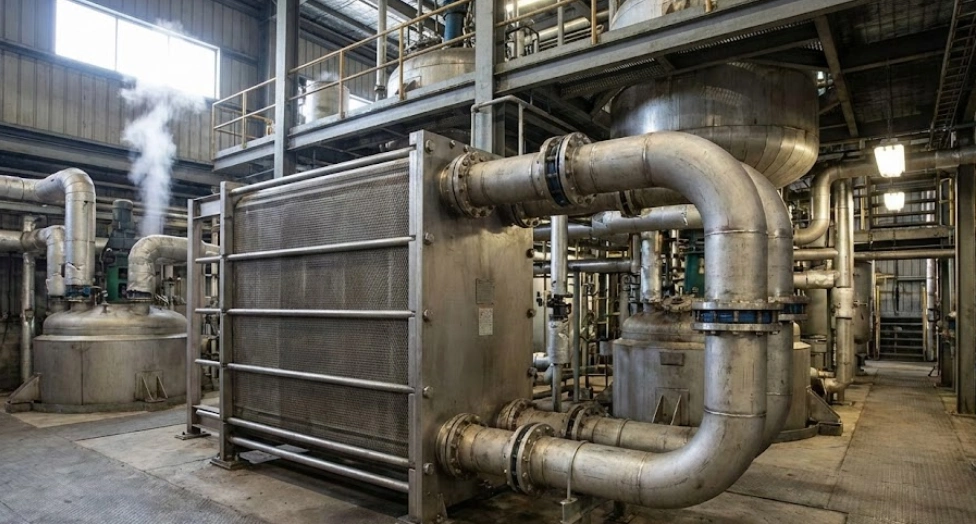
The Weak Spots in Traditional Heat Exchangers
To really understand why a fully welded design is so much better, we first have to look at where the older methods fail when they face corrosive environments. It usually comes down to the parts that hold everything together.
The Problem with Rubber Gaskets
Standard plate heat exchangers use gaskets, which are basically rubber seals, to keep the fluids inside the machine. These work perfectly fine if you are just heating up water or mild fluids. However, in the chemical industry, gaskets are often the first thing to break. They are the “Achilles’ heel” of the system.
When you expose a rubber gasket to aggressive chemicals, bad things happen. The rubber might swell up and get too big for its groove, or it might dry out and crack. Sometimes, the chemical actually eats away at the rubber. When any of this happens, you get a leak. In a chemical plant, a leak is not just a puddle on the floor; it can be a cloud of poisonous gas or a spill of burning acid. Also, because rubber melts or gets brittle, gaskets limit how hot or how much pressure you can run your system at. You are always held back by the limits of that rubber seal.
The Problem with Big Shell-and-Tube Units
On the other side, you have the Shell-and-Tube exchanger. These have been around forever. You can weld them shut so they don’t have gaskets, which solves the leaking problem. But they have other huge downsides. They are notoriously bad at transferring heat compared to plate units. To get the same amount of cooling or heating done, a shell-and-tube unit often needs to be five times bigger than a plate unit.
This size problem leads to a money problem. If your process involves corrosive fluids, you cannot build the exchanger out of cheap steel. You have to use expensive metals like Titanium or Hastelloy. If you have to build a massive shell-and-tube unit out of those expensive metals, the cost goes through the roof. You end up paying for thousands of pounds of expensive metal just to do a job that a smaller machine could do better.
Enter the Fully Welded Plate Heat Exchanger
A Fully Welded PHE is the answer to these problems. It combines the best parts of both older technologies. You get the small size and high efficiency of a plate heat exchanger, but you also get the tough, sealed durability of a shell-and-tube unit.
The magic happens in how it is made. Grano replaces those weak rubber gaskets with permanent metal welds. We use advanced welding technology, like TIG or laser welding, to melt the edges of the plates together. This creates a “hermetically sealed” channel for the fluid to flow through. It is one continuous piece of metal. There are no gaskets to fail, no rubber to rot, and no easy path for leaks to start.
1. Absolute Immunity to Gasket Failure
The biggest reason to switch to a Fully Welded PHE is safety. If you are managing a plant that works with sulfuric acid, ammonia, or deadly gases, you cannot afford a leak. A leak is a catastrophe.
Grano designs these fully welded units to completely remove the gasket from the picture. The plates are welded into a solid block. This means the only thing you have to worry about is if the metal itself can handle the fluid. If the metal is compatible with your chemicals, the heat exchanger will work. You don’t have to worry about a rubber seal failing because there isn’t one. This gives plant managers a lot of peace of mind. You know that the weak link has been removed from the chain.
2. Handling Extreme Heat and Pressure
Chemical processes often happen under extreme conditions. You might need to heat something up to very high temperatures to get a reaction going, or put it under high pressure. Standard gaskets would melt or blow out under these conditions.
Because Grano fully welded units don’t have rubber parts, they are not held back by thermal limits.
High Pressure:These units are built tough. They can handle pressure spikes and heavy loads that would break a normal gasketed unit.
High Temperature:With no rubber to burn, fully welded exchangers can keep working at temperatures higher than 300°C to 500°C. This makes them perfect for jobs in oil refineries, high-temperature chemical reactions, and recovering heat from hot exhaust gases.
3. Maximum Efficiency in a Tiny Footprint
In any factory or chemical plant, floor space costs money. You don’t want a machine taking up half the room if it doesn’t have to. A Fully Welded PHE keeps the “turbulent flow” that makes plate exchangers so good. Inside the unit, the fluid doesn’t just flow smoothly; it tumbles and mixes rapidly. This turbulence scrubs the surface of the plates, which helps keep them clean, and it pulls heat out of the fluid very fast. In fact, the heat transfer rate is often 3 to 5 times higher than a shell-and-tube exchanger.
For you, this means you can do the same work with a machine that is 80-90% smaller than the old-fashioned shell-and-tube types. This saves you valuable space in your plant. It also adds another layer of safety because the unit holds less dangerous fluid at any one time. If there ever was an accident, having 50 gallons of acid in the system is a lot safer than having 500 gallons.
4. Saving Money on Expensive Materials
This is where the economics really make sense. When you are dealing with nasty stuff like hot hydrochloric acid or chlorides, you cannot use regular stainless steel. You have to use “exotic” materials like Titanium, Nickel Alloys, or Hastelloy.
If you try to build a massive Shell-and-Tube exchanger out of solid Titanium, the price will be astronomical. It would be incredibly heavy and incredibly expensive. But because a Fully Welded PHE is so efficient, it is much smaller. It uses thin, corrugated plates (usually between 0.5mm and 1.0mm thick). This means the total weight of that expensive metal is just a fraction of what you would need for a tubular unit. Grano can build you a top-tier, corrosion-resistant machine for a much lower price because we use those expensive materials much more efficiently.
The Grano Advantage: Built for the Toughest Jobs
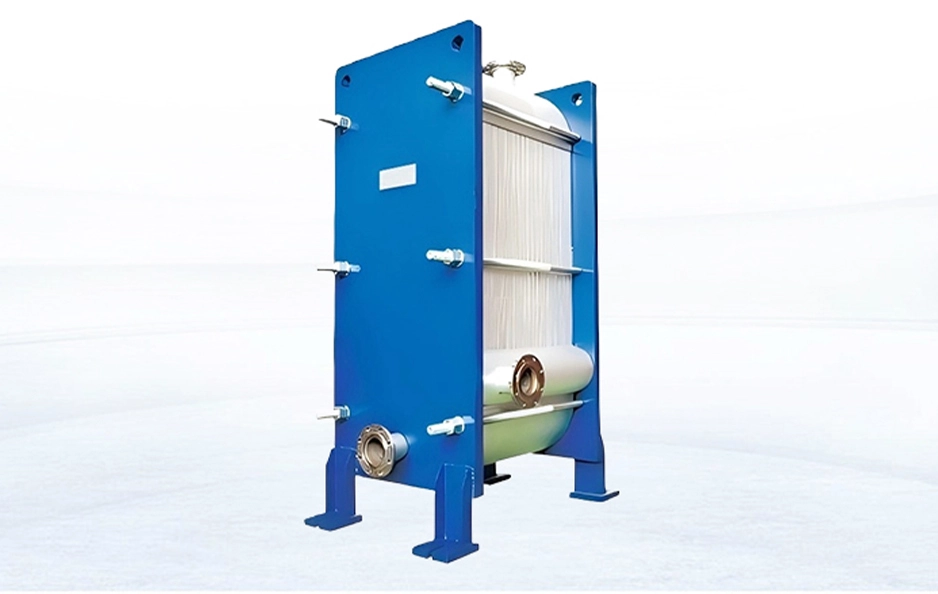
At Grano Heat, we are not just moving boxes. We are providing engineered solutions that are backed by more than 10 years of research, development, and manufacturing experience. We have positioned ourselves as the smart, high-quality alternative to the giant global brands. We offer world-class performance, but we don’t charge the huge “brand name” markup.
Our Fully Welded Plate Heat Exchangers are specifically designed for the most demanding industries out there:
-
Petrochemical & Refinery:We help handle the heavy processing of hydrocarbons and recovering heat that would otherwise be wasted.
-
Chemical Processing:We provide the equipment needed to heat and cool acids, bases, and solvents safely.
-
Power Generation:Our units are used for condensing high-pressure steam and heating up feed water to keep power plants running efficiently.
Quality is important to us, and each welded unit is tested to ensure that it can withstand pressure. Whether you are replacing a failing shell and tube unit with one that is smaller in scale or designing a new process for one of your critical chemical lines, the Grano engineering team is here to help.
Conclusion
When dealing with corrosive media, a gasket approach is always considered an unacceptable risk. This is due to the potential costs in terms of safety, environmental issues, and production loss. Fully Welded Plate Heat Exchanger is the ultimate solution available to the chemical processing industry. It offers a marriage between a safe solid welded vessel and a highly efficient plate pack.
By choosing Grano, you are choosing a partner who cares about strength, reliability, and doing the job right. You don’t have to let corrosion eat away at your profits or keep you up at night worrying about leaks. It is time to upgrade to a solution that is built to last.
FAQ
Q: If the unit is welded shut, how do we clean it if it gets dirty or clogged?
A:This is a very common question. Since you cannot take the plates apart like you can with a gasketed unit, you might think cleaning is impossible. But it is actually quite straightforward. Fully welded exchangers are designed to be cleaned using a method called CIP (Cleaning-In-Place). Because the fluid inside the unit moves with such high turbulence, it naturally scrubs the walls and prevents dirt from sticking in the first place. However, if some deposits do build up over time, you can pump a cleaning chemical solution through the unit without unhooking it from your system. This solution dissolves the dirt and flushes it out. It is often faster and easier than unbolting a unit and cleaning plates by hand.
Q: Is a Fully Welded PHE really cheaper than a Shell-and-Tube exchanger?
A:The answer depends on what materials you need. If you are just using standard stainless steel, the prices might be similar, though the welded unit will be much smaller and save you installation space. However, the real savings happen when you need corrosion-resistant materials. If your process requires exotic metals like Titanium or Hastelloy, a Shell-and-Tube unit becomes incredibly expensive because it is so heavy and uses so much metal. A Fully Welded PHE uses thin plates and is much more compact, so it uses far less of that expensive material. in these cases, the Grano fully welded unit is significantly cheaper than the shell-and-tube alternative, saving you a large amount of money on your initial investment.
Q: What kind of pressure can Grano’s fully welded units actually handle?
A:While the specific numbers always depend on which model you choose and what your job is, fully welded plate heat exchangers are built for high pressure. Standard rubber-gasket units usually top out around 20 or 25 bar of pressure. If you go higher, they leak. Our fully welded designs can handle much more than that. Some of our robust designs can withstand pressures up to 60 bar or even higher, depending on the specific construction method we use, such as block-type designs. If you have a high-pressure process, just talk to our engineering team, and we can specify the exact limits for your unique situation.


