
Pour refroidir un processus industriel ou chauffer un bâtiment commercial, le choix du bon équipement est crucial. Vous comparez peut-être actuellement un échangeur de chaleur à contre-courant et un échangeur à flux croisés afin de déterminer lequel est le plus adapté à votre système.
Si vous recherchez un partenaire fiable pour la gestion thermique, Grain est un fabricant spécialisé depuis 2015. L'entreprise se concentre sur les unités compactes, les plaques et les joints à haute efficacité. Son équipe met à profit des années d'expertise pour fournir des technologies de conception et de production de pointe à diverses industries. le contexte à complet Grain Ils prennent en charge l'ensemble des opérations, de la vente à l'installation en passant par la maintenance. Vous bénéficiez ainsi d'un fonctionnement stable et de coûts réduits. Examinons de plus près le fonctionnement de la dynamique des fluides et son impact sur vos activités quotidiennes.
Principes fondamentaux de la dynamique des fluides dans les échangeurs de chaleur
Le mouvement des fluides détermine l'efficacité du transfert de chaleur d'un endroit à un autre. Il est essentiel de connaître ces principes de base avant d'investir dans un équipement coûteux.
Principes fondamentaux du transfert de chaleur
Le transfert de chaleur repose sur une règle simple : l’énergie thermique se déplace d’un corps chaud vers un corps froid. Dans les équipements industriels, une barrière métallique sépare les deux fluides tout en laissant passer la chaleur. La manière dont ces fluides se déplacent l’un par rapport à l’autre sur cette plaque métallique influence considérablement les performances de l’appareil. Pour accélérer le transfert de chaleur à travers le métal, il est essentiel d’obtenir la différence de température la plus élevée possible en tout point de la plaque.
Importance dans les systèmes CVC
Dans les systèmes de ventilation et de chauffage des bâtiments, même de faibles variations de débit ont un impact considérable sur vos factures d'énergie. Les systèmes CVC fonctionnent en continu. Si le transfert de chaleur est insuffisant, vos pompes et compresseurs doivent fournir un effort bien plus important pour atteindre la température souhaitée. Choisir une conception de débit optimisant la récupération d'énergie permet à votre système de consommer moins d'électricité du réseau, et ce, à chaque instant.
Rôle dans les processus industriels
Les usines chimiques et agroalimentaires exigent une grande précision de température. Une légère baisse de température peut ruiner tout un lot de jus, un problème fréquent dans les usines plus anciennes. Les procédés industriels requièrent un contrôle thermique rigoureux pour maintenir les liquides à des niveaux de viscosité sûrs ou pour pasteuriser parfaitement les produits. La configuration du flux choisie influe directement sur la stabilité de ces températures lorsque la production s'accélère.
Mécanismes des échangeurs de chaleur à contre-courant
Cette configuration offre l'échange thermique le plus efficace actuellement disponible sur le marché. Voyons pourquoi les ingénieurs privilégient généralement cette méthode pour les applications de refroidissement exigeantes.
Définition du flux à contre-courant
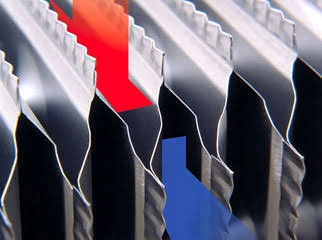
Dans cette conception, le fluide chaud et le fluide froid circulent parallèlement, mais en sens inverse. Le fluide le plus froid entre dans l'appareil à l'endroit précis où le fluide chaud en sort. Cette configuration permet de maintenir une différence de température constante entre les deux liquides sur toute la longueur des plaques métalliques. Il n'y a aucune surface perdue.
Avantages en matière d'efficacité thermique
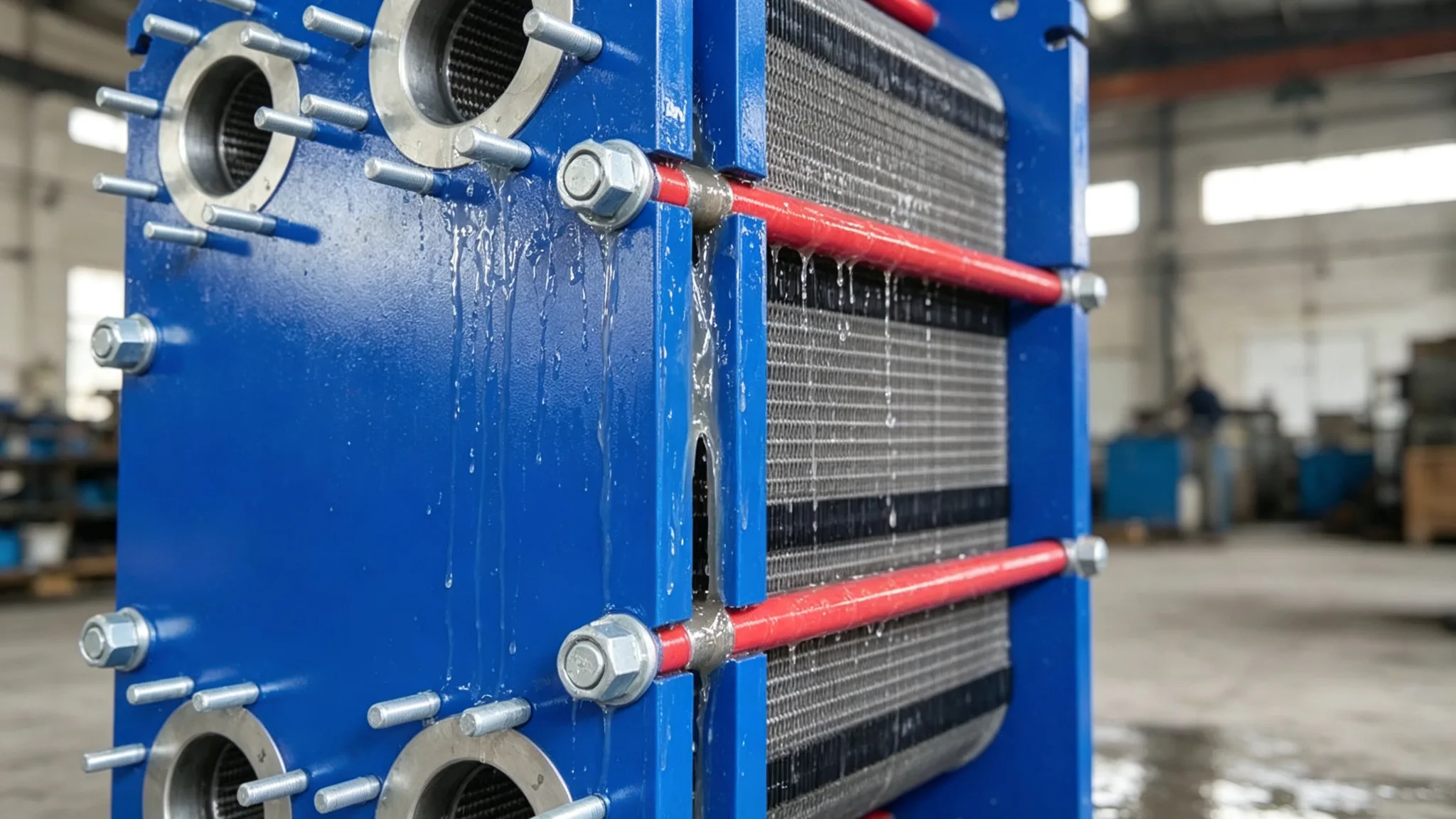
Cette approche permet d'obtenir la différence de température moyenne logarithmique la plus élevée possible. Elle autorise même le croisement des températures, c'est-à-dire que le liquide froid peut sortir de l'unité à une température supérieure à celle du liquide chaud qui en sort. Échangeur de chaleur à plaques Ce système utilise précisément cette conception à contre-courant. Grâce à l'installation inversée des plaques, des milliers de points de contact créent une forte turbulence du fluide. Il en résulte un coefficient de transfert thermique exceptionnellement élevé et une excellente résistance à la pression.
Applications industrielles idéales
Ce système excelle dans les raffineries de pétrole, les usines pétrochimiques et les systèmes de refroidissement de précision. Tout procédé de récupération de chaleur résiduelle en tire un avantage considérable. Lorsqu'il s'agit d'extraire la moindre goutte d'énergie thermique des eaux usées pour préchauffer l'eau entrante, rien ne vaut un système à contre-courant.
Dynamique des échangeurs de chaleur à flux croisés
Il arrive que vos fluides se croisent à angle droit. Ce type de conception a son utilité, mais il présente des limitations physiques spécifiques.
Principes fondamentaux du flux transversal
Un échangeur de chaleur à courants croisés classique fonctionne en faisant circuler un fluide de gauche à droite tandis que l'autre se déplace de haut en bas. Leurs flux se croisent à angle droit. Comme les fluides ne circulent pas en opposition parfaite, la différence de température varie considérablement sur la surface d'échange. Certaines parties du métal contribuent fortement à la chaleur tandis que d'autres y contribuent très peu.
Impact sur la chute de pression
On pourrait croire que la perte de charge n'est qu'un chiffre sur une fiche technique. Pourtant, elle influe directement sur votre facture d'électricité mensuelle, car les pompes doivent fournir un effort plus important pour faire circuler le liquide. Un échangeur de chaleur à flux croisés génère généralement une perte de charge plus faible côté gaz, ce qui le rend utile pour le déplacement de volumes importants d'air à basse pression. Cependant, son rendement thermique est sensiblement inférieur à celui d'un échangeur à flux parallèles opposés.
Applications courantes de CVC
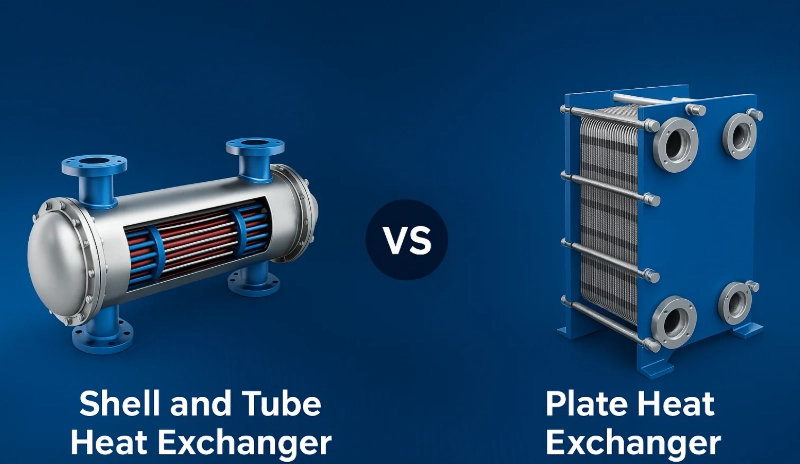
On trouve souvent des échangeurs de chaleur à flux croisé dans les radiateurs de voiture ou les simples conduits de ventilation. Lorsqu'il s'agit simplement de souffler de l'air extérieur sur un tube contenant un liquide chaud, cela fonctionne parfaitement. Mais lorsque l'espace se réduit et qu'il faut gérer des liquides à haute pression, les ingénieurs remplacent généralement ces serpentins encombrants par des modèles à plaques plus performants.
Comparaison détaillée des deux configurations
Comparer les données vous aidera à prendre la décision finale concernant votre installation. Il vous faut trouver un équilibre entre les coûts initiaux et les dépenses d'exploitation à long terme.
Différences d'efficacité thermique
Comparé à un échangeur de chaleur à courants croisés, un échangeur à contre-courant permet d'obtenir un rendement thermique bien supérieur dans un espace réduit. Ce gain est mesuré à l'aide d'un facteur de correction.
| Configuration du flux | Correction de la différence de température moyenne logarithmique (LMTD) | Efficacité pratique maximale | Domaine d'application typique |
|---|---|---|---|
| Contre-courant pur | 1.0 (Optimal) | 90 % à 95 % | Liquide à liquide |
| Flux croisé pur | 0.75 to 0.85 | 60 % à 75 % | Air-air / Air-liquide |
Source : Normes générales d'ingénierie thermique
Le système à contre-courant maintient une force motrice maximale sur toute la surface de la plaque. Concrètement, on utilise moins de métal pour un résultat identique.
Exigences relatives à l'espace d'installation
L'espace au sol en usine est précieux. Un échangeur de chaleur à flux croisés classique occupe une surface considérable. Les échangeurs à plaques à contre-courant, quant à eux, sont incroyablement compacts. Vous pouvez ainsi optimiser l'espace d'échange thermique, même dans un petit coin de votre local technique. Vous disposez alors de plus de place pour installer des pompes supplémentaires ou, tout simplement, pour permettre à vos employés de circuler en toute sécurité.
Comparaison des coûts de maintenance
Les équipes de maintenance détestent nettoyer les serpentins de tubes soudés. Grâce à un système de plaques amovibles, un seul opérateur peut desserrer les boulons, faire glisser les plaques vers l'arrière et nettoyer la saleté au nettoyeur haute pression en quelques heures.
| Type d'équipement | Empreinte au sol par MW | Méthode de nettoyage | Durée de vie du joint/de la bague d'étanchéité |
|---|---|---|---|
| Unité de plateau (comptoir) | Très petit | Ouverture et lavage manuels | 3 à 5 ans |
| Unité de bobine (croisée) | Grand | chasse d'eau chimique uniquement | Difficile à remplacer |
Source : Registres de maintenance industrielle
Remplacer un joint sur un séparateur à plaques est simple. Réparer une fuite au cœur d'un serpentin à flux croisé implique généralement de découper du métal ou de jeter l'ensemble.
Critères de sélection adaptés à vos besoins spécifiques
Maintenant, examinez votre propre atelier de production. Chaque projet présente des goulots d'étranglement uniques qui déterminent le type d'équipement que vous devriez réellement acheter.
Évaluation des limites de température
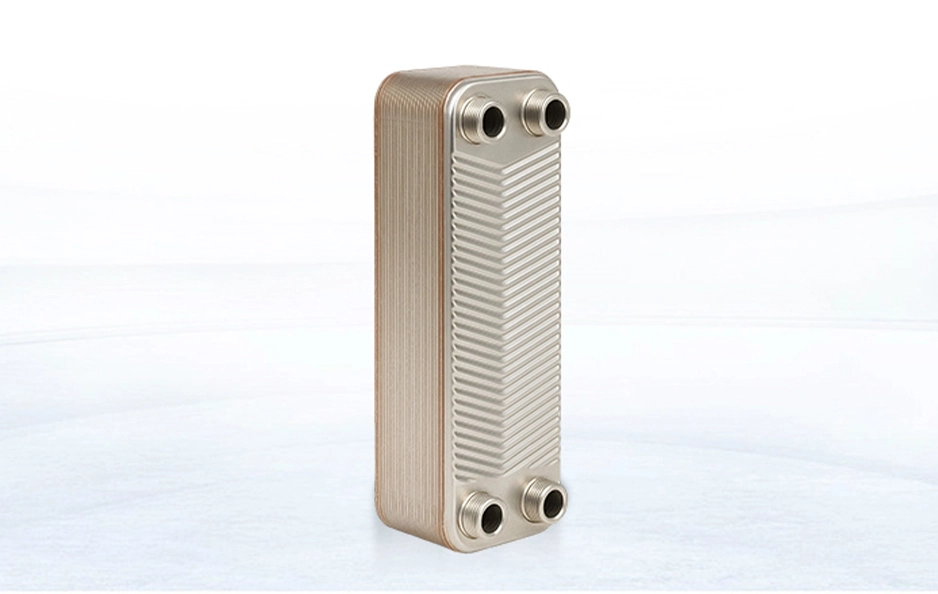
Il est essentiel de prendre en compte la température maximale que votre système est susceptible d'atteindre. Si vos fluides sont extrêmement chauds, les joints en caoutchouc standard fondront. C'est là qu'un échangeur de chaleur à plaques brasées s'avère indispensable. Ces unités utilisent le brasage au cuivre pour sceller les plaques sans recourir au caoutchouc. Elles supportent sans problème des conditions extrêmes, jusqu'à 300 °C et une pression de 40 MPa.
Évaluation des contraintes spatiales
Si votre local technique se trouve au sous-sol et que les portes sont étroites, il vous est impossible de faire descendre un bloc-machine imposant par l'escalier. Vous avez besoin d'équipements modulaires. Les structures préfabriquées permettent de transporter le châssis et les panneaux individuels par une porte standard et d'assembler l'ensemble de la machine sur place.
Examen des objectifs budgétaires
Ne vous fiez pas uniquement au prix affiché. Il est essentiel de calculer le coût total de possession sur dix ans. Un appareil bon marché, mais peu performant en termes de débit, vous coûtera cher en raison de la forte consommation électrique de la pompe et des nettoyages chimiques fréquents. Investir un peu plus au départ dans un modèle à haut rendement thermique est rentable dès la première année d'utilisation.
Faites appel à Grano pour des solutions d'échange thermique haut de gamme.
Choisir le bon équipement vous évitera bien des soucis par la suite. Que vous souhaitiez remplacer un ancien échangeur de chaleur à flux croisés ou construire une toute nouvelle usine de traitement, nous avons exactement le matériel qu'il vous faut.
Échangeurs de chaleur à plaques haute performance
Nos unités détachables offrent des surfaces d'échange thermique allant jusqu'à 5 000 mètres carrés. Elles sont très économes en énergie, compactes et se démontent facilement pour le nettoyage. Nos plaques sont fabriquées en acier inoxydable et en titane de haute qualité, adaptés à vos besoins spécifiques en matière de fluides.
Échangeurs de chaleur à plaques brasées robustes
Lorsque votre usine manipule des fluides à des températures extrêmes, nos unités brasées sont à la hauteur. Elles offrent une résistance à la corrosion exceptionnelle et une structure ultra-compacte. Chaque unité est testée individuellement pour son étanchéité avant sa sortie d'usine, vous assurant ainsi une résistance optimale même sous des contraintes extrêmes.
Maintenance complète et Services personnalisés
Nous ne nous contentons pas de vendre du métal. Nous assurons également le support technique, la fourniture de plaques de rechange, de joints sur mesure et des services de nettoyage sur site. Contactez-nous dès aujourd'hui pour obtenir un devis personnalisé et garantir le fonctionnement optimal de votre système thermique pour les années à venir.
FAQ
Q : Pourquoi un échangeur de chaleur à contre-courant est-il généralement plus efficace qu'un échangeur de chaleur à flux croisés ?
A : Un échangeur à contre-courant maintient les deux fluides en mouvement dans des directions opposées, ce qui assure une différence de température élevée et constante sur toute la surface de la plaque métallique. À l'inverse, un échangeur à courants croisés déplace les fluides à un angle de 90 degrés, ce qui provoque une chute rapide de la différence de température dans certaines zones, gaspille de l'espace et réduit l'efficacité.
Q : Puis-je facilement agrandir mon système de chauffage ultérieurement si j'achète un appareil à plaques maintenant ?
A : Oui. L'un des principaux avantages d'un groupe de refroidissement à plaques détachables est sa structure modulaire. Si votre usine s'agrandit et que vous avez besoin de plus de puissance de refroidissement l'année prochaine, il vous suffit de desserrer les boulons principaux et d'ajouter des plaques métalliques supplémentaires à la même structure.
Q : À quelle fréquence dois-je nettoyer ces appareils ?
R : Cela dépend beaucoup de la qualité de votre fluide. Si vous utilisez de l'eau traitée et propre, vous n'aurez peut-être besoin d'ouvrir l'appareil que tous les deux ou trois ans. En revanche, si vous traitez des liquides alimentaires visqueux ou si vous utilisez de l'eau de refroidissement provenant directement d'une rivière polluée, il vous faudra peut-être ouvrir l'appareil et nettoyer les plaques au nettoyeur haute pression tous les six mois afin de maintenir une efficacité optimale.