



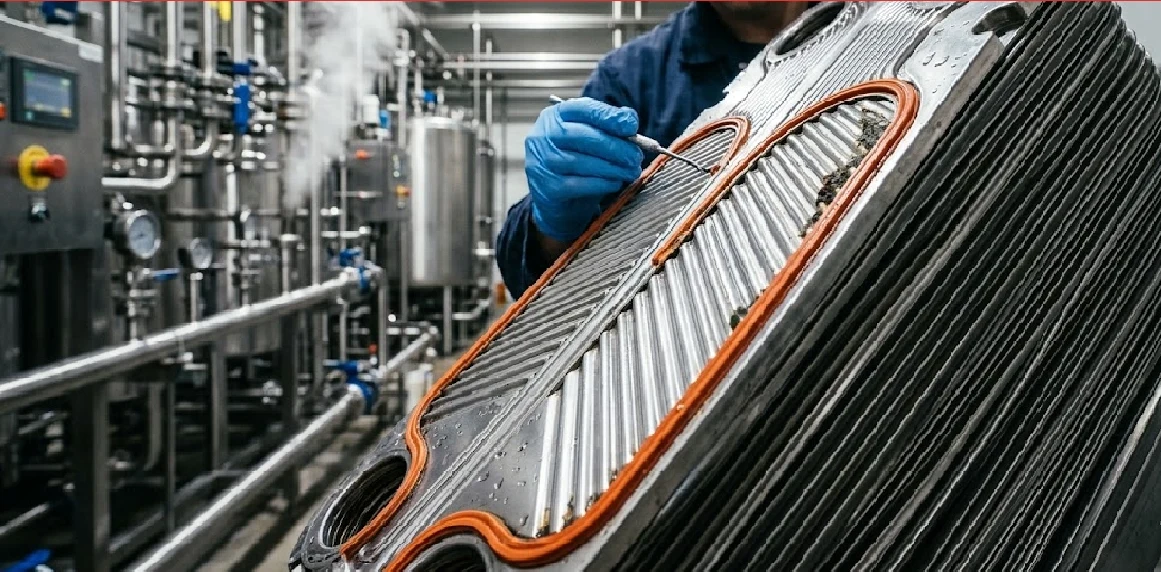
Ton Échangeur de chaleur L'installation peut paraître impeccable après chaque cycle NEP (Nettoyage En Place). Cependant, des dépôts cachés peuvent persister dans les interstices des plaques, les rainures des joints et les zones de faible débit. Dans les lignes de production de produits laitiers, de jus, de yaourts, de sirops, de bière et de boissons en bouteille, ces dépôts constituent un risque microbien. Une conception sanitaire appropriée et des équipements adaptés sont donc essentiels. Joint conforme aux normes FDA Les choix sont des éléments clés. Ils garantissent la sécurité des produits, la constance des lots et la crédibilité de votre production.
Pour une amélioration fiable des procédés de transformation des aliments et des boissons, considérez les Échangeur de chaleur à plaques GranoIl s'adapte aux espaces restreints, assure un transfert de chaleur efficace, se démonte facilement et… supports Maintenance aisée. La configuration des plaques garantit d'excellentes performances thermiques. Par ailleurs, la structure amovible simplifie les contrôles et le nettoyage, même pour les productions les plus exigeantes. Différentes options sont disponibles : surfaces d'échange thermique sur mesure, acier inoxydable ou autres matériaux, et systèmes à plaques et joints pour divers fluides, températures et conditions. Les transformateurs de lait, jus, boissons, sauces ou produits épais bénéficient de cette solution adaptable. Échangeur de chaleurIl facilite les tâches de nettoyage et renforce la fiabilité à long terme.
Pourquoi des problèmes microbiens persistent-ils après un nettoyage en place (NEP) ?
De nombreuses usines agroalimentaires rencontrent un problème persistant : la ligne de production termine le nettoyage en place (NEP), mais les analyses révèlent des taux de bactéries ou de micro-organismes supérieurs aux seuils de sécurité. Au départ, le processus de nettoyage semble fiable : l’eau atteint la température adéquate, le détergent circule correctement et les opérateurs respectent la procédure standard. Pourtant, lorsque… Échangeur de chaleur Des résidus tenaces s'accrochent aux bords, aux fentes des joints ou aux passages étroits.
Ce problème résulte rarement d'une simple erreur de manipulation. Souvent, il est dû à une inadéquation entre la configuration de l'équipement, le type de joint ou le style de plaque et le produit utilisé. Les yaourts, les sirops, les jus concentrés, les laits aromatisés et les sauces diffèrent considérablement de l'eau. Leur texture épaisse, leur teneur en sucres, protéines, minéraux et pulpe adhèrent aux surfaces et sont difficiles à rincer.
Les recommandations de la FDA concernant la validation du nettoyage insistent sur la nécessité de prendre en compte les facteurs microbiologiques lors du nettoyage des équipements. Le nettoyage et le stockage réguliers doivent prévenir la prolifération microbienne. Elles mettent également en garde contre le risque de laisser de l'eau stagnante dans les équipements après le nettoyage.
Ainsi, choisissez un produit sanitaire Échangeur de chaleur comme partie intégrante de votre dispositif de sécurité alimentaire, bien plus qu'un simple outil de transfert de chaleur.
L'erreur fréquente : l'acier inoxydable seul ne suffit pas
De nombreux acheteurs se concentrent sur une seule question : « Est-ce de l’acier inoxydable ? » L’acier inoxydable est un bon matériau, mais il ne garantit pas à lui seul une hygiène parfaite. Examinez également le joint, la disposition des plaques, la facilité de nettoyage, le circuit d’écoulement, la précision d’assemblage et la méthode d’entretien.
Un ensemble de plaques comprend des plaques de transfert thermique, des joints d'étanchéité, des plaques de serrage et des boulons. Le joint assure l'étanchéité et guide le flux entre les plaques. Son état influe donc sur la propreté, la résistance à la pression et les niveaux de chaleur. La surface du joint doit être lisse, brillante et exempte de bulles, de bosses, d'excédents de matière ou d'autres défauts d'étanchéité.
L'utilisation d'un joint industriel standard dans les zones de contact alimentaire peut présenter trois dangers :
|
Risque caché |
Pourquoi c'est important dans la production alimentaire et de boissons |
Meilleur choix |
|
Formule de caoutchouc non alimentaire |
Il peut ne pas convenir à un contact alimentaire répété ou à des cycles de nettoyage à chaud. |
Utilisez un document Joint conforme aux normes FDA |
|
Excès d'adhésif |
La colle vieillissante peut se ramollir, emprisonner des résidus ou rendre le nettoyage plus difficile. |
Utilisez des joints à clipser ou à enclenchement lorsque cela est possible. |
|
mauvaise hygiène de la rainure du joint |
Des résidus peuvent subsister au niveau du joint après le nettoyage en place (NEP). |
Utilisez des joints faciles à retirer et inspectez régulièrement les rainures. |
Pour les articles en caoutchouc destinés à un contact alimentaire continu, la norme FDA 21 CFR 177.2600 définit les limites d'extraction des substances nocives pour les surfaces en caoutchouc dans les aliments aqueux et gras. La documentation est essentielle. Ne vous fiez pas uniquement à la couleur, à l'apparence ou à des assurances superficielles.
Que signifie réellement un joint conforme aux normes de la FDA ?
UN Joint conforme aux normes FDA Il ne s'agit pas simplement d'un composant en caoutchouc plus souple ou plus lisse. Ce procédé utilise des matériaux adaptés au contact alimentaire prévu, et atteste de leur conformité. La norme FDA 21 CFR 177.2600 autorise la réutilisation d'articles en caoutchouc dans la production, la transformation, le conditionnement, le transport ou le stockage des aliments, sous réserve du respect des réglementations.
La règle fixe des seuils d'extraction clairs :
|
Conditions de contact alimentaire selon la norme FDA 21 CFR 177.2600 |
milieu de test |
Extraction maximale dans les 7 premières heures |
Extraction maximale dans les 2 prochaines heures |
|
contact alimentaire aqueux |
Eau distillée à température de reflux |
20 mg/po² |
1 mg/po² |
|
contact avec des aliments gras |
n-hexane à température de reflux |
175 mg/po² |
4 mg/po² |
Le point principal pour les utilisateurs est simple : si le joint est en contact avec le produit ou le liquide de nettoyage d’une ligne de production alimentaire, demandez des informations sur la compatibilité des matériaux, les limites de température et les documents de conformité. Joint conforme aux normes FDA réduit les risques d'extraction de substances nocives, d'enflure, de fractures et d'usure prématurée.
Comment le matériau du joint affecte le nettoyage, le SIP et la sécurité du produit
Un sanitaire Échangeur de chaleur Le bon fonctionnement dépend de la compatibilité des plaques et des joints. Un joint inadapté peut entraîner un dysfonctionnement, même avec des plaques de qualité. La vapeur, l'eau chaude, les acides, les bases, les sucres, les huiles et les produits de nettoyage ont un impact spécifique sur les élastomères.
Les spécifications du produit détaillent les différents matériaux de joints et les plages de température pour les systèmes de plaques, y compris les versions compatibles avec les aliments. Ces plages permettent d'adapter le joint au produit et à la méthode de nettoyage.
|
Type de joint |
Plage de températures de fonctionnement indiquée |
Convient généralement à une utilisation dans le secteur alimentaire et des boissons |
|
EPDM alimentaire |
-54°C à 150°C |
Eau, vapeur, eau chaude, nombreuses tâches liées aux boissons et aux produits laitiers |
|
Aliments NBR |
-30°C à 120°C |
droits d'huile et d'eau, procédés liés aux huiles comestibles |
|
Nourriture FKM |
-29°C à 220°C |
Conditions de travail résistantes aux températures élevées, à l'huile, aux acides, aux alcalis et aux produits chimiques |
Les problèmes de contamination commencent souvent ici. Un joint adapté à l'eau claire peut présenter des faiblesses avec du lait chaud, du jus d'agrumes, des nettoyants alcalins ou du SIP. Sélectionnez un Joint conforme aux normes FDA en fonction du fluide, de la chaleur, de la pression, des agents de nettoyage et des intervalles de remplacement.
Pourquoi les modèles à clipser ou à enclenchement réduisent les risques d'hygiène
Les joints collés standard conviennent dans certains cas. Cependant, les nettoyages réguliers et les cycles de chauffe peuvent dégrader l'adhésif. Lorsque la colle durcit ou se détache, elle forme des irrégularités et des zones de rétention. Dans les installations de production de boissons ou de produits laitiers, ces irrégularités peuvent retenir des sucres, des protéines, des matières grasses ou des minéraux.
Les joints à clipser ou à enclenchement simplifient l'entretien. Ils permettent un retrait et un remplacement sans avoir à gratter l'ancienne colle des rainures. Cela représente un gain de temps et évite d'endommager la plaque. De plus, cela encourage l'équipe à vérifier régulièrement l'état des rainures.
Dans les situations à haut risque, cette option est à privilégier. Pour la manipulation de yaourts, de sirops, de jus concentrés ou de sauces, optez également pour des plateaux à larges canaux ou à écoulement libre. Des passages plus larges réduisent les risques d'obstruction et facilitent le nettoyage des produits contenant de la pulpe, des fibres, des cristaux ou des particules solides.
Choisir le bon échangeur de chaleur pour les produits visqueux
Pas tous Échangeur de chaleur Chaque unité convient à toutes les applications. Un petit modèle à canaux étroits est idéal pour l'eau claire. En revanche, pour les produits à forte viscosité, il est essentiel de bien choisir son équipement. L'objectif va au-delà de l'efficacité du transfert de chaleur et inclut également une grande facilité de nettoyage.
Les unités à plaques sanitaires constituent une solution fiable. Compactes, performantes et faciles à démonter pour vérification, elles offrent des performances optimales. Leurs caractéristiques techniques indiquent des plaques personnalisables jusqu'à une surface d'échange thermique de 5 000 m², une pression maximale de 25 MPa et une température maximale de 200 °C, selon la configuration et le modèle choisis.
|
Point de sélection |
Pourquoi vous devriez le vérifier |
Recommandation pratique |
|
viscosité du produit |
Les produits épais s'écoulent plus lentement et laissent plus de résidus. |
Utilisez des plaques à large canal ou à écoulement libre |
|
débit CIP |
Une faible turbulence réduit l'effet de nettoyage |
Vérifier la vitesse d'écoulement et la perte de charge |
|
Matériau du joint |
Les produits de nettoyage et la chaleur affectent la durée de vie des joints |
Utilisez un dispositif approprié Joint conforme aux normes FDA |
|
accès à l'inspection |
Les résidus cachés peuvent ne pas être visibles lors du fonctionnement quotidien. |
Choisissez une construction démontable |
|
Modèle de plaque |
Les motifs profonds ou étroits peuvent piéger les produits visqueux. |
Adapter l'ondulation au comportement du produit |
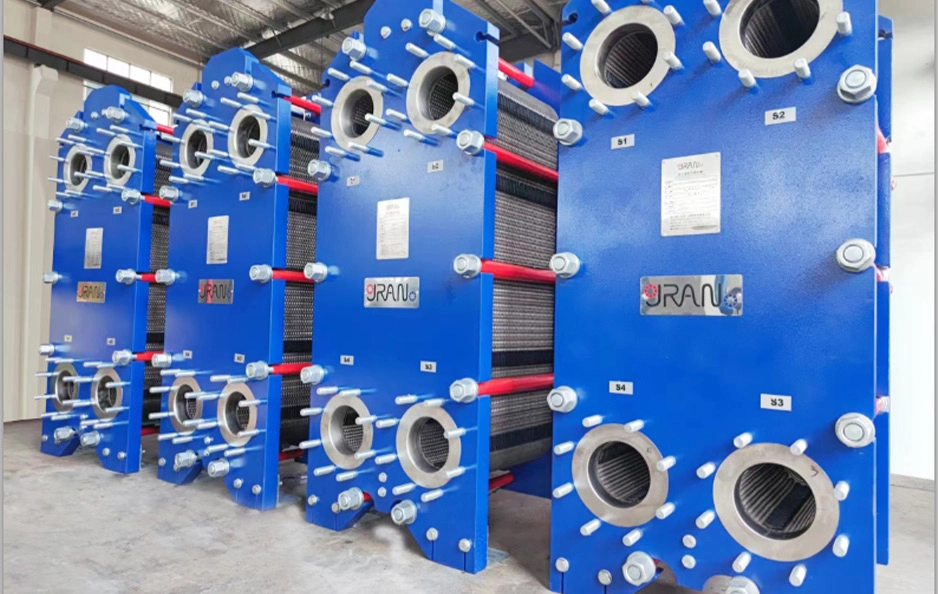
Lors de la sélection d'un Échangeur de chaleur Pour évaluer le débit des aliments, testez-le au-delà de sa capacité maximale. Vérifiez si la conception facilite le nettoyage, la vidange, les contrôles et le remplacement des joints.
Pratiques d'ingénierie et de maintenance qui protègent votre ligne
Les équipements robustes nécessitent une manipulation régulière pour fonctionner correctement. Afin de limiter les risques microbiens, il convient de maîtriser l'ensemble du processus de nettoyage : prérinçage, lavage au détergent, rinçage intermédiaire, phase acide ou alcaline si nécessaire, rinçage final, désinfection ou stérilisation en place (SEP), vidange et stockage.
Consignez également chaque cycle de nettoyage. Les recommandations de la FDA indiquent que les procédures de nettoyage écrites et validées doivent être examinées. La documentation doit détailler le fonctionnement du système.
Appliquez ces vérifications de base :
- Vérifier la température, la concentration, le débit et le CIP contact
- Vérifiez les variations de perte de charge ; une augmentation de la perte de charge peut indiquer un entartrage ou un blocage.
- Inspectez les joints pour détecter tout gonflement, durcissement, fissures et déformation rémanente à la compression.
- Remplacez les joints usés avant qu'ils ne tombent en panne pendant production.
- Ouvrir et inspecter l'unité selon un calendrier établi, en particulier pour les produits à haute viscosité.
- Utilisez des plaques à larges canaux lorsque les résidus de produit ou l'accumulation de pulpe sont un problème.
- Conserver les joints dans un endroit frais, sec, à l'abri de la lumière et loin des huiles, solvants, acides et alcalis.
La section 3-A définit les normes sanitaires relatives aux échangeurs de chaleur à plaques et les meilleures pratiques en matière d'installation, de nettoyage en place des équipements de traitement et de canalisations hygiéniques. Ceci souligne l'importance de la conception hygiénique dans les systèmes laitiers et alimentaires.
Réflexions finales
Les risques cachés dans la transformation des aliments et des boissons passent souvent inaperçus, contrairement à la saleté visible. Il peut s'agir de rainures étroites, de plaques mal alignées, de colle usée, d'eau stagnante ou de caoutchouc inadapté. Si le nettoyage en place (NEP) semble correct mais que les tests microbiologiques échouent systématiquement, examinez attentivement les Échangeur de chaleur et le montage du joint d'étanchéité de manière précise.
Pour le lait, les jus, la bière, les yaourts, les sirops, les sauces et autres produits fragiles similaires, choisissez des modèles hygiéniques, faciles à démonter, avec des options de large passage si nécessaire, et vérifiés. Joint conforme aux normes FDADe tels choix réduisent les risques de contamination, garantissent le respect des normes de qualité des produits et simplifient l'entretien courant.
FAQs
Q : Pourquoi un échangeur de chaleur peut-il encore provoquer une contamination après un nettoyage en place (NEP) ?
UN: Des résidus peuvent subsister dans les rainures des joints, aux points de contact des plaques, dans les zones de faible débit ou dans les canaux inadaptés à la viscosité du produit. Le nettoyage en place (NEP) est optimal lorsque la conception de l'équipement, le débit, la température, le détergent et le drainage sont parfaitement adaptés au procédé.
Q : Que dois-je demander lors de l'achat d'un joint conforme aux normes de la FDA ?
UN: Demandez le type de matériau, la plage de températures, la compatibilité avec les fluides, les documents de conformité pour le contact alimentaire et le mode d'installation. Pour un nettoyage fréquent, un système à clipser ou à enclenchement facilite l'inspection et le remplacement.
Q : Quel échangeur de chaleur est le plus adapté au yaourt, au sirop ou au concentré de jus ?
UN: Un séparateur à plaques détachables, doté de canaux larges ou d'une conception à flux libre, est souvent un meilleur choix pour les produits visqueux ou contenant des particules. Associez-le au système approprié. Joint conforme aux normes FDA et confirmer que la conception prend en charge le NEP, le SEP, la vidange et l'inspection programmée.


